Showing posts with label Saudi ulama. Show all posts
Thursday, January 9, 2014
Saudi-Zionist alliance against Muslims exposed
by Tahir Mustafa
January, 2014
There is much in common between the Saudis and the zionists. Both are illegal regimes occupying holy lands. Their secret alliance has now been exposed. Muslims must take appropriate steps to confront this phenomenon.
Two illegitimate usurper regimes, one led by Zionists in the Holy Land and the other by Najdi Bedouins in the Arabian Peninsula, have been forced by rapidly changing developments to expose their long-maintained secret ties. Not only Muslims but also many fair-minded non-Muslims recognize the illegitimacy of the Zionist pariah regime in the Holy Land. The Saudis, however, have been able to conceal their true identity by claiming to be “defenders of the Haramayn,” the two holy cities of Makkah and Madinah. If so, they have a strange way of claiming this on the one hand while being totally subservient to US imperialism and Zionist racism on the other.
It was Israeli Prime Minister Benjamin Netanyahu who several months ago mentioned the Zionist-Saudi alliance in the context of confronting Islamic Iran. He had talked of the Arabian regimes but given Saudi Arabia’s size and importance, it was clear, he was talking about the regime in Riyadh. Egypt, the other major player on the Arabian scene, had long embraced the Zionist regime publicly.
Two policy failures have forced the secret relationship between Riyadh and Tel Aviv to come out into the open: Saudi-Israeli policy in Syria and their policy of trying to isolate Islamic Iran in the region. Both have unraveled as a result of developments beyond their control. The Saudis in particular are not only furious at their longtime patron, the US, but also in panic because Washington has established contacts, however tenuous, with Islamic Iran.
Among a series of contacts between the Saudis and the Zionists, the latest was a brief encounter between Saudi Arabia’s former intelligence chief, Prince Turki al-Faisal and former Israeli ambassador to Washington (1992– 1996), Itamar Rabinovich, in Monaco in mid-December. According to an Israeli radio report, Turki publicly shook hands with Rabinovich at the World Policy Conference. Their contacts have progressed so far that Rabinovich took the unusual step of inviting Turki to deliver a speech before the Israeli parliament, the Knesset.
Turki reportedly declined the offer — what would he say to the Zionist occupiers of Palestine? — but the fact that the offer was made indicates their relations are deep and have been established for a long time. The offer also shows the degree of trust they have in each other. Rabinovich is an expert on Syria policy and clearly he was planning to engage the former Saudi spy master more deeply although the current Saudi intelligence chief, Bandar bin Sultan is more deeply involved with the Zionists.
Both regimes have been critical of US policy on Syria and Washington’s rapprochement with Tehran. The Zionists have been blunt to the point of being obnoxious, as is their wont. The Saudis have been more diplomatic with their American masters in public but no less vehement in their denunciation of America opening up to Tehran.
The Saudis sense a perceptible shift in US policy in the region. President Barack Obama made this known when he announced a policy shift toward the Asia-Pacific region to confront the rising power of China. The Saudis clearly see this as indication of their reduced importance to the US. Further, Obama shocked the Saudis when he refused to launch a military strike against Syria last summer in what is now known as a carefully orchestrated plan by Bandar. This was a personal slap in the face of Bandar and public humiliation of Saudi Arabia that was long believed to be America’s indispensable ally in the region.
Soon thereafter, Bandar announced that henceforth, the kingdom would go it alone in Syria without coordinating its policy with Washington. The result has been the creation of what is called the “Islamic Front,” a grouping of six or seven different rebel factions that has taken on the Western-backed, Free Syrian Army (FSA). According to several reports, the Saudi-backed and financed Islamic Front fighters have overrun FSA positions and taken over their weapon stockpiles from depots near the Turkish border. The FSA chief Salim Idriss is also reportedly on the run.
The Saudis are determined to sabotage the Geneva II conference on Syria that is scheduled for January 22. Saudi-backed groups are putting forward conditions for participation that would almost certainly wreck the chances of holding a conference. The Syrian government has also said it will only attend if there are no pre-conditions. This is what Lakhdar Brahimi, the UN and Arab League envoy had announced when the date of Geneva II was made public in November.
Syrian government forces have been making steady progress recently as rebel groups fight each other. This has weakened them considerably. Further, their barbaric practices have repelled most Syrians. They do not want the Bashar al-Asad regime to be replaced by people indulging in beheadings and cannibalism. Such behavior is no bar to the Saudis; they want al-Asad removed regardless of the price the Syrian people may have to pay. Already millions of Syrians are refugees and the UN has asked for $6.5 billion in emergency aid otherwise these people will face virtual starvation. Conditions in refugee camps whether in Lebanon or Jordan are appalling. Recent snowstorms, unusual for the region, have added to the refugees’ woes.
The plight of refugees, however, is not something that bothers the Saudis. Instead, they welcome it because it garners more sympathy for the Syrian people, which Saudi Arabia can blame on the Asad regime. It is interesting to note that even US Secretary of State John Kerry has announced that he might meet Syrian rebel groups affiliated with al-Qaeda. Did the US not invade Afghanistan to get rid of al-Qaeda or was that just a ruse to invade the mountainous but mineral-rich country?
The mastermind of the Saudi-Zionist alliance is Bandar. During his long tenure as Saudi ambassador to Washington, he cultivated close links with the neocons, especially the Zionists. His lavish parties were well known for booze and scantily clad women (one wonders what the Saudi ministry responsible for “enjoining good and preventing vice” would say about such conduct or is it permissible if one of the Saudi royals indulges in it?).
Soon after it became clear that the US would not attack Syria as the Saudis had hoped and planned for, Bandar went to the Jordanian port city of Aqaba to meet director of Israel’s Mossad intelligence agency, Tamir Pardo. The aim was to coordinate Saudi-Israeli policy on Syria and Iran. This information was leaked by a source within the Saudi embassy in Amman, Jordan, indicating that within the Saudi ruling circles, there are strong differences.
It needs recalling that when the plot to stage the uprising in Syria was hatched in a Paris café in February 2011, Bandar attended it together with the US ambassador to Israel Dan Shapiro and US Undersecretary of State Jeffrey Feltman. Naturally a number of Syrian opposition figures were also involved. Both Shapiro and Feltman are Zionists and staunchly pro-Israel. The received wisdom at the time was that the Asad regime would collapse within a matter of months if not weeks.
Bandar has been making other moves as well, since the US refusal to attack Syria last August. He reportedly met with French President Francois Hollande when he visited Tel Aviv to meet Netanyahu. According to the Lebanese website, al-Hadath, Bandar proposed common policy on Iran’s nuclear policy to try and sabotage any deal with the US. Further, Bandar proposed the strengthening of Saudi defences (read, the Saudis would purchase more weapons, this time from France). This must have been music to Hollande’s ears since the French economy is struggling and any cash inflow would be welcome.
The Saudis’ open embrace of Zionists reflects their desperation. It should, however, alert all sincere Muslims to the true nature of this regime. The question that Muslims must ask is, whether the two holy cities of Makkah and Madinah can be left in the hands of Zionist allied Saudis. If Masjid al-Aqsa is under the direct occupation of the Zionists, Makkah and Madinah are under the indirect occupation of the Zionists since the Saudis are their close allies.
How long will Muslims tolerate this state of affairs to continue?
Wednesday, May 18, 2011
Saudis resort to crude sectarianism to create divisions in the Ummah

Abu Dharr
Sectarianism has been a time tested tool in the hands of illegitimate rulers since the Islamic institution of khilafah was subverted into mulukiyah nearly 1,400 years ago. Today, the illegitimate rulers of Bahrain, Qatar, Kuwait, the United Arab Emirates and Saudi Arabia are using this weapon to divert attention away from their oppressive policies and subservience to the West and to Zionist Israel.

Pictured are (left ro right): Kuwait's Crown Prince Nawaf Al Ahmad Al Sabah; the Emir of Qatar, Hamad bin Khalifa Al Thani; a representative of Sultan Qaboos of Oman, Fahad bin Mahmoud Al Saeed; Kuwait's Emir Sabah Al Ahmed Al Jaber Al Sabah; Saudi Arabia's King Abdullah; Bahrain's King Khalifa bin Salman Al Khalifa, and UAE President and Abu Dhabi Ruler Khalifa bin Zayed Al Nahayyan
Until now, the main culprit was the regime in Saudi Arabia followed by Kuwait. Now tiny Bahrain has also joined these troublemakers because its illegitimate rule is being challenged by the people that have been subjected to brutal suppression for decades. Saudi Arabia has established a fatwa factory from where it habitually issues fatwas of takfir against the Shias. Such fatwas, however, are not hurled only at the Shi‘is. Any Muslim that disagrees with their narrow obscurantist views is immediately branded a kafir or accused of indulging in bid‘ah or other “un-Islamic” practices. The underlying message is that only the Saudis are “true” Muslims.
The Saudis are the leading manufacturers and exporters of takfiri fatwas. The uprising in Bahrain where the people are demanding their legitimate rights like people elsewhere in the Muslim East have been dismissed as “Shi‘i agitators.” The Saudis have gone so far as to accuse Islamic Iran of interfering in Bahrain’s affairs. It is interesting to note that while thousands of Saudi troops and tens of thousands of American sailors are prowling all over Bahrain, the Saudis are crying hoarse about Iran. There are no Iranian troops in Bahrain. Even Western officials — no friends of Iran — have said they have found no evidence of Iranian involvement in or instigation of the people’s uprising yet the Saudis have been using the Gulf Cooperation Council (GCC) as a platform to hurl invectives at Tehran.


Bahrain Protests: More Than 100,000 March Through Capital As Helicopters Circle Overhead
On April 17, the frightened rulers of GCC member states — Saudi Arabia, Kuwait, Qatar, Bahrain, UAE and Oman — met in Riyadh and called on the Islamic Republic to stop its “interference” in the GCC. The meeting was called to discuss the rapidly escalating crisis in Yemen but the foreign ministers found time to make allegations against Iran. Without providing proof and in a desperate Saudi and Emirati bid to camouflage their own occupation of Bahrain to crush the legitimate aspirations of the people there, the GCC called on “the international community and the [UN] Security Council to take the necessary measures to make flagrant Iranian interference and provocations aimed at sowing discord and destruction” among the GCC states.
It said the GCC “categorically rejects all foreign interference in its affairs and invites the Iranian regime to stop its provocations.” Unable to justify their brutal clampdown of peaceful protesters especially in Bahrain where the overwhelming majority of the population is Shi‘i (there is also a sizeable Shi‘i population in Saudi Arabia that is equally suppressed and deprived of basic rights), the Saudis are trying to turn this into a sectarian issue. If people ask for their fundamental rights, how does it become a sectarian problem? The Saudis were also opposed to the removal of Hosni Mubarak from power because they felt it would expose them to pressure from people demanding similar rights in the kingdom. This is true. Was sectarianism also involved in Mubarak’s removal? If not — and it clearly was not — how can they categorize the Bahrainis’ demand for rights and dignity as promoting sectarianism? The Saudis feel quite vulnerable; and they should. Their rule is illegitimate and their policies have caused great damage to the larger interests of the Ummah.
The Saudis and their frightened GCC partners, clinging to each other for support, are not content merely with issuing appeals to the “international community and the Security Council” to save their tottering regimes. They know these appeals will not yield much direct help. Western support, even for friendly regimes has limits. Chastened by their experience in Afghanistan and Iraq, the Americans and their allies are not about to rush into another minefield even if they will increase the volume of their rhetoric against Islamic Iran or whoever the Saudis think is causing them grief. The most that will happen is that the West will not support any uprising in these countries as they have shown in the case of Bahrain.
While that may bring some comfort to these regimes, the Saudis have gone further. They have resorted to their favourite ploy to divide the Ummah along sectarian lines. They have sent their court ‘ulama to visit various countries and mobilize Muslim communities to form councils and organizations in “defence of the Sahabah”.
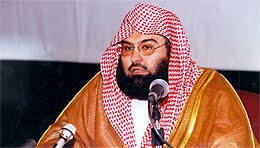
The Imam of Masjid al-Haram, Shaikh Sudais, for instance, was recently in India to rope in the Muslims into the Saudis’ campaign of sowing sectarian discord. Muslims have great attachment to Makkah and Madinah and the imams there are looked upon with respect. Most Muslims also admire their reciting skills but to use these imams for such nefarious activities is not only sad but also dangerous. It is equally disturbing that such imams allow themselves to be used by the corrupt and anti-Islamic rulers of Saudi Arabia.

Let us be clear: there should be no insults of the Sahabah or the Umahat al-Mumineen (the Mothers of the committed Muslims, that is, the wives of the noble Messenger of Allah – r) by anyone. But if the Saudis and their court preachers are really serious about this, we are constrained to ask: why do they not start in the kingdom itself? The Saudis have a strange sense of respecting the Sahabah; they have vandalised most of the historic sites of Islam. In fact, in their inexorable drive to build concrete and glass monstrosities in and around the Haram in Makkah and Madinah, they have obliterated virtually all traces of Islamic history including many monuments associated with the noble Messenger (pbuh) and his Sahabah (companions).
For instance, the house where the noble Messenger (pbuh) spent 25 blissful years of his married life with Khadijah (g), has been turned into a toilet. What kind of respect do these Saudi-Wahhabis show for the Prophet (pbuh) and his beloved wife and family? Even the green dome over the Prophet’s (pbuh) grave in al-Masjid al-Nabawi is not safe from these primitive bedouin vandals from Najd. Plans are afoot to demolish the green dome and remove the Prophet’s (pbuh) body from there. What more proof do Muslims need of the Saudis’ disrespect of the noble Messenger (pbuh) and the vile nature of the Saudi regime?

Why does Shaikh Sudais not raise his voice and lend his prestige to protest real acts of vandalism and desecrations by the House of Saud rather than flying all the way to India to whip up hysteria over a hypothetical issue? Even if the Imam of Masjid al-Haram in Makkah has little sympathy for people struggling for their rights and dignity in the Muslim East — and there is no reason why he should not — what excuse does he have to remain silent about the Saudis’ destructive policies that are obliterating Islamic history and heritage? And why is the Saudi regime not helping the oppressed people of Palestine in the same way that it has joined the crusade against Qaddafi of Libya? Saudi hypocrisy and subservience to the kafirs know no bounds.
It is sad to see such ‘ulama lend their name and prestige — that comes with being imams of such noble sanctuaries — to become tools of the corrupt Saudi monarchy, which is only interested in protecting its own illegitimate rule regardless of the damage it causes to Islam or the honour of the Prophet (pbuh) and his Sahabah. It is also quite revealing that not one imam either in Masjid al-Haram or al-Masjid al-Nabawi has raised his voice about the destruction of masjids by Saudi troops or desecration of copies of the noble Qur’an in Bahrain. Should one conclude that these imams do not know about this or that they are complicit in these crimes?
Either way it is not a good reflection of their character or behaviour. Muslims deserve far better from such ‘ulama than becoming tools in a vicious propaganda campaign against the legitimate aspirations of the people in the Muslim East whether in Bahrain, Yemen or Saudi Arabia. The time for games is over; let the ‘ulama of Saudi Arabia make a clear choice: are they with the Muslim masses struggling for dignity and honour or with the corrupt rulers that are subservient to the forces of kufr, nifaq and zulm?
Monday, August 17, 2009
The House of Saud’s crisis of legitimacy


The House of Saud’s crisis of legitimacy
by Khalil Osman
The aftermath of September 11 has focused attention once more on the House of Saud and its ability to survive. There are growing indications that the genie of waning popularity, which the Saudi dynasty has long feared and tried to control by a legion of gimmicks, has again escaped. True, the Saudi clan is still established in the corridors of power, but an important pillar of its position seems to be seriously eroded.
The crisis has taken the form of a storm of criticism from a number of Saudi ulama, warning the government not to side with the US against a Muslim country. At least seven ulama have reportedly issued fatawa (juristic rulings) condemning the US and Britain for their attacks on Afghanistan. In a series of rulings in September and October, Shaykh Hammoud bin ‘Uqla al-Shu’aybi declared that "whoever supports and backs the infidels against Muslims is considered an infidel." Shu’aybi, a former head of the department of theology at Imam Muhammad bin Saud University, is one of the most prominent and learned ulama in the kingdom. He comes from Najd, the traditional power base of the royal family, and lives in Buraydah, a town north of Riyadh. Buraydah has been a centre of religious opposition to the royal family for a decade; Shu’aybi was imprisoned in the mid-1990s for publicly criticising the ruling family’s policies during and after the Gulf war. He has recently been called in for questioning by the authorities on at least two occasions, but has consistently refused to be silenced.
Similar fatawa issued by Shaykhs Sulayman ‘Alwan and Ali Khudayr, two young ulama with links to Shu’aybi, rule that those supporting the US war against Afghanistan "by hand, by tongue, or by money" are automatically excommunicated from Islam. Other fatawa refer specifically to the country’s rulers as "infidels."
These rulings demonstrate the growing rift between the House of Saud and elements of the Wahhabi establishment. They indicate that cracks are emerging in the 256-year pact between the House of Saud and the followers of Shaykh Muhammad bin ‘Abd al-Wahhab (1703-1793). The deal of 1744 between Ibn ‘Abd al-Wahhab and Muhammad bin Saud, then chieftain of the town of Dar’iyyah in Wadi Hanifah, produced a double-headed political entity that challenged the Ottoman state. Ibn ‘Abd al-Wahhab and the ulama exercised religious authority while the Saudi rulers exerted political authority.
Ibn ‘Abd al-Wahhab got most of his inspiration from the distinctive political views of Taqiy al-Din Ahmad bin ‘Abd al-Halim bin Taymiyyah al-Harrani (1263-1328), who denied the necessity of the khilafah, arguing that the true khilafah ceased to exist after the four rightly-guided khulafa. Instead of the political unity of the khilafah, he accepted plurality of Muslim states. Ibn Taymiyyah emphasised the importance of cooperation between the de facto rulers and the religious establishment for the implementation of the Shari’ah. He interpreted the Qur’anic phrase "those of you who are in authority" (uli al-amr minkum, 4:59) to mean the ulama and the amirs. The ulama interpret the Shari’ah and have the authority to administer it, mainly as judges, working in conjunction with the amirs.
It can be argued that Ibn Taymiyyah tried to increase the influence of the ulama. His theory was a departure from the classical Sunni view exemplified by Abu al-Hassan ‘Ali bin Muhammad bin Habib al-Mawardi (974-1058), which accepts the legitimacy of de facto rulers, provided that their authority is recognized by the khalifah. Instead, for Ibn Taymiyyah governance and religious learning are combined into a whole whereby shawkah (force, might) becomes dependent on carrying out the objectives of the Shari’ah under the supervision of the ulama. However, in practice the division of power and authority into spiritual and temporal, religious and political, succumbs to an irremediable dualism whereby Shari’ah and deen are subordinated to the exigencies of raison d’etat and politics.
It was through Wahhabism that the political theory of Ibn Taymiyyah found its practical expression. Unlike other reformist movements in the history of Islam, where the ultimate authorities were vested in the leaders of these groups, the duality and bifurcation of religious and political leadership figure prominently in Wahhabism. After the alliance between Ibn ‘Abd al-Wahhab and Ibn Saud, the conquests of the Saudi-Wahhabi forces spread the Saudis’ dominion and the Wahhabi doctrine simultaneously. As such, Wahhabism provided the Saudi state with legitimation, an acceptance of the House of Saud’s right to rule and their subjects’ obligation to obey them. The Wahhabi ulama became an ideological elite, helping to maintain and legitimize the political system and government.
But Ibn Taymiyyah’s division of authority results in political contradiction. The absolute monopoly of shawkah is bound to clash eventually with the supervisory role of the ulama. Suspended between these two poles, the political system is prone to instability. The arrangement is a double-edged sword. It fosters political dissent on religious grounds. The relative openness of the religious institutions enables them to play a leading role in voicing political grievances.
The main impression that transpires from a cursory examination of Saudi history is that it is the shawkah of the House of Saud, rather than the theological and juristic epistemology of the ulama, that has been setting most of their agenda. The crushing of the Ikhwan fighters, the Wahhabi political force that helped king Abd al-’Aziz to extend his sway throughout the Arabian peninsula in the first quarter of the twentieth century, demonstrated this primacy of the shawkah of the Saudi royal family over the religious institutions in the country’s political life. Oil wealth, which enabled the state to provide the ulama with handsome salaries, social status and positions of importance, supported the royal family’s efforts to absorb the religious institutions of Islam, such as mosques, schools, courts and awqaf (religious endowments), into the state apparatus. By and large, the role of the ulama was reduced to providing institutional support and legitimation for the regime, and engineering the people’s consent.
Yet the 1990-91 Gulf crisis and subsequent war brought this extended honeymoon to an end, as Islamic radicals and ulama began to voice their opposition to the presence of American troops on the Arabian peninsula, and also their dissatisfaction with the royal family’s corrupt and dictatorial rule. A number of prominent ulama, notably Safar al-Hawali, dean of the department of Islamic studies at Umm al-Qura University, Makkah, and Sulayman al-’Udah were quick to denounce the decision of king Fahd bin ‘Abd al-’Aziz to seek western help to confront Saddam Hussein.
The distrust between religious circles and the government over the presence of foreign forces in the kingdom continued after the war. The government’s efforts to obtain religious sanction for its policies through fatawa from the kingdom’s highest religious authorities were in vain. A number of university lecturers and ulama have since castigated the government for adopting policies that they deem to be unIslamic. Audiotapes of many critical lectures circulated around the country; memoranda of advice (naseehah), calling for an independent consultative assembly, an independent judiciary, government accountability and a crackdown on corrupt officials, were addressed to the king.
On the heels of these developments came the establishment of organized opposition groups such as the Committee to Defend Legitimate Rights and the Movement for Islamic Reform. These movements added renewed vigour to non-violent political opposition. They embarked on wide-ranging campaigns using fax, email and toll-free numbers. Unlike earlier episodes, in which dissent erupted into public confrontation, such as the takeover in 1979 of al-Haram al-Shareef in Makkah by Juhayman al-’Utaybi and his followers, this time dissent seems to have wide support. The demonstrations in Buraydah demanding the release of jailed ulama (1994) underline the popularity of the movement.
There has also reportedly been increasing support for Usama bin Ladin. A tape distributed last summer, showing fighters performing urban and guerrilla-warfare games in their camps while bin Ladin criticised the US and Israel, shook the authorities. The tape’s great popularity prompted the police to round up dozens of people suspected of distributing it, and to interrogate them about their links with bin Ladin and his network. The rate of arrests increased dramatically after September 11.
by Khalil Osman
The aftermath of September 11 has focused attention once more on the House of Saud and its ability to survive. There are growing indications that the genie of waning popularity, which the Saudi dynasty has long feared and tried to control by a legion of gimmicks, has again escaped. True, the Saudi clan is still established in the corridors of power, but an important pillar of its position seems to be seriously eroded.
The crisis has taken the form of a storm of criticism from a number of Saudi ulama, warning the government not to side with the US against a Muslim country. At least seven ulama have reportedly issued fatawa (juristic rulings) condemning the US and Britain for their attacks on Afghanistan. In a series of rulings in September and October, Shaykh Hammoud bin ‘Uqla al-Shu’aybi declared that "whoever supports and backs the infidels against Muslims is considered an infidel." Shu’aybi, a former head of the department of theology at Imam Muhammad bin Saud University, is one of the most prominent and learned ulama in the kingdom. He comes from Najd, the traditional power base of the royal family, and lives in Buraydah, a town north of Riyadh. Buraydah has been a centre of religious opposition to the royal family for a decade; Shu’aybi was imprisoned in the mid-1990s for publicly criticising the ruling family’s policies during and after the Gulf war. He has recently been called in for questioning by the authorities on at least two occasions, but has consistently refused to be silenced.
Similar fatawa issued by Shaykhs Sulayman ‘Alwan and Ali Khudayr, two young ulama with links to Shu’aybi, rule that those supporting the US war against Afghanistan "by hand, by tongue, or by money" are automatically excommunicated from Islam. Other fatawa refer specifically to the country’s rulers as "infidels."
These rulings demonstrate the growing rift between the House of Saud and elements of the Wahhabi establishment. They indicate that cracks are emerging in the 256-year pact between the House of Saud and the followers of Shaykh Muhammad bin ‘Abd al-Wahhab (1703-1793). The deal of 1744 between Ibn ‘Abd al-Wahhab and Muhammad bin Saud, then chieftain of the town of Dar’iyyah in Wadi Hanifah, produced a double-headed political entity that challenged the Ottoman state. Ibn ‘Abd al-Wahhab and the ulama exercised religious authority while the Saudi rulers exerted political authority.
Ibn ‘Abd al-Wahhab got most of his inspiration from the distinctive political views of Taqiy al-Din Ahmad bin ‘Abd al-Halim bin Taymiyyah al-Harrani (1263-1328), who denied the necessity of the khilafah, arguing that the true khilafah ceased to exist after the four rightly-guided khulafa. Instead of the political unity of the khilafah, he accepted plurality of Muslim states. Ibn Taymiyyah emphasised the importance of cooperation between the de facto rulers and the religious establishment for the implementation of the Shari’ah. He interpreted the Qur’anic phrase "those of you who are in authority" (uli al-amr minkum, 4:59) to mean the ulama and the amirs. The ulama interpret the Shari’ah and have the authority to administer it, mainly as judges, working in conjunction with the amirs.
It can be argued that Ibn Taymiyyah tried to increase the influence of the ulama. His theory was a departure from the classical Sunni view exemplified by Abu al-Hassan ‘Ali bin Muhammad bin Habib al-Mawardi (974-1058), which accepts the legitimacy of de facto rulers, provided that their authority is recognized by the khalifah. Instead, for Ibn Taymiyyah governance and religious learning are combined into a whole whereby shawkah (force, might) becomes dependent on carrying out the objectives of the Shari’ah under the supervision of the ulama. However, in practice the division of power and authority into spiritual and temporal, religious and political, succumbs to an irremediable dualism whereby Shari’ah and deen are subordinated to the exigencies of raison d’etat and politics.
It was through Wahhabism that the political theory of Ibn Taymiyyah found its practical expression. Unlike other reformist movements in the history of Islam, where the ultimate authorities were vested in the leaders of these groups, the duality and bifurcation of religious and political leadership figure prominently in Wahhabism. After the alliance between Ibn ‘Abd al-Wahhab and Ibn Saud, the conquests of the Saudi-Wahhabi forces spread the Saudis’ dominion and the Wahhabi doctrine simultaneously. As such, Wahhabism provided the Saudi state with legitimation, an acceptance of the House of Saud’s right to rule and their subjects’ obligation to obey them. The Wahhabi ulama became an ideological elite, helping to maintain and legitimize the political system and government.
But Ibn Taymiyyah’s division of authority results in political contradiction. The absolute monopoly of shawkah is bound to clash eventually with the supervisory role of the ulama. Suspended between these two poles, the political system is prone to instability. The arrangement is a double-edged sword. It fosters political dissent on religious grounds. The relative openness of the religious institutions enables them to play a leading role in voicing political grievances.
The main impression that transpires from a cursory examination of Saudi history is that it is the shawkah of the House of Saud, rather than the theological and juristic epistemology of the ulama, that has been setting most of their agenda. The crushing of the Ikhwan fighters, the Wahhabi political force that helped king Abd al-’Aziz to extend his sway throughout the Arabian peninsula in the first quarter of the twentieth century, demonstrated this primacy of the shawkah of the Saudi royal family over the religious institutions in the country’s political life. Oil wealth, which enabled the state to provide the ulama with handsome salaries, social status and positions of importance, supported the royal family’s efforts to absorb the religious institutions of Islam, such as mosques, schools, courts and awqaf (religious endowments), into the state apparatus. By and large, the role of the ulama was reduced to providing institutional support and legitimation for the regime, and engineering the people’s consent.
Yet the 1990-91 Gulf crisis and subsequent war brought this extended honeymoon to an end, as Islamic radicals and ulama began to voice their opposition to the presence of American troops on the Arabian peninsula, and also their dissatisfaction with the royal family’s corrupt and dictatorial rule. A number of prominent ulama, notably Safar al-Hawali, dean of the department of Islamic studies at Umm al-Qura University, Makkah, and Sulayman al-’Udah were quick to denounce the decision of king Fahd bin ‘Abd al-’Aziz to seek western help to confront Saddam Hussein.
The distrust between religious circles and the government over the presence of foreign forces in the kingdom continued after the war. The government’s efforts to obtain religious sanction for its policies through fatawa from the kingdom’s highest religious authorities were in vain. A number of university lecturers and ulama have since castigated the government for adopting policies that they deem to be unIslamic. Audiotapes of many critical lectures circulated around the country; memoranda of advice (naseehah), calling for an independent consultative assembly, an independent judiciary, government accountability and a crackdown on corrupt officials, were addressed to the king.
On the heels of these developments came the establishment of organized opposition groups such as the Committee to Defend Legitimate Rights and the Movement for Islamic Reform. These movements added renewed vigour to non-violent political opposition. They embarked on wide-ranging campaigns using fax, email and toll-free numbers. Unlike earlier episodes, in which dissent erupted into public confrontation, such as the takeover in 1979 of al-Haram al-Shareef in Makkah by Juhayman al-’Utaybi and his followers, this time dissent seems to have wide support. The demonstrations in Buraydah demanding the release of jailed ulama (1994) underline the popularity of the movement.
There has also reportedly been increasing support for Usama bin Ladin. A tape distributed last summer, showing fighters performing urban and guerrilla-warfare games in their camps while bin Ladin criticised the US and Israel, shook the authorities. The tape’s great popularity prompted the police to round up dozens of people suspected of distributing it, and to interrogate them about their links with bin Ladin and his network. The rate of arrests increased dramatically after September 11.
The Saudi government’s reluctance to allow the US to use the Prince Sultan Air Base in Dhahran in its bombing campaign against Afghanistan shows the increasingly difficult predicament it faces: a strong alliance with the US under the present conditions could foment even more serious trouble at home. In fact, internal pressures are more important in explaining the muted Saudi support for the US’s "war on terrorism" than Washington’s pro-Israel bias.
The escalating tension between the Wahhabi ulama and the House of Saud could be explosive. It effectively undermines the religious aspect of the Saudis’ dynastic legitimacy. The claim of legitimacy is an important part of a government’s ability to sustain the consent of the majority of the population, that is their acceptance of that government’s authority over them. No government can long operate without inspiring in its populace an emotional faith in its legitimacy in this sense. Without this it will be increasingly compelled to function by coercion and inducements. Combined with other weaknesses, such as deepening socioeconomic distress, the intensifying crisis of legitimacy could make the cumbersome apparatus of the Saudi state a political Titanic, a ship headed straight for icebergs.
Source:
by courtesy & © 2001 Crescent International & Khalil Osman
Subscribe to:
Posts (Atom)