



A FORUM TO EXCHANGE VIEWS AND IDEAS
Subscribe To

 Posts
All Comments
Posts
All Comments
Showing posts with label Iran. islam. Show all posts
Showing posts with label Iran. islam. Show all posts
Thursday, September 4, 2014
Saudi regime’s hatred of Islamic movements
by Zafar Bangash
 September, 2014
While claiming to be carrying the banner of ‘Sunni’ Islam, the Saudi regime has visceral hatred for any genuine expression of Islam. We examine why.
What explains the Saudi regime’s visceral hatred of Islamic movements struggling to establish fairness and justice in society based on Islamic principles? The question is especially pertinent in view of the fact that successive Saudi rulers have arrogated to themselves the title of Khadim al-Haramayn (Servant of the Two Holy Cities). By so doing, they claim special status among Muslims. In their innocence, many Muslims have unfortunately fallen for this gimmick.
Israel’s barbaric assault on tiny Gaza launched officially on July 8 (it had started on July 1), however, has exposed more than the ugly faces of Zionism and US imperialism. It has also laid bare the criminal nature of a number of Arabian regimes. Leading this pack of villains are the tribal regime in Saudi Arabia and the military dictatorship in Egypt. Both have made their position clear in word and deed as staunch enemies of Islamic movements globally and therefore, of Islam itself.
In the past, these rulers resorted to rhetorical volleys against Zionist aggression in order to camouflage their impotence and complicity in such crimes. Now even that pretence has been abandoned as both regimes and their putative allies among the tribal sheikhdoms and emirates have openly sided with the Zionists. Israeli officials have publicly admitted that Arabian regimes have told them to “finish the job” in Gaza — meaning, eliminate the Islamic resistance movements Hamas and Islamic Jihad.
Such messages have not been communicated secretly: the Saudis and Egyptians are quite open about them. In an interview published in the London-based al-Sharq al-Awsat (July 27), the former Saudi intelligence chief Turki bin Faisal (he owns the paper!) said Hamas was responsible for “the crimes Israel has committed in the Gaza Strip following its bad decisions in the past, and the haughtiness it shows by firing useless rockets at Israel, which contribute nothing to the Palestinian interest. The Hamas rockets pose no threat to the Israeli occupation, even when they reach Tel Aviv.” He offered no solution to the ongoing Zionist occupation of Palestine and onslaught on Gaza but went on to castigate Turkey and Qatar for their mediation efforts because they undermined Egypt’s “leadership role” in the Arabian world.
What precisely is this Egyptian “leadership role”? Under the heels of a military dictator who was awarded the highest Saudi medal, the King ‘Abd al- ‘Aziz Necklace, on August 10, General Abdel Fattah el-Sisi has been exerting pressure on Hamas and the Palestinians to accept a cease-fire with Israel without addressing the underlying causes of Palestinian anger: the tight siege of Gaza that is strangling its 1.8 million inhabitants to death. The Sisi dictatorship has not only refused to open the Rafah border crossing with Gaza even for injured Palestinians to seek medical help but also destroyed the tunnels through which the Palestinians get much needed supplies. For his services to the Zionists, the Sisi regime has earned the title of Israel’s “most friendly neighbor.”
Saudi King Abdullah has been no less nasty with the Palestinians. In a message delivered on Saudi television on August 1, he blamed “terrorist groups” bringing a bad name to Islam. Of course he also referred to the “terrorist regime” without once mentioning Israel by name. One wonders what disrepute has Hamas, Islamic Jihad or Hizbullah brought to Islam? One can cite many examples of the Saudi ruling family bringing disrepute to Islam. For instance, it is financing the terrorists in Syria and Iraq that are slitting people’s throats and stoning women to death in public, allegedly for committing adultery without meeting even the minimum requirements before inflicting such punishment. Besides, such punishment cannot be meted out by hoodlums brandishing Kalashnikovs.
There are other examples that prove the Saudi regime’s anti-Islamic practices. There is no freedom for people in the Kingdom when Islam grants such freedom to everyone; women are oppressed and not even allowed to drive cars. There is massive corruption in the Kingdom; the thieving “royals” are rotten to the core and indulge in numerous vices — gambling, adultery, drinking etc. — all prohibited in Islam and for which there is severe punishment.
While the Saudi regime has spent billions financing the terrorist mercenaries in Syria and Iraq that incidentally have not lifted a finger against the Zionist criminals murdering innocent Palestinians in Gaza, the king announced a donation of a mere $30 million to the Palestinian Health Ministry to help the people of Gaza. The ministry is controlled by the Palestinian Authority of Mahmoud Abbas and dominated by Zionist and imperialist stooges. The people of Gaza are not likely to see a penny of this money once it gets into the grubby hands of the PA opportunists. In any case, $30 million is peanuts for what is needed in Gaza. The Saudi “royals” drop more than this in tips in one night when they visit the brothels of Europe!
The Saudis’ hate-filled language against Hamas is identical to that of the foul-mouthed Zionists. Israeli Knesset’s deputy speaker Moshe Feiglin has called for the “annihilation” of the Palestinians in Gaza. A member of Israeli Prime Minister Benjamin Netanyahu’s neo-Nazi Likud Party, Feiglin wrote on his Facebook page on August 2 to re-occupy the entire Gaza Strip. He also called for expelling all the residents of Gaza and for putting them in concentration camps in the Negev desert before shipping them across the world. To achieve this, he said water and electricity should be shut off to the Palestinians to force them to leave their homes. He called for their “extermination,” the precise word used on his Facebook page.
Even Saudi court ‘ulama have been pressed into service against the Palestinians and their supporters. They are always ready to issue whatever “fatwa” the regime wants. The latest “fatwa” of the Grand Mufti of the Kingdom, Shaykh ‘Abd al-‘Aziz Aal al-Shaykh denounced marches in support of the brutalized people of Gaza as “useless” and “demagogic.” The grand mufti who is blind, is the President for Scientific Researches and Fatwas. Denouncing marches in support of the Palestinians in Gaza is necessitated by the Saudi regime’s fear of its own people. If they are allowed to march in support of Gaza, people are bound to raise questions about their own lack of freedoms. After all, there are more than 30,000 political prisoners in the Kingdom.
Does the Saudi Grand Mufti’s fatwa have any basis in the Qur’an or the Sunnah of the noble Messenger of Allah (pbuh)? The noble Qur’an says, “And how could you refuse to struggle in the cause of Allah and of the utterly helpless men and women and children who are crying, “O our Sustainer! Lead us forth [to freedom] out of this land whose people are oppressors and raise for us, out of Your grace, a protector, and raise for us, out of Your grace, one who will bring us support!” (4:75).
Let us also consider an episode from early Islamic history when Muslims in Makkah were persecuted because they were weak. Abu Jahl, a particularly nasty member of the Makkan elite, was torturing two early Muslims — Sumayya and her husband Yasir. While the noble Messenger (pbuh) could not rescue them, he did not abandon them either. Every day the noble Messenger (pbuh) would come out and stand at a distance expressing solidarity with them. He would say to them, “Isbiru ya aal Yasir! Inna maw‘idakum al-jannah: Have patience, O family of Yasir; verily, your reward is Paradise! The two were tortured to death becoming the first martyrs of Islam. If the noble Messenger (pbuh) expressed solidarity with the oppressed Muslims in early Islamic history even when he was unable to save them from torture and death, how can the paid preachers of Saudi Arabia denounce solidarity marches for the oppressed Palestinians in Gaza?
But what do the Saudis propose to do about the unending crisis in Palestine? Why, peace with Israel, of course. Prince Turki bin Faisal lamented in his al-Sharq al-Awsat interview that Hamas’ resistance to Zionist crimes was undermining the “Arab Peace Plan” put forward by the Saudi regime as far back as 1982 and different versions of it have circulated ever since. The Saudi author, Mohammed Aal Shaykh wrote a recent piece in the regime’s mouthpiece, al-Arabiya headlined “Peace with Israel is the solution.” The problem with this proposal is that the Zionists are not prepared to make peace with the Palestinians. Even the Americans who underwrite all of Israel’s expenses have realized this but the Saudis seem to be oblivious.
Are they really oblivious of Zionist intentions or are they just plain wicked and against any expression of true Islam? The Saudi regime conspired with the Egyptian military to overthrow the first democratically elected government in the country’s history. The Ikhwan-backed government of President Mohamed Mursi was overthrown in July 2013 and thousands of their supporters were mercilessly gunned down in Rabi‘a al-‘Adawiya Square and al-Nahda Square in the suburbs of Cairo in August 2013.
Immediately after the coup, the Saudi ruler congratulated the military for “saving” Egypt and delivered $5 billion in bakhshish. Another $20 billion followed after it carried out the bloodbath. Compare these vast sums to the puny amount promised for Gaza’s brutalized people where more than 2,000 civilians have been murdered by the Zionist regime and virtually the entire infrastructure of the tiny enclave has been destroyed including houses, schools, hospitals, masjids and even the sole power plant.
We must, therefore, ask: what is the reason for the Saudi regime’s visceral hatred of Islamic movements and any genuine expression of Islam outside the archaic understanding it peddles globally? If its opposition to Islamic Iran and Hizbullah is based on the fact that they are Shi‘i, why does the Saudi regime hate the Ikhwan in Egypt and Hamas in Palestine who are both Sunnis?
Islamic Iran exposed the Saudi regime’s pretensions of being Islamic. After all, anyone claiming to represent Islam or having policy based on Islamic principles must live up to those principles by helping the oppressed Muslims everywhere. Prior to the Islamic Revolution in Iran, the Saudi and Egyptian regimes, and indeed all regimes in the Muslim East, had no problem with the US-Zionist backed regime of the Shah even though he was also Shi‘i. The Shah posed no threat to the Saudis’ “Islamic” pretensions; only Islamic Iran does. Similarly, Hizbullah and by extension, Islamic Iran, exposed the fraudulent claims of the Saudis and other Arabian regimes to helping the Palestinians and standing up to Zionist aggression. All these regimes are now openly calling for peace with (read, surrender to) Israel.
As far as the Ikhwan in Egypt and Hamas and Islamic Jihad in Palestine are concerned, the Saudis see in them rivals to the claim of carrying the mantle of “Sunni” Islam. The Saudis do not want to share this title with any other group unless of course, it is completely subservient to its version of understanding Islam. As far as the Ikhwan are concerned, many of them spent decades in Saudi Arabia and were instrumental in designing course material for their schools and universities and share many common understandings with them but that is not good enough for the Saudis. The Ikhwan pose a “threat” because they offer an alternative model to that of the Saudis, hence the Saudi regime’s tight embrace of the brutes in uniform in Egypt that perpetrated a bloodbath against the Ikhwan, having thrown tens of thousands of others into prison.
The Saudis display no less hatred for Hamas because it refuses to surrender to the Zionists. Hamas has compounded its problem, according to the Saudis, by aligning — horror of horrors — with Islamic Iran and Hizbullah who are both Shi‘i. Some Saudi officials like the Kingdom’s ambassador to Britain, Prince Mohammed bin Nawaf Aal Saud, have tried to put a benign spin on their policy and even claim they are “supporting the Palestinians” but the reality is clearly very different, as David Hearst, editor of Middle East Eye exposed in an article published in Huffington Post on July 28.
Hearst did more; he exposed the Saudis’ close links with the Israelis and scoffed at the ambassador’s claim that the Kingdom’s dealings with Israel are “limited to bring about a plan for peace.” Hears wrote, “You are privy to the cables, Mr. Ambassador. Tell us what passed between Prince Bandar and the Mossad director Tamir Pardo at that hotel in Aqaba in November last year [2013]. The Jordanians leaked it to an Israeli newspaper in Eilat. Were Bandar and Pardo: 1. soaking up the winter sun, 2. talking about the Arab Peace Initiative, or 3. plotting how to bomb Iran?
“And why are your new friends the Israelis being so loquacious? Why, to take the latest example, did Dan Gillerman, Israeli ambassador to the UN 2003–08, say at the weekend [July 26-27] that ‘representatives from the Gulf states told us to finish the job in Gaza time and again.’ Finish the job? Killing over 1,000 Palestinians [by July 28; the total death toll has exceeded 2,016 as of August 18 when more bodies are pulled out from underneath the rubble], most of them civilian. Is that what you meant when you said, ‘we will never do anything to harm them’?”
Despite vicious anti-Hamas propaganda in Egypt and Saudi Arabia, especially in Egypt, the masses do not share the regimes’ view of the resistance movement. Outside of official circles and the small coterie of hangers-on, there is widespread support and sympathy for the resistance movement and the Palestinian people in general. In Egypt, the official media — there are no other media outlets allowed to function — has been relentless in attacking Hamas and the Ikhwan. The latter is seen as the regime’s nemesis and el-Sisi has vowed to eliminate the Ikhwan from Egyptian politics. The movement has been banned after being declared a “terrorist” organization; its assets are frozen, as are those of its leaders. Thousands of its members are languishing in prisons undergoing horrible torture for which the Egyptian regime is notorious; hundreds of others have been sentenced to death.
In Saudi Arabia, anti-Hamas propaganda is not so blatant but the regime has made its hatred very clear in statements and actions. Yet the majority of people in Saudi Arabia do not share this view. A poll conducted by Rakeen, the leading pollster in the Kingdom, among a representative sample of 2,000 Saudis found 95% support continuation of the resistance against Zionist aggression despite the regime’s open rejection of it. Similarly, 82% support the firing of rockets into Israel while a mere 14% opposed it (Prince Turki, please note!).
Muslims elsewhere, especially in places like Pakistan where there is a naïve view of the Saudi regime, there is need for a realistic assessment of its policies. A Pew Research poll in 2013 found a massive 97% of Pakistanis have a favorable view of Saudi Arabia even while the desert kingdom’s standing everywhere else took a beating. True, both the Pakistani government, especially Nawaz Sharif, and the military are very tight with the Saudis because Saudi rulers give generous bakhshish, such association is costing the Pakistani society dearly. The extremist ideology sweeping the country is the direct result of Saudi financing of Wahhabi ideology in the country. Unless this is checked, and soon, Pakistan itself may not survive the tsunami of hatred that grips much of the country.
What Muslims everywhere must understand is that the Saudi regime is a staunch enemy of Islam and Muslims. For decades it peddled the fiction that it was concerned about Muslims; its policies vis-à-vis the Palestinians especially in Gaza hava removed the mask from its face. It is time to support the strugglers for human rights in the Kingdom and demand that the corrupt regime relinquish control of the Haramayn. It is distorting the teachings of Islam and preventing the performance of Hajj according to the commands of Allah (swt) in the Qur’an and the Sunnah and Sirah of the noble Messenger (pbuh).
If committed Muslims were to reclaim the Arabian Peninsula, the Ummah would be well on the way to resolving many of its problems and such heart-wrenching tragedies as those witnessed in Gaza would no longer occur with such regularity.
September, 2014
While claiming to be carrying the banner of ‘Sunni’ Islam, the Saudi regime has visceral hatred for any genuine expression of Islam. We examine why.
What explains the Saudi regime’s visceral hatred of Islamic movements struggling to establish fairness and justice in society based on Islamic principles? The question is especially pertinent in view of the fact that successive Saudi rulers have arrogated to themselves the title of Khadim al-Haramayn (Servant of the Two Holy Cities). By so doing, they claim special status among Muslims. In their innocence, many Muslims have unfortunately fallen for this gimmick.
Israel’s barbaric assault on tiny Gaza launched officially on July 8 (it had started on July 1), however, has exposed more than the ugly faces of Zionism and US imperialism. It has also laid bare the criminal nature of a number of Arabian regimes. Leading this pack of villains are the tribal regime in Saudi Arabia and the military dictatorship in Egypt. Both have made their position clear in word and deed as staunch enemies of Islamic movements globally and therefore, of Islam itself.
In the past, these rulers resorted to rhetorical volleys against Zionist aggression in order to camouflage their impotence and complicity in such crimes. Now even that pretence has been abandoned as both regimes and their putative allies among the tribal sheikhdoms and emirates have openly sided with the Zionists. Israeli officials have publicly admitted that Arabian regimes have told them to “finish the job” in Gaza — meaning, eliminate the Islamic resistance movements Hamas and Islamic Jihad.
Such messages have not been communicated secretly: the Saudis and Egyptians are quite open about them. In an interview published in the London-based al-Sharq al-Awsat (July 27), the former Saudi intelligence chief Turki bin Faisal (he owns the paper!) said Hamas was responsible for “the crimes Israel has committed in the Gaza Strip following its bad decisions in the past, and the haughtiness it shows by firing useless rockets at Israel, which contribute nothing to the Palestinian interest. The Hamas rockets pose no threat to the Israeli occupation, even when they reach Tel Aviv.” He offered no solution to the ongoing Zionist occupation of Palestine and onslaught on Gaza but went on to castigate Turkey and Qatar for their mediation efforts because they undermined Egypt’s “leadership role” in the Arabian world.
What precisely is this Egyptian “leadership role”? Under the heels of a military dictator who was awarded the highest Saudi medal, the King ‘Abd al- ‘Aziz Necklace, on August 10, General Abdel Fattah el-Sisi has been exerting pressure on Hamas and the Palestinians to accept a cease-fire with Israel without addressing the underlying causes of Palestinian anger: the tight siege of Gaza that is strangling its 1.8 million inhabitants to death. The Sisi dictatorship has not only refused to open the Rafah border crossing with Gaza even for injured Palestinians to seek medical help but also destroyed the tunnels through which the Palestinians get much needed supplies. For his services to the Zionists, the Sisi regime has earned the title of Israel’s “most friendly neighbor.”
Saudi King Abdullah has been no less nasty with the Palestinians. In a message delivered on Saudi television on August 1, he blamed “terrorist groups” bringing a bad name to Islam. Of course he also referred to the “terrorist regime” without once mentioning Israel by name. One wonders what disrepute has Hamas, Islamic Jihad or Hizbullah brought to Islam? One can cite many examples of the Saudi ruling family bringing disrepute to Islam. For instance, it is financing the terrorists in Syria and Iraq that are slitting people’s throats and stoning women to death in public, allegedly for committing adultery without meeting even the minimum requirements before inflicting such punishment. Besides, such punishment cannot be meted out by hoodlums brandishing Kalashnikovs.
There are other examples that prove the Saudi regime’s anti-Islamic practices. There is no freedom for people in the Kingdom when Islam grants such freedom to everyone; women are oppressed and not even allowed to drive cars. There is massive corruption in the Kingdom; the thieving “royals” are rotten to the core and indulge in numerous vices — gambling, adultery, drinking etc. — all prohibited in Islam and for which there is severe punishment.
While the Saudi regime has spent billions financing the terrorist mercenaries in Syria and Iraq that incidentally have not lifted a finger against the Zionist criminals murdering innocent Palestinians in Gaza, the king announced a donation of a mere $30 million to the Palestinian Health Ministry to help the people of Gaza. The ministry is controlled by the Palestinian Authority of Mahmoud Abbas and dominated by Zionist and imperialist stooges. The people of Gaza are not likely to see a penny of this money once it gets into the grubby hands of the PA opportunists. In any case, $30 million is peanuts for what is needed in Gaza. The Saudi “royals” drop more than this in tips in one night when they visit the brothels of Europe!
The Saudis’ hate-filled language against Hamas is identical to that of the foul-mouthed Zionists. Israeli Knesset’s deputy speaker Moshe Feiglin has called for the “annihilation” of the Palestinians in Gaza. A member of Israeli Prime Minister Benjamin Netanyahu’s neo-Nazi Likud Party, Feiglin wrote on his Facebook page on August 2 to re-occupy the entire Gaza Strip. He also called for expelling all the residents of Gaza and for putting them in concentration camps in the Negev desert before shipping them across the world. To achieve this, he said water and electricity should be shut off to the Palestinians to force them to leave their homes. He called for their “extermination,” the precise word used on his Facebook page.
Even Saudi court ‘ulama have been pressed into service against the Palestinians and their supporters. They are always ready to issue whatever “fatwa” the regime wants. The latest “fatwa” of the Grand Mufti of the Kingdom, Shaykh ‘Abd al-‘Aziz Aal al-Shaykh denounced marches in support of the brutalized people of Gaza as “useless” and “demagogic.” The grand mufti who is blind, is the President for Scientific Researches and Fatwas. Denouncing marches in support of the Palestinians in Gaza is necessitated by the Saudi regime’s fear of its own people. If they are allowed to march in support of Gaza, people are bound to raise questions about their own lack of freedoms. After all, there are more than 30,000 political prisoners in the Kingdom.
Does the Saudi Grand Mufti’s fatwa have any basis in the Qur’an or the Sunnah of the noble Messenger of Allah (pbuh)? The noble Qur’an says, “And how could you refuse to struggle in the cause of Allah and of the utterly helpless men and women and children who are crying, “O our Sustainer! Lead us forth [to freedom] out of this land whose people are oppressors and raise for us, out of Your grace, a protector, and raise for us, out of Your grace, one who will bring us support!” (4:75).
Let us also consider an episode from early Islamic history when Muslims in Makkah were persecuted because they were weak. Abu Jahl, a particularly nasty member of the Makkan elite, was torturing two early Muslims — Sumayya and her husband Yasir. While the noble Messenger (pbuh) could not rescue them, he did not abandon them either. Every day the noble Messenger (pbuh) would come out and stand at a distance expressing solidarity with them. He would say to them, “Isbiru ya aal Yasir! Inna maw‘idakum al-jannah: Have patience, O family of Yasir; verily, your reward is Paradise! The two were tortured to death becoming the first martyrs of Islam. If the noble Messenger (pbuh) expressed solidarity with the oppressed Muslims in early Islamic history even when he was unable to save them from torture and death, how can the paid preachers of Saudi Arabia denounce solidarity marches for the oppressed Palestinians in Gaza?
But what do the Saudis propose to do about the unending crisis in Palestine? Why, peace with Israel, of course. Prince Turki bin Faisal lamented in his al-Sharq al-Awsat interview that Hamas’ resistance to Zionist crimes was undermining the “Arab Peace Plan” put forward by the Saudi regime as far back as 1982 and different versions of it have circulated ever since. The Saudi author, Mohammed Aal Shaykh wrote a recent piece in the regime’s mouthpiece, al-Arabiya headlined “Peace with Israel is the solution.” The problem with this proposal is that the Zionists are not prepared to make peace with the Palestinians. Even the Americans who underwrite all of Israel’s expenses have realized this but the Saudis seem to be oblivious.
Are they really oblivious of Zionist intentions or are they just plain wicked and against any expression of true Islam? The Saudi regime conspired with the Egyptian military to overthrow the first democratically elected government in the country’s history. The Ikhwan-backed government of President Mohamed Mursi was overthrown in July 2013 and thousands of their supporters were mercilessly gunned down in Rabi‘a al-‘Adawiya Square and al-Nahda Square in the suburbs of Cairo in August 2013.
Immediately after the coup, the Saudi ruler congratulated the military for “saving” Egypt and delivered $5 billion in bakhshish. Another $20 billion followed after it carried out the bloodbath. Compare these vast sums to the puny amount promised for Gaza’s brutalized people where more than 2,000 civilians have been murdered by the Zionist regime and virtually the entire infrastructure of the tiny enclave has been destroyed including houses, schools, hospitals, masjids and even the sole power plant.
We must, therefore, ask: what is the reason for the Saudi regime’s visceral hatred of Islamic movements and any genuine expression of Islam outside the archaic understanding it peddles globally? If its opposition to Islamic Iran and Hizbullah is based on the fact that they are Shi‘i, why does the Saudi regime hate the Ikhwan in Egypt and Hamas in Palestine who are both Sunnis?
Islamic Iran exposed the Saudi regime’s pretensions of being Islamic. After all, anyone claiming to represent Islam or having policy based on Islamic principles must live up to those principles by helping the oppressed Muslims everywhere. Prior to the Islamic Revolution in Iran, the Saudi and Egyptian regimes, and indeed all regimes in the Muslim East, had no problem with the US-Zionist backed regime of the Shah even though he was also Shi‘i. The Shah posed no threat to the Saudis’ “Islamic” pretensions; only Islamic Iran does. Similarly, Hizbullah and by extension, Islamic Iran, exposed the fraudulent claims of the Saudis and other Arabian regimes to helping the Palestinians and standing up to Zionist aggression. All these regimes are now openly calling for peace with (read, surrender to) Israel.
As far as the Ikhwan in Egypt and Hamas and Islamic Jihad in Palestine are concerned, the Saudis see in them rivals to the claim of carrying the mantle of “Sunni” Islam. The Saudis do not want to share this title with any other group unless of course, it is completely subservient to its version of understanding Islam. As far as the Ikhwan are concerned, many of them spent decades in Saudi Arabia and were instrumental in designing course material for their schools and universities and share many common understandings with them but that is not good enough for the Saudis. The Ikhwan pose a “threat” because they offer an alternative model to that of the Saudis, hence the Saudi regime’s tight embrace of the brutes in uniform in Egypt that perpetrated a bloodbath against the Ikhwan, having thrown tens of thousands of others into prison.
The Saudis display no less hatred for Hamas because it refuses to surrender to the Zionists. Hamas has compounded its problem, according to the Saudis, by aligning — horror of horrors — with Islamic Iran and Hizbullah who are both Shi‘i. Some Saudi officials like the Kingdom’s ambassador to Britain, Prince Mohammed bin Nawaf Aal Saud, have tried to put a benign spin on their policy and even claim they are “supporting the Palestinians” but the reality is clearly very different, as David Hearst, editor of Middle East Eye exposed in an article published in Huffington Post on July 28.
Hearst did more; he exposed the Saudis’ close links with the Israelis and scoffed at the ambassador’s claim that the Kingdom’s dealings with Israel are “limited to bring about a plan for peace.” Hears wrote, “You are privy to the cables, Mr. Ambassador. Tell us what passed between Prince Bandar and the Mossad director Tamir Pardo at that hotel in Aqaba in November last year [2013]. The Jordanians leaked it to an Israeli newspaper in Eilat. Were Bandar and Pardo: 1. soaking up the winter sun, 2. talking about the Arab Peace Initiative, or 3. plotting how to bomb Iran?
“And why are your new friends the Israelis being so loquacious? Why, to take the latest example, did Dan Gillerman, Israeli ambassador to the UN 2003–08, say at the weekend [July 26-27] that ‘representatives from the Gulf states told us to finish the job in Gaza time and again.’ Finish the job? Killing over 1,000 Palestinians [by July 28; the total death toll has exceeded 2,016 as of August 18 when more bodies are pulled out from underneath the rubble], most of them civilian. Is that what you meant when you said, ‘we will never do anything to harm them’?”
Despite vicious anti-Hamas propaganda in Egypt and Saudi Arabia, especially in Egypt, the masses do not share the regimes’ view of the resistance movement. Outside of official circles and the small coterie of hangers-on, there is widespread support and sympathy for the resistance movement and the Palestinian people in general. In Egypt, the official media — there are no other media outlets allowed to function — has been relentless in attacking Hamas and the Ikhwan. The latter is seen as the regime’s nemesis and el-Sisi has vowed to eliminate the Ikhwan from Egyptian politics. The movement has been banned after being declared a “terrorist” organization; its assets are frozen, as are those of its leaders. Thousands of its members are languishing in prisons undergoing horrible torture for which the Egyptian regime is notorious; hundreds of others have been sentenced to death.
In Saudi Arabia, anti-Hamas propaganda is not so blatant but the regime has made its hatred very clear in statements and actions. Yet the majority of people in Saudi Arabia do not share this view. A poll conducted by Rakeen, the leading pollster in the Kingdom, among a representative sample of 2,000 Saudis found 95% support continuation of the resistance against Zionist aggression despite the regime’s open rejection of it. Similarly, 82% support the firing of rockets into Israel while a mere 14% opposed it (Prince Turki, please note!).
Muslims elsewhere, especially in places like Pakistan where there is a naïve view of the Saudi regime, there is need for a realistic assessment of its policies. A Pew Research poll in 2013 found a massive 97% of Pakistanis have a favorable view of Saudi Arabia even while the desert kingdom’s standing everywhere else took a beating. True, both the Pakistani government, especially Nawaz Sharif, and the military are very tight with the Saudis because Saudi rulers give generous bakhshish, such association is costing the Pakistani society dearly. The extremist ideology sweeping the country is the direct result of Saudi financing of Wahhabi ideology in the country. Unless this is checked, and soon, Pakistan itself may not survive the tsunami of hatred that grips much of the country.
What Muslims everywhere must understand is that the Saudi regime is a staunch enemy of Islam and Muslims. For decades it peddled the fiction that it was concerned about Muslims; its policies vis-à-vis the Palestinians especially in Gaza hava removed the mask from its face. It is time to support the strugglers for human rights in the Kingdom and demand that the corrupt regime relinquish control of the Haramayn. It is distorting the teachings of Islam and preventing the performance of Hajj according to the commands of Allah (swt) in the Qur’an and the Sunnah and Sirah of the noble Messenger (pbuh).
If committed Muslims were to reclaim the Arabian Peninsula, the Ummah would be well on the way to resolving many of its problems and such heart-wrenching tragedies as those witnessed in Gaza would no longer occur with such regularity.

Wednesday, February 1, 2012
Iran: The Price of Resistance
By Chandra Muzaffar
28 January, 2012
European Union foreign ministers have agreed to a full-fledged embargo on all imports of Iranian crude oil. Towards this end, various measures will be adopted gradually from 23 rd January to 1 st July 2012 . In December 2011, the US Congress (with a 100 to 0 vote in the Senate) presented a mandatory sanctions package to President Obama which starting June 2012 will prohibit any third-country banks and companies from dealing with Iran's Central Bank. Both the EU and US moves, it is alleged, are aimed at pressurising Iran to stop its so-called ‘nuclear weapons' programme through the emasculation of its oil exports which account for more than 80% of its national revenue.
Nuclear Weapons Programme
The first question we should ask is: Does Iran have a nuclear weapons programme? The International Atomic Energy Agency (IAEA) --- its mischievous attempt to raise doubts about Iran 's nuclear energy programme notwithstanding--- admits in its November 2011 Report that there is no evidence of a nuclear weapons programme. Incidentally, every nuclear installation in Iran has been inspected hundreds of times by the IAEA making them the most thoroughly inspected nuclear facilities on earth! Even the US 's own classified National Intelligence Estimate (NIE) 2011--- which the well-known investigative journalist, Seymour Hersh, had exposed in May 2011--- states quite clearly that Iran is not producing nuclear weapons and had in fact halted such a programme way back in 2003. NIE 2011 in a sense reiterates what is contained in NIE 2007.
Of course, Iran continues to enrich uranium up to the 20% level required for the production of medical isotopes. This is far below the 85% plus necessary to manufacture a nuclear bomb. Every major leader in Iran has emphasised over and over again that they have no intention of making a bomb. They regard it --- rightly--- as haram (or prohibited in Islam).
Because its nuclear programme is for peaceful purposes--- medical research and electricity---- the Iranian government agreed to a nuclear fuel swap deal initiated by Brazil and Turkey in May 2010 which would have seen Iran shipping low-enriched uranium to Turkey in return for fuel for a research reactor. The Western powers and Israel rejected the deal.
Their rejection underscores the stark hypocrisy that surrounds the entire issue of Iran 's nuclear programme. If it is nuclear weapons that they are concerned about why didn't they accept a deal that would have, to a large extent, curbed any clandestine move by Iran to produce such weapons? Or, are certain Western powers and Israel against Iran producing nuclear energy even for peaceful purposes --- a right that Iran possesses as a signatory to the Non-Proliferation Treaty (NPT)?
It is important to raise these questions for two other reasons. One, the countries that are most vocal in demanding that Iran terminate its uranium enrichment programme are all nuclear weapon states. The US has an arsenal of more than 5000 nuclear warheads while Israel, an undeclared nuclear state---- the only nuclear weapon state in West Asia and North Africa (WANA)--- has perhaps between 200 and 400 warheads. Two, countries such as the US, Britain, France and even Israel had no qualms about assisting Iran to launch its nuclear programme in the fifties when it was under the Shah, Reza Pahlavi. US President, Dwight Eisenhower, saw it as an “atoms for peace” enterprise. One does not have to second guess why they were all so enthusiastic about the Shah's nuclear energy programme---- because the dictator was their gendarme in that corner of WANA, protecting their strategic, political and oil interests with all his brutal might.
Why did the West and Israel change their attitude towards Iran 's nuclear programme? Was it because an Islamic Revolution had occurred in Iran in 1979? Was Islam the decisive factor? Islam per se was not the major reason for the change in attitude. After all, the West counts as its allies a number of countries that view themselves as ‘Islamic States' and subscribe to a somewhat narrow, exclusive idea of Islam and Muslim identity. Saudi Arabia , Qatar and most of the Gulf Sheikhdoms would be outstanding examples. Colluding and collaborating with these states and other Islamic movements has never been a problem for the centres of power in the West.
Independence
The real reason why the Islamic Republic of Iran and its nuclear programme became anathema for the West and Israel was because of Iran 's defence of its independence and integrity in the face of US and Western hegemony. The Islamic Republic under the guidance of its charismatic leader Ayatollah Khomeini was not prepared to submit to US dominance or acquiesce with Israeli arrogance. From the outset --- from 1979 itself--- Iran was determined to manage its own destiny which is why it nationalised oil and strengthened its self-reliance.
In an earlier period--- in 1953 to be exact--- another Iranian leader, this time a highly principled secular democrat, Mohammad Mosaddegh, had also sought to assert Iranian independence and sovereignty by nationalising oil. This incurred the wrath of the British and American elites whose companies dominated the local oil industry. With the help of their intelligence services, they managed to oust Mosaddegh from his Prime Ministership and restore full authority to the Shah.
Others in WANA, at different times and in different circumstances, have also paid the price for resisting dominance.Gamal Nasser in Egypt, HouriBoumediene in Algeria, Hafiz Assad in Syria, Yasser Arafat in Palestine (and other Palestinian freedom fighters), Saddam Hussein in Iraq, and Muammar Gaddafi in Libya, had all at some point or other in their lives refused to yield to hegemonic power. Today, there are leaders like Hassan Nasrallah in Lebanon , Khalil Meshal in Palestine , and Bashar Assad in Syria who continue to resist Israeli power and US hegemony and are therefore targeted by Tel Aviv and Washington.
It is appropriate to observe at this juncture that resistance to US hegemony has had a longer and perhaps more tragic history in parts of Latin America . From Simon Bolivar and Jose Marti to Salvador Allende, Fidel Castro, Hugo Chavez,Evo Morales, and Rafael Correa these and other illustrious leaders have unflinchingly opposed attempts by the US elite to subjugate the people of Latin America and subordinate the continent to the whims and fancies of its northern neighbour. Indeed, today there is a new determination in Latin America to strengthen the independence of individual states and of the region as a whole through cooperation and collective action that is both innovative and dynamic.
There is no doubt at all that it is Iran 's refusal to be subservient to the US , Israel and their allies, its readiness to resist, that has incensed the powers-that-be. It explains why they are going all out to emasculate the Iranian economy, manufacture mass disaffection with the government and, at the right moment, engineer a regime change. The excuse they are using for this manipulation is of course Iran 's unproven nuclear weapons programme. In the scenario that is unfolding before our eyes, there are shades of the build-up that led to the invasion of Iraq and the overthrow of Saddam Hussein 2003.
Targeting Iran
While Iran's desire to remain independent has been a prominent feature of the nation's personality since the Revolution 33 years ago, there must be situations and circumstances that are more current and contemporarywhich have given rise tothisobsession in Tel Aviv and in certain Western capitals with the targeting and taming of Iran.What are these situations and circumstances? There are many. We shall highlight some of them.
1. In the wake of the Arab uprising, the Israeli elite has become extremely apprehensive about the state's security and its future. It is afraid that popular movements sweeping through WANA would eventually challenge the legitimacy of the Israeli regime. Though Israel's protector, the US, has sought assurances from some of the Islamic parties that have come to power that they will not question the Israeli presence, the Israeli elite regards the increasing influence of states and movements in WANA that are firmly opposed to Israeli suppression of Palestinian rights--- the most powerful of which is of course Iran--- as a huge threat to Israel's very existence. This is why it wants its protector, buttressed by its European allies, to castrate Iran immediately.
2. This fear has increased dramatically in recent months with the economic decline of its protector and the economic crisis embroiling various European states. Israel knows that the US 's decline is part of a general decline which in a sense is irreversible and would therefore want its protector to act decisively against Israel 's foes like Iran now when the US still has the military muscle rather than wait until it is too late. For the US elite itself, the most serious implication of its decline is its loss of control over WANA, the world's major oil exporting region which is, at the same time, of tremendous geostrategic significance. When hegemonic powers are losing their dominance, do they not become more bellicose in attempting to perpetuate their power and privilege? Should we be surprised when they turn against other actors on the ascendancy who are perceived as the cause of their decline?
3. For both the US and Israeli elites and European leaders allied to them, it is Iran which is the lynchpin of the challenge to their hegemony over WANA. Iran maintains a tried and tested link to the Syrian leadership and to the Hezbollah in Lebanon . Hamas is also to a certain degree part of this link which in broad terms constitutes the resistance to US-Israel hegemony. As the fulcrum of this resistance, Iran has displayed remarkable tenacity--- a tenacity which is now expressing itself in its ability to take on US drones and US spies and to openly challenge US military power. Similarly, the Syrian crisis, orchestrated to a large extent by external forces, has revealed the resilience of the Bashar Assad government. Likewise, in defending Lebanon against the Israeli assault in 2006, the Hezbollah showed that it possesses both strategic depth and immense courage which in the end thwarted the Israeli agenda. Both Israel and the US are determined to not only break the link of resistance but also to crush each of the component elements of the link.
4. What has strengthened their determination to act against Iran in particular is the situation in Iraq . The Israeli and US elites had hoped that the conquest of Iraq would help to create a new environment in WANA which would reinforce their grip over oil and strengthen their geostrategic position in the region through a subservient leadership in Baghdad eager to do their bidding. Given Iraq 's importance, the Baghdad leadership, they reckoned, would succeed in shaping an atmosphere in the region conducive to Israel even if it were at the cost of Palestinian self-determination. However, things have not worked according to plan. WhileUS and British companies have managed to secure lucrative oil deals, Israeli and US elites have failed to gain political control over Iraq . A nation that is politically unstable, socially chaotic and deeply divided along sectarian lines, there is endless jockeying for power among contending groups. In the midst of this maelstrom, most of the groups within the majority Shia community seem to have gravitated towards Shia Iran . Shia affinity has undoubtedly smoothened the forging of political ties across the Iraq-Iran border. Recent political developments in Iraq indicate that the influence that emanates from these ties is considerable. It is this that annoys and angers the Israeli, US and British elites. Their political defeat in Iraq which is a major setback for them in WANA and beyond is one of the primary reasons why they are now training their guns on Iran .
5. Iran 's influence over Iraq has also riled some regional actors. The monarchical elite in Saudi Arabia , with its Wahabi orientation, often manifests an almost visceral hatred towards the Shia sect. Some Saudi leaders regard it as their duty to defend the Sunni majority against the rising Shia tide. They are not alone in perceiving growing Shia influence and power --- in Iraq , in Syria through the Alawite elite, in Lebanon via Hezbollah, and in Bahrain--- as a mortal threat to the Sunnis. The Qatari leadership and even some Turkish politicians and intellectuals have begun to ring the alarm bells. The latter, it is said, are backing some hard-line Sunnis in Iraq . These anti-Shia sentiments which are spreading quite rapidly in WANA have heightened the antagonism towards Iran . They have strengthened the hand of the US and Israel and their European allies as they prepare to move against the Iranian Republic .
6. For the US curbing Iran 's influence goes beyond WANA. Iran has become close to Russia in the last couple of years. The relationship is strategic and economic especially since they have overlapping interests in Central Asia and the Caspian region. Russia itself is re-asserting its power in Eastern Europe , Central Asia , West Asia and South Asia , much to the chagrin of the US . That is why it is uneasy about a Russian-Iranian nexus developing in the future.
7. Of even greater significance to the US 's hegemonic agenda is the relationship between Iran and China . Largely economic in nature, China imports 9% of its oil and 15% of its gas from Iran . China has massive investments in the oil and gas industry in Iran , and is helping to upgrade its infrastructure in general. Since access to energy is critical for China 's development, the US which is determined to contain China , is keen on exercising control over China 's sources of energy supply. What this means is that curtailing Iran 's oil and gas exports may in fact be part of a larger agenda whose principal goal is the containment of China , the nation that the US and the West view as the most formidable challenge ever to their centuries old dominance.
8. Iran 's expanding ties with various Latin American countries also irks the US . Countries such as Cuba , Venezuela , Nicaragua , Ecuador , Bolivia and Brazil , among others have become good friends of Iran in recent years. Most of these states are opposed to US dominance over Latin America . A couple of them have become very critical of Israeli occupation of Palestine . Since Venezuela and Ecuador are also major oil exporters, the US is worried that the ties that Iran , also an important oil exporter, is forging with them could enhance their collective clout in the global economy to the detriment of the US . This is yet another reason why the US sees Iran as a challenge to its hegemonic power.
9. It is not just because of Iran 's ties with oil exporting states in Latin America or its export of oil to China that oil is also a factor that explains the targeting of Iran . As one of the top five oil exporters in the world, Iran is an attractive destination for a lot of oil companies especially from the US --- a country which has been excluded from Iran 's petroleum sector for more than three decades. According to petroleum experts there are oil and gas fields that have yet to be explored fully. There is also money to be made from infrastructure investments. US and other Western oil firms are hungering to go in--- just as they moved into Iraq after the invasion in 2003.
10. A final factor that is responsible for this fixation with Iran is perhaps the position of the US dollar. The dollar, needless to say, is one of the most crucial pillars of US global hegemony. This is the reason why any attempt to redefine its role as the world's principal reserve currency elicits an immediate response from US financial and political circles. In the last few years Iran has been steadily distancing itself from the US dollar in its trade transactions. At the end of December 2011, it signed an agreement with China that states that the Iranian rial and the Chinese yuan would be used in bilateral trade. In early January 2012, Iran made a similar arrangement with Russia , the rial and the rouble replacing the US dollar. Iran and India are holding discussions on moving out of dollar settlements. Trading in gold is an option they are considering. These moves by Iran have assumed great significance because others, including US allies, are abandoning the dollar in some of their bilateral trade arrangements. Japan and China , for instance, have announced that they will trade in yen and yuan.Because Iran is perceived as one of those nations pushing hard for the abandonment of the dollar, the US has her in its sights. It has been suggested that one of the reasons why the US decided to invade Iraq in 2003 was because Saddam Hussein had switched from the dollar to the euro for the sale of his country's oil.
Suffering; Mistakes
The ten points elaborated here prove that the US and its allies have zero tolerance for any challenge, however minor, to US hegemonic power or to the position of Israel . Those who resist their power and position will pay the price. In the last 30 odd years, Iran has paid the price of resistance in hundreds of ways. Less than a year after the Islamic Revolution, a war was imposed upon Iran --- a war led by the Iraqi dictator, Saddam Hussein, on behalf of all the Gulf Sheikhdoms, a number of other Arab states, the US, Britain, certain other Western governments, and even the Soviet Union. Though Iran 's adversaries had different motives, their common objective was to crush the Revolution which they saw as a challenge to their interests. A million lives were lost on both sides of the divide in the eight year war which emasculated the Iranian economy and sapped the nation's energy. In June 1981, a vicious bombexplosion wiped out some top political leaders, a huge number of parliamentarians, and leading figures in the Judiciary. This, and other subsequent terrorist attacks, it is alleged,were master-minded by a militant group operating from Iraq called the Mujahideen-e-Khalq. In recent years the Islamic Republic's nuclear programme has been subjected to a cyber- attack and four of its scientists have been assassinated. And for decades, Iran has been under US economic sanctions which have had a negative impact upon its development programme.
Indeed, very few countries have been subjected to the pain and suffering that Iran has gone through in the last 33 years. The perseverance and fortitude of the Iranian people, as we have alluded to, is awe-inspiring. And yet, an objective analysis of Iran 's response to hegemony would suggest that Iranian leaders and activists have also made serious mistakes. From the perspective of international law and diplomacy, it was clearly wrong of Iranian students to seize the US Embassy in Tehran on 4 November 1979 and hold its occupants hostage for 444 days. Storming the British Embassy in the nation's capital on 29 November 2011 was also a foolish act for which Iran 's Minister of Foreign Affairs has apologised. Likewise, allegations of foul-play in the June 2009Presidential Election could have been better handled. The Iranian authorities should have countered those allegations by demonstrating their commitment to total electoral transparency and accountability. The language that the current Iranian President, Mahmoud Ahmadinejad, sometimes employs on matters of grave international significance is intemperate and injudicious. However difficult the situation maybe, there is no need to deliberately provoke or irritate one's enemies. As a case in point, though Ahmadinejad's oft-quoted remarks about Israel were distorted and twisted by the Western media and politicians, the Iranian President could have adopted a more mature yet principled stance vis-à-vis the Jewish state.
Hegemonic Agenda
Ahmadinejad's predecessor, Muhammad Khatami, proved that it was possible to defend Iran 's independence and dignity without being unduly confrontational. He sought to meet the challenge of hegemony by insisting upon dialogue among civilisations and the politics of inclusiveness. Khatami was prepared to talk to the US leadership. But instead of welcoming the offer of dialogue, US President, George Bush Junior, chose to castigate Iran as part of an “axis of evil.”
The demonization of Iran proves yet again that regardless of whether the target adopts a confrontational or conciliatory approach, the hegemon will continue to pursue its agenda. It is an agenda that has a power and potency of its own. In the context of WANA, Israel , it is so apparent, is the driving force behind US hegemonic power.
Making people everywhere aware of this and what its consequences are is one of the most urgent tasks at hand. This task is perhaps a little less difficult today compared to the past for two reasons. One, as we have stated a number of times before, US helmed hegemonic power is declining. People are becoming much more critical of US's global role now. Two, the citizens of WANA in particular are acutely conscious of what hegemonic intervention can lead to after witnessing the chaos and catastrophe that have befallen Iraq and Afghanistan . They are also beginning to sense--- after the initial euphoria---- that Libya may also be heading towards calamity. Foreign intervention they know is not the solution. It is the problem.
Immediate Measures
While mass consciousness building about the danger of hegemony as the ultimate repudiation of human dignity will take time, we could propose some immediate measures thatshould be taken to avert military strikes against Iran and to prevent a war in WANA. The BRICS (Brazil, Russia, India, China and South Africa) grouping could through the UN Security Council suggest a new nuclear deal which would allow Iran limited uranium enrichment under strict supervision within a larger treaty signed by all the states in WANA and other leading powers that pledges to create a nuclear weapon free zone in the region within a certain time-frame. The manufacture, storage, saleand distribution of other weapons of mass destruction should also be prohibited. As the formulation of such a treaty begins in earnest, all sanctions against Iran should also be lifted. There are other challenges notably the Israeli occupation of Arab lands, the establishment of an independent, sovereign Palestinian state and the status of Israel , which should also be resolved at the same time.
Is there still time to persuade the powers-that-be to consider proposals like this? Or is it already too late in the day? Is the hegemon--- or is Israel--- about to strike?
Dr. Chandra Muzaffar is President of the International Movement for a Just World (JUST) and Professor of lobal Studies at UniversitiSains Malaysia .
Malaysia .
27 January 2012
28 January, 2012
European Union foreign ministers have agreed to a full-fledged embargo on all imports of Iranian crude oil. Towards this end, various measures will be adopted gradually from 23 rd January to 1 st July 2012 . In December 2011, the US Congress (with a 100 to 0 vote in the Senate) presented a mandatory sanctions package to President Obama which starting June 2012 will prohibit any third-country banks and companies from dealing with Iran's Central Bank. Both the EU and US moves, it is alleged, are aimed at pressurising Iran to stop its so-called ‘nuclear weapons' programme through the emasculation of its oil exports which account for more than 80% of its national revenue.
Nuclear Weapons Programme
The first question we should ask is: Does Iran have a nuclear weapons programme? The International Atomic Energy Agency (IAEA) --- its mischievous attempt to raise doubts about Iran 's nuclear energy programme notwithstanding--- admits in its November 2011 Report that there is no evidence of a nuclear weapons programme. Incidentally, every nuclear installation in Iran has been inspected hundreds of times by the IAEA making them the most thoroughly inspected nuclear facilities on earth! Even the US 's own classified National Intelligence Estimate (NIE) 2011--- which the well-known investigative journalist, Seymour Hersh, had exposed in May 2011--- states quite clearly that Iran is not producing nuclear weapons and had in fact halted such a programme way back in 2003. NIE 2011 in a sense reiterates what is contained in NIE 2007.
Of course, Iran continues to enrich uranium up to the 20% level required for the production of medical isotopes. This is far below the 85% plus necessary to manufacture a nuclear bomb. Every major leader in Iran has emphasised over and over again that they have no intention of making a bomb. They regard it --- rightly--- as haram (or prohibited in Islam).
Because its nuclear programme is for peaceful purposes--- medical research and electricity---- the Iranian government agreed to a nuclear fuel swap deal initiated by Brazil and Turkey in May 2010 which would have seen Iran shipping low-enriched uranium to Turkey in return for fuel for a research reactor. The Western powers and Israel rejected the deal.
Their rejection underscores the stark hypocrisy that surrounds the entire issue of Iran 's nuclear programme. If it is nuclear weapons that they are concerned about why didn't they accept a deal that would have, to a large extent, curbed any clandestine move by Iran to produce such weapons? Or, are certain Western powers and Israel against Iran producing nuclear energy even for peaceful purposes --- a right that Iran possesses as a signatory to the Non-Proliferation Treaty (NPT)?
It is important to raise these questions for two other reasons. One, the countries that are most vocal in demanding that Iran terminate its uranium enrichment programme are all nuclear weapon states. The US has an arsenal of more than 5000 nuclear warheads while Israel, an undeclared nuclear state---- the only nuclear weapon state in West Asia and North Africa (WANA)--- has perhaps between 200 and 400 warheads. Two, countries such as the US, Britain, France and even Israel had no qualms about assisting Iran to launch its nuclear programme in the fifties when it was under the Shah, Reza Pahlavi. US President, Dwight Eisenhower, saw it as an “atoms for peace” enterprise. One does not have to second guess why they were all so enthusiastic about the Shah's nuclear energy programme---- because the dictator was their gendarme in that corner of WANA, protecting their strategic, political and oil interests with all his brutal might.
Why did the West and Israel change their attitude towards Iran 's nuclear programme? Was it because an Islamic Revolution had occurred in Iran in 1979? Was Islam the decisive factor? Islam per se was not the major reason for the change in attitude. After all, the West counts as its allies a number of countries that view themselves as ‘Islamic States' and subscribe to a somewhat narrow, exclusive idea of Islam and Muslim identity. Saudi Arabia , Qatar and most of the Gulf Sheikhdoms would be outstanding examples. Colluding and collaborating with these states and other Islamic movements has never been a problem for the centres of power in the West.
Independence
The real reason why the Islamic Republic of Iran and its nuclear programme became anathema for the West and Israel was because of Iran 's defence of its independence and integrity in the face of US and Western hegemony. The Islamic Republic under the guidance of its charismatic leader Ayatollah Khomeini was not prepared to submit to US dominance or acquiesce with Israeli arrogance. From the outset --- from 1979 itself--- Iran was determined to manage its own destiny which is why it nationalised oil and strengthened its self-reliance.
In an earlier period--- in 1953 to be exact--- another Iranian leader, this time a highly principled secular democrat, Mohammad Mosaddegh, had also sought to assert Iranian independence and sovereignty by nationalising oil. This incurred the wrath of the British and American elites whose companies dominated the local oil industry. With the help of their intelligence services, they managed to oust Mosaddegh from his Prime Ministership and restore full authority to the Shah.
Others in WANA, at different times and in different circumstances, have also paid the price for resisting dominance.Gamal Nasser in Egypt, HouriBoumediene in Algeria, Hafiz Assad in Syria, Yasser Arafat in Palestine (and other Palestinian freedom fighters), Saddam Hussein in Iraq, and Muammar Gaddafi in Libya, had all at some point or other in their lives refused to yield to hegemonic power. Today, there are leaders like Hassan Nasrallah in Lebanon , Khalil Meshal in Palestine , and Bashar Assad in Syria who continue to resist Israeli power and US hegemony and are therefore targeted by Tel Aviv and Washington.
It is appropriate to observe at this juncture that resistance to US hegemony has had a longer and perhaps more tragic history in parts of Latin America . From Simon Bolivar and Jose Marti to Salvador Allende, Fidel Castro, Hugo Chavez,Evo Morales, and Rafael Correa these and other illustrious leaders have unflinchingly opposed attempts by the US elite to subjugate the people of Latin America and subordinate the continent to the whims and fancies of its northern neighbour. Indeed, today there is a new determination in Latin America to strengthen the independence of individual states and of the region as a whole through cooperation and collective action that is both innovative and dynamic.
There is no doubt at all that it is Iran 's refusal to be subservient to the US , Israel and their allies, its readiness to resist, that has incensed the powers-that-be. It explains why they are going all out to emasculate the Iranian economy, manufacture mass disaffection with the government and, at the right moment, engineer a regime change. The excuse they are using for this manipulation is of course Iran 's unproven nuclear weapons programme. In the scenario that is unfolding before our eyes, there are shades of the build-up that led to the invasion of Iraq and the overthrow of Saddam Hussein 2003.
Targeting Iran
While Iran's desire to remain independent has been a prominent feature of the nation's personality since the Revolution 33 years ago, there must be situations and circumstances that are more current and contemporarywhich have given rise tothisobsession in Tel Aviv and in certain Western capitals with the targeting and taming of Iran.What are these situations and circumstances? There are many. We shall highlight some of them.
1. In the wake of the Arab uprising, the Israeli elite has become extremely apprehensive about the state's security and its future. It is afraid that popular movements sweeping through WANA would eventually challenge the legitimacy of the Israeli regime. Though Israel's protector, the US, has sought assurances from some of the Islamic parties that have come to power that they will not question the Israeli presence, the Israeli elite regards the increasing influence of states and movements in WANA that are firmly opposed to Israeli suppression of Palestinian rights--- the most powerful of which is of course Iran--- as a huge threat to Israel's very existence. This is why it wants its protector, buttressed by its European allies, to castrate Iran immediately.
2. This fear has increased dramatically in recent months with the economic decline of its protector and the economic crisis embroiling various European states. Israel knows that the US 's decline is part of a general decline which in a sense is irreversible and would therefore want its protector to act decisively against Israel 's foes like Iran now when the US still has the military muscle rather than wait until it is too late. For the US elite itself, the most serious implication of its decline is its loss of control over WANA, the world's major oil exporting region which is, at the same time, of tremendous geostrategic significance. When hegemonic powers are losing their dominance, do they not become more bellicose in attempting to perpetuate their power and privilege? Should we be surprised when they turn against other actors on the ascendancy who are perceived as the cause of their decline?
3. For both the US and Israeli elites and European leaders allied to them, it is Iran which is the lynchpin of the challenge to their hegemony over WANA. Iran maintains a tried and tested link to the Syrian leadership and to the Hezbollah in Lebanon . Hamas is also to a certain degree part of this link which in broad terms constitutes the resistance to US-Israel hegemony. As the fulcrum of this resistance, Iran has displayed remarkable tenacity--- a tenacity which is now expressing itself in its ability to take on US drones and US spies and to openly challenge US military power. Similarly, the Syrian crisis, orchestrated to a large extent by external forces, has revealed the resilience of the Bashar Assad government. Likewise, in defending Lebanon against the Israeli assault in 2006, the Hezbollah showed that it possesses both strategic depth and immense courage which in the end thwarted the Israeli agenda. Both Israel and the US are determined to not only break the link of resistance but also to crush each of the component elements of the link.
4. What has strengthened their determination to act against Iran in particular is the situation in Iraq . The Israeli and US elites had hoped that the conquest of Iraq would help to create a new environment in WANA which would reinforce their grip over oil and strengthen their geostrategic position in the region through a subservient leadership in Baghdad eager to do their bidding. Given Iraq 's importance, the Baghdad leadership, they reckoned, would succeed in shaping an atmosphere in the region conducive to Israel even if it were at the cost of Palestinian self-determination. However, things have not worked according to plan. WhileUS and British companies have managed to secure lucrative oil deals, Israeli and US elites have failed to gain political control over Iraq . A nation that is politically unstable, socially chaotic and deeply divided along sectarian lines, there is endless jockeying for power among contending groups. In the midst of this maelstrom, most of the groups within the majority Shia community seem to have gravitated towards Shia Iran . Shia affinity has undoubtedly smoothened the forging of political ties across the Iraq-Iran border. Recent political developments in Iraq indicate that the influence that emanates from these ties is considerable. It is this that annoys and angers the Israeli, US and British elites. Their political defeat in Iraq which is a major setback for them in WANA and beyond is one of the primary reasons why they are now training their guns on Iran .
5. Iran 's influence over Iraq has also riled some regional actors. The monarchical elite in Saudi Arabia , with its Wahabi orientation, often manifests an almost visceral hatred towards the Shia sect. Some Saudi leaders regard it as their duty to defend the Sunni majority against the rising Shia tide. They are not alone in perceiving growing Shia influence and power --- in Iraq , in Syria through the Alawite elite, in Lebanon via Hezbollah, and in Bahrain--- as a mortal threat to the Sunnis. The Qatari leadership and even some Turkish politicians and intellectuals have begun to ring the alarm bells. The latter, it is said, are backing some hard-line Sunnis in Iraq . These anti-Shia sentiments which are spreading quite rapidly in WANA have heightened the antagonism towards Iran . They have strengthened the hand of the US and Israel and their European allies as they prepare to move against the Iranian Republic .
6. For the US curbing Iran 's influence goes beyond WANA. Iran has become close to Russia in the last couple of years. The relationship is strategic and economic especially since they have overlapping interests in Central Asia and the Caspian region. Russia itself is re-asserting its power in Eastern Europe , Central Asia , West Asia and South Asia , much to the chagrin of the US . That is why it is uneasy about a Russian-Iranian nexus developing in the future.
7. Of even greater significance to the US 's hegemonic agenda is the relationship between Iran and China . Largely economic in nature, China imports 9% of its oil and 15% of its gas from Iran . China has massive investments in the oil and gas industry in Iran , and is helping to upgrade its infrastructure in general. Since access to energy is critical for China 's development, the US which is determined to contain China , is keen on exercising control over China 's sources of energy supply. What this means is that curtailing Iran 's oil and gas exports may in fact be part of a larger agenda whose principal goal is the containment of China , the nation that the US and the West view as the most formidable challenge ever to their centuries old dominance.
8. Iran 's expanding ties with various Latin American countries also irks the US . Countries such as Cuba , Venezuela , Nicaragua , Ecuador , Bolivia and Brazil , among others have become good friends of Iran in recent years. Most of these states are opposed to US dominance over Latin America . A couple of them have become very critical of Israeli occupation of Palestine . Since Venezuela and Ecuador are also major oil exporters, the US is worried that the ties that Iran , also an important oil exporter, is forging with them could enhance their collective clout in the global economy to the detriment of the US . This is yet another reason why the US sees Iran as a challenge to its hegemonic power.
9. It is not just because of Iran 's ties with oil exporting states in Latin America or its export of oil to China that oil is also a factor that explains the targeting of Iran . As one of the top five oil exporters in the world, Iran is an attractive destination for a lot of oil companies especially from the US --- a country which has been excluded from Iran 's petroleum sector for more than three decades. According to petroleum experts there are oil and gas fields that have yet to be explored fully. There is also money to be made from infrastructure investments. US and other Western oil firms are hungering to go in--- just as they moved into Iraq after the invasion in 2003.
10. A final factor that is responsible for this fixation with Iran is perhaps the position of the US dollar. The dollar, needless to say, is one of the most crucial pillars of US global hegemony. This is the reason why any attempt to redefine its role as the world's principal reserve currency elicits an immediate response from US financial and political circles. In the last few years Iran has been steadily distancing itself from the US dollar in its trade transactions. At the end of December 2011, it signed an agreement with China that states that the Iranian rial and the Chinese yuan would be used in bilateral trade. In early January 2012, Iran made a similar arrangement with Russia , the rial and the rouble replacing the US dollar. Iran and India are holding discussions on moving out of dollar settlements. Trading in gold is an option they are considering. These moves by Iran have assumed great significance because others, including US allies, are abandoning the dollar in some of their bilateral trade arrangements. Japan and China , for instance, have announced that they will trade in yen and yuan.Because Iran is perceived as one of those nations pushing hard for the abandonment of the dollar, the US has her in its sights. It has been suggested that one of the reasons why the US decided to invade Iraq in 2003 was because Saddam Hussein had switched from the dollar to the euro for the sale of his country's oil.
Suffering; Mistakes
The ten points elaborated here prove that the US and its allies have zero tolerance for any challenge, however minor, to US hegemonic power or to the position of Israel . Those who resist their power and position will pay the price. In the last 30 odd years, Iran has paid the price of resistance in hundreds of ways. Less than a year after the Islamic Revolution, a war was imposed upon Iran --- a war led by the Iraqi dictator, Saddam Hussein, on behalf of all the Gulf Sheikhdoms, a number of other Arab states, the US, Britain, certain other Western governments, and even the Soviet Union. Though Iran 's adversaries had different motives, their common objective was to crush the Revolution which they saw as a challenge to their interests. A million lives were lost on both sides of the divide in the eight year war which emasculated the Iranian economy and sapped the nation's energy. In June 1981, a vicious bombexplosion wiped out some top political leaders, a huge number of parliamentarians, and leading figures in the Judiciary. This, and other subsequent terrorist attacks, it is alleged,were master-minded by a militant group operating from Iraq called the Mujahideen-e-Khalq. In recent years the Islamic Republic's nuclear programme has been subjected to a cyber- attack and four of its scientists have been assassinated. And for decades, Iran has been under US economic sanctions which have had a negative impact upon its development programme.
Indeed, very few countries have been subjected to the pain and suffering that Iran has gone through in the last 33 years. The perseverance and fortitude of the Iranian people, as we have alluded to, is awe-inspiring. And yet, an objective analysis of Iran 's response to hegemony would suggest that Iranian leaders and activists have also made serious mistakes. From the perspective of international law and diplomacy, it was clearly wrong of Iranian students to seize the US Embassy in Tehran on 4 November 1979 and hold its occupants hostage for 444 days. Storming the British Embassy in the nation's capital on 29 November 2011 was also a foolish act for which Iran 's Minister of Foreign Affairs has apologised. Likewise, allegations of foul-play in the June 2009Presidential Election could have been better handled. The Iranian authorities should have countered those allegations by demonstrating their commitment to total electoral transparency and accountability. The language that the current Iranian President, Mahmoud Ahmadinejad, sometimes employs on matters of grave international significance is intemperate and injudicious. However difficult the situation maybe, there is no need to deliberately provoke or irritate one's enemies. As a case in point, though Ahmadinejad's oft-quoted remarks about Israel were distorted and twisted by the Western media and politicians, the Iranian President could have adopted a more mature yet principled stance vis-à-vis the Jewish state.
Hegemonic Agenda
Ahmadinejad's predecessor, Muhammad Khatami, proved that it was possible to defend Iran 's independence and dignity without being unduly confrontational. He sought to meet the challenge of hegemony by insisting upon dialogue among civilisations and the politics of inclusiveness. Khatami was prepared to talk to the US leadership. But instead of welcoming the offer of dialogue, US President, George Bush Junior, chose to castigate Iran as part of an “axis of evil.”
The demonization of Iran proves yet again that regardless of whether the target adopts a confrontational or conciliatory approach, the hegemon will continue to pursue its agenda. It is an agenda that has a power and potency of its own. In the context of WANA, Israel , it is so apparent, is the driving force behind US hegemonic power.
Making people everywhere aware of this and what its consequences are is one of the most urgent tasks at hand. This task is perhaps a little less difficult today compared to the past for two reasons. One, as we have stated a number of times before, US helmed hegemonic power is declining. People are becoming much more critical of US's global role now. Two, the citizens of WANA in particular are acutely conscious of what hegemonic intervention can lead to after witnessing the chaos and catastrophe that have befallen Iraq and Afghanistan . They are also beginning to sense--- after the initial euphoria---- that Libya may also be heading towards calamity. Foreign intervention they know is not the solution. It is the problem.
Immediate Measures
While mass consciousness building about the danger of hegemony as the ultimate repudiation of human dignity will take time, we could propose some immediate measures thatshould be taken to avert military strikes against Iran and to prevent a war in WANA. The BRICS (Brazil, Russia, India, China and South Africa) grouping could through the UN Security Council suggest a new nuclear deal which would allow Iran limited uranium enrichment under strict supervision within a larger treaty signed by all the states in WANA and other leading powers that pledges to create a nuclear weapon free zone in the region within a certain time-frame. The manufacture, storage, saleand distribution of other weapons of mass destruction should also be prohibited. As the formulation of such a treaty begins in earnest, all sanctions against Iran should also be lifted. There are other challenges notably the Israeli occupation of Arab lands, the establishment of an independent, sovereign Palestinian state and the status of Israel , which should also be resolved at the same time.
Is there still time to persuade the powers-that-be to consider proposals like this? Or is it already too late in the day? Is the hegemon--- or is Israel--- about to strike?
Dr. Chandra Muzaffar is President of the International Movement for a Just World (JUST) and Professor of lobal Studies at UniversitiSains Malaysia .
Malaysia .
27 January 2012
Thursday, February 3, 2011
Blessed are the revolutionaries (for they are the peacemakers)

by Abu Dharr
This solar month — the Persian Bahman and the Gregorian February — marks 32 years since the culmination of the Islamic spirit of change that swept away the decrepit regime of the great grandson of Cyrus the great, his majesty, the now six-foot under, king-of-kings Shah Mohammad Reza Pahlavi. It was one of those rare moments in history when a tyrant felt the volcanic wrath of his own people and realized that its lava was decomposing his autocracy. May he dwell with his fellow tyrants in the bowels of the netherworld.

And into the land of Iran came the Imam of our time, Imam Khomeini. Those were truly epic days that swept the Islamic and oppressed areas of the world with an unforgettable euphoria borne of centuries of hope and generations of sacrifices. And just when Imam Khomeini was putting an Islamic form of government into order all hell broke loose: the Zionist cabal and its imperialist enablers gave marching orders to the Iraqi regime to declare war against the newborn Islamic leadership and populace in Iran. The Iraqi regime would, on behalf of the USA and Israel bear the brunt of the military onus of the war. The Arabian petro-rich sheikhdoms would carry the financial burden of the war against Islamic Iran, while most of the rest of the nation-states in Arabdom would chip in their psychological and informational “talents” to augment this combined war-effort against the Islamic Republic that was still virtually in its cradle.

Skipping the details of those eight years of the combined regional and international policies and strategies against the Islamic Republic in Iran the war ended without a clear winner or loser as far as official records reflect. The Islamic side of that war resulted in nearly one million martyrs and disabled war veterans. Casualties on the anti-Islamic side were comparable. The total cost of the war was tremendous, mind-boggling, and prohibitive. But what began to happen after the war ended was in itself mysterious and miraculous. The regime in Iraq that launched the fatal war — on orders and with incentives from its masters in Washington and by-extension Tel Aviv — was to become the enemy of all its hitherto supporters, financiers, and enablers.

In a move that can only be described by the word “divine entrapment” the blood soaked politicians in Baghdad decided to annex Kuwait. From here on the fury and wrath of Arabian brothers (al-ashiqqa’ al-‘arab), who barely a few months earlier were embracing and kissing the Iraqi dictator, became his mortal enemies. This too was with the blessings of American imperialists and Israeli Zionists.

-The Shah
At the beginning of 1991, the Iraqi regime that had been artificially inflated into a southern European nation-state as a reward for its war of aggression against Islamic Iran was now cut back to its original size — just another failing Arabian nation-state. And for the coming decade the Iraqi regime would become the cause of a nightmarish national hemorrhage that bled the Iraqi population into the final act that commenced in March 2003. During all these nationalist years of Ba‘thi rule, the Zionist-American plan was to defeat the Islamic Republic in Iran, first by an all-out military attack in 1980. When that failed, they tried to bleed the Islamic Republic of Iran by a thousand economic cuts. And we can only say that it is the care of Providence that saw the Islamic Republic through all those years of war-making and hate-mongering.


And as the regional world around the Islamic Republic was falling apart, the sons of the Islamic Revolution, the followers of the Imam, and the revolutionaries of no compromise were working on building up their hard won Islamic State. A new generation of young and dedicated Muslims was hard at work — behind the scenes — on putting together an independent infrastructure that does not rely on a world, which showed its true colors during the infant years of the Islamic Revolution. Thus, the Islamic State was building itself from scratch, while Iraq, Kuwait, Saudi Arabia and the other toadies of imperialist Washington and Zionist Tel Aviv were slugging it out verbally and militarily.
While the Arabian sheikhs were spending much money and time under their bedsheets in the red district areas of London, Bangkok, and Paris, the Islamic ‘ulama’ in Islamic Iran were concentrating on putting their internal house together. The Islamic leadership in Iran can be proud of itself (in an innocent way of course) of their accomplishments. They now have a heavy industry base; they developed their own military industry. They have made major strides in many fields of every kind of technology. They have become exporters of civilian and military products. They don’t have their wealth tied up in capitalist and Zionist financial institutions.
Truly speaking, after three decades, the Islamic leadership in Iran has succeeded in “coming of age.” They have advanced so much that the talk of the town now in America, Europe, and their Zionist enclave is what they call Iran going nuclear. The steady progress of the dedicated and silent workers throughout the past three decades in Islamic Iran has brought the Zionist skeleton out of the Israeli closet, and their political language now is stuck on “what to do with Iran”. From time to time the Zionist cowards threaten a military strike against Iran… And with words of silence they intimate that such a war would have consequences that defy all their social models and war scenarios. Such a war of aggression by Zionist wimps will definitely redo the map of the whole area with the likelihood that the Zionist regime will experience its Samson’s moment.
I speak not to the crybabies — the western pussycats who want the nightlife of the Shah’s days to come back to Iran and who find self-fulfillment in imitating all things Western, but to the guarded revolutionaries and the hard-working and anonymous sons of the revolution who, even though they may not know it, have scared the daylights out of the Zionist-imperialist duo. Their toil and productive work throughout the last three decades is driving a wedge between Washington and Tel Aviv. To be more precise, the cracks are beginning to show in the military and political establishments inside the Zionist beast. Even the foreign minister from Tel Aviv, Avigdor Lieberman, known for his racist ranting, shows caution when it comes to unleashing an Israeli war against Islamic Iran because he knows the aftermath will be devastating to the Yahudi national interest.

Why do you think the Zionists are afraid of Islamic Iran? Because they know that Iran is not Saudi Arabia; Iran is not Egypt; and Iran is not any of their minions. If war breaks out, the Zionist house will go up in fire with tens of thousands of missiles landing everywhere in their enclave. Urban centers will burn and strategic areas will be in flames. The Lod International Airport, knowing the way Israelis conduct war, will become a legitimate target. Their ports will become military targets in Haifa and Yafa. The Zionists may think of turning to their best kept secret: the neighboring rulers in Egypt and Jordan, among others, for air and sea access to the outside world. This will only hasten the simmering revolutions in these adjacent countries. One study by the Saban think tank in Washington, DC puts the number of Israeli casualties if such a war breaks out, at around 800,000.

Add to the gradual erosion of the Israeli racist state the growing polarization between secular and religious Jews. And throw into the mix the prejudice and counter-prejudice represented by Ashkenazi and Sephardi Jews having two separate Rabbinical authorities that represent them. Many young Israelis do not want to serve in the armed forces either because they are secular and liberal and do not understand why their regime is stretching the Israeli nation-state into other people’s territories (i.e., where the Palestinians live in the West Bank and Ghazzah), or because they are religious Jews and cannot in good faith fight for a Zionist state that does not represent the Torahic teachings. Score one for them. The previous president of Israel, Moshe Katzav (an Iranian Jew, of all ethnicities) was recently found guilty of rape. Now how does that fit in anyone’s mind — a biblical Israel whose president is a fornicator?!
Another very important development that is beginning to sink into the commercial and corporate mind of the Euro-Americans is “at what cost Israel”. At the end of the day it is the money and the profits that run the political show at both ends of the Atlantic. And if Israel is becoming a serious economic liability and the loss of business in the Muslim world far outweighs the petty gains coming from a puny Israel, then the simple mercantile and investment conclusion would be “to hell with Israel”. These words are not yet uttered in public. They are said behind closed doors. It is only a matter of time before they become official policy. That is of course if the sneaky Israelis do not come up with a spectacular dangerous undertaking à la 9/11.
Whatever happens in the near future, you the sons of the Islamic Revolution with your Islamic Leader today and with all the martyrs who gave their lives — not for nationalism or sectarianism — have moved regional and world politics into its current position. Keep up the good work and feel secure that the Almighty will remain on your side as long as you remain on His. “And it is due upon us to support the committed Muslims” (30:47).
Friday, October 15, 2010
The two opposite poles of the global Islamic movement


Abu Dharr
Deep down inside the recesses of the Islamic movement there is what one may call a dichotomy — two mutually exclusive subclasses of the worldwide Islamic movement. One of them is centered on Islamic Iran


and the other around what is today called “Saudi” Arabia.


This animation is so intense and profound but no one wants to express it in public. It is limited to the inner circles of the inner circles of the polite and well-educated members of the worldwide Islamic movement. In a sense, the active and informed Muslims who belong to one or the other branch of this umbrella Islamic movement are alienated from each other because their individual organizational hierarchies have to answer to either one of these two divergent and many times mutually exclusive official umpires. Currently there is a detente between the government in Arabia and the government in Persia; both, of course, affirming in strong terms their Islamic credentials. But are they both legitimate points of reference for the larger Islamic movement in the world? Our humble but strong opinion is an emphatic NO. We say this with the support of facts on the ground and the record that speaks for itself.
In the first demonstration of facts, there is the Islamic political willpower in Iran

that has, in word and in deed, taken on the imperialist and Zionist superstructure of kufr and shirk, and their combined might.


Because of this, the loudmouths and bullhorns of racist Zionism and socioeconomic class imperialism are frothing at the mouth.
Their corporate media fumes with the same, now tiresome, innuendo against the leadership of the Islamic state in Iran because of its self-willed and unwavering opposition to both militarist and political Zionism.

This fearless and daring position by the Islamic leadership in Iran should remind every active Muslim who knows his history of the Yahudi forerunners (of today’s Zionists) in Arabia 14 centuries ago — the same ones who were also seething with rancor and conconcting countermoves against the Prophet (pbuh) when Islamic self-rule was on the rise in Arabia at the time.


Contrast Islamic Iran with the official Saudi sponsorship of a grand plan to reconcile the dispossessed Palestinians with their Israeli overlords. The official Saudi creatures and their unofficial Egyptian and Jordanian tools are what they call the “moderates”. And, who said there are no “moderate Muslims”? The real power-brokers in Arabia and its extensions into Egypt and Jordan among other countries along with that strain of the Islamic movement that answers to royal Riyadh are all showing excessive and compulsive concern with a slowly-but-surely consolidating front that will eventually move all the Muslims from Central Asia to the Mediter-ranean in a wave of military determination to pluck the regime of Zionist Israel out of existence.

The American hegemon who went into Iraq and Afghanistan, giving both Israel and Saudi Arabia a decade of wiggle time, is beginning to pack his bags and gradually but surely moving out of Iraq and eventually out of Afghanistan. We call forth the wits and wisdom of this long paralyzed branch of the Islamic movement that has been sheltered and weltered by the financially obese and mentally anorexic Saudis to open its eyes and see the light!

This past month the top news item from Arabia concerned the $60 billion dollar military contract that the Saudi halfwits signed with the American military-industrial-banking complex. What an insult to every living and thinking Muslim everywhere! Are the Muslims in Arabia so brainless as to be unable to begin to build a military industry of their own? Let them begin with manufacturing their own guns and bullets and then proceed from there to manufacturing their own tanks and aircraft. This is also an insult to the larger Muslim population of the world; do the Saudi statesmen and representatives not believe that the 1.8 billion Muslims in the world are capable of initiating their own military industry that will free them from being dependent on their enemies for purposes of self defense? And at the end of the day all these weapons purchases will end up injecting much needed cash into the corporate coffers of weapons manufacturers like Raytheon, Lockheed, General Dynamics, Grumman and Northrop among others as well as the predatory policies of imperialist occupation and invasion forces — the ones that occupy Palestine, Iraq, and Afghanistan to be precise. We can almost hear their chief executive officers say behind closed doors “Thank God for Saudi Arabia”. Of course, Saudi Arabia returns the thanks to the US by making sure that its contingent of the worldwide Islamic movement does not forget that the USA [and even Israel] are Ahl al-Kitab!
Contrast this Saudi capitalist cash-cow with an independent Islamic Iran that has crossed the rubicon on its way to becoming the first independent Islamic nuclear powerhouse in the world. The quality and quantity of enriched uranium in Iran this coming year will be enough for the Islamic Republic to kiss all Western offers of “uranium exchanges” good-bye.

Step by step, there is a serious behind-the-scenes Euro-American discussion and at times argument to factor in Iran as the up-and-coming undisputed regional power in the “Middle East” and to factor out Saudi Arabia as the undisputed last-ditch stand by the old-school of political imperialist political thought that seeks to prevent Iran from becoming the acknowledged regional superpower. We have to remind the pre-Imam Khomeini “Shi‘i” faithful that these audacious and resolute strides are not attributable to a “theological” or “historical” superiority that some diehards never tire of expressing to the outside world. No indeed; it is the result of the hard work of the sons of the revolution who never forgot the eight years of imposed war and all the characters involved in those eight years, including the war financiers — the crude oil Arabians.

Listen, O sons of the broad Islamic movement in the world! If we were to rip this whole issue to its bare bones we could agree, I hope, to see that there is a real core conflict that puts the Islamic Republic of Iran on one side and the Zionist regime of Israel on the other. The rest are, let us say, “fillers”. The number one supporter of racist Israel is the United States of America. Any run-of-the-mill Muslim knows that. And the number one supporter of Islamic Iran is Syria, in the shaping up of the not-too-distant firestorm between an Israel of Zionism and an Iran of Islam.

In the distorted view of things within the Saudi sponsored wing of the Islamic movement the Americans turn out to be Ahl al-Kitab and nasara while the Syrians turn out to be kafirs and zindiqs. Before this begins to strain the minds of the indoctrinated Saudi types, would it not be fair if we were to look at how the Ahl al-Kitab American officials came down on all the Islamic fringes that are under the Saudi umbrella. Washington even went as far as demanding the Saudi embassy in Washington, DC close down its religious department which employed scores of da‘is and is said to have had a budget of scores of millions of dollars annually. The American Ahl al-Kitab officials are going to the Arabian nation-states — tribal states to be more precise — and to other Islamic countries and rearranging their educational curricula, seeing to it that all Qur’anic ayat and Prophetic hadiths mentioning Yahud in a negative way are deleted from textbooks.
Can we compare that to a country that has accommodated Palestinian fighters and Hizbullah to the detriment of Israel? Don’t rush to conclusions; no one here is trying to paint a rosy picture of the Syrian regime, we know it has its own agenda against Islamic self-determination in Syria and it should be addressed at the appropriate level. But in the larger scheme of things, the Islamic Republic in Iran has managed to deploy specific Syrian tactics to help with a groundswell program that intends to place all their common resources and assets into the up-and-coming fight with the Zionist tormentors of the Holy Land and its original population.

If the leading light and the momentous policies come from Islamic Iran then what is the Saudi Arabian government’s problem with a free trade agreement between Tehran and Damascus? Why are the Saudi national security functionaries so upset with Tehran and Ankara raising their economic ties to higher and unprecedented levels? Why do we sense nervousness in the Saudi financed Arabian media when Islamic Iran declares that it will begin to refine its own petroleum? One would think that the Saudi lords would feel a pinch of ardor and eagerness to do the same; but no, the Saudi officials are downright resentful and begrudging.
The Saudi royalists are hoping against hope that the Euro-American economic measures against certain banks belonging to the Islamic Republic will pay off. But the brave leadership in Iran called upon the people to adopt a “resistance economy”. And when Wall Street and Western economies have been gripped by structural problems such as inflation, unemployment, currency erosions, recessions looming into depressions, the economy in Iran with all its loopholes has weathered these troubled economic times with relative success. According to some sources, when the American economy in the past two years has been in a free-fall the overall economy of the Islamic State has grown by about one-third.
Its economy is strong enough to make Russia think twice before it decides to cancel a $13 billion S-300 missile system deal. If Islamic Iran’s economy were not doing well Russia would not have had second thoughts about canceling that deal, especially when it is prodded to do so by the US on generous terms. Add to this Islamic Iran’s policies that nudged Syria — its strategic ally — to acquire the Yakhnut surface-to-sea advanced missiles. The Israeli leadership tried in vain to persuade the Russians to call the deal off. No success.
Sure, Islamic Iran buys advanced military technology just as the Saudis do; but the difference is that in Islamic Iran there is an advanced military industry that will make buying weapons from foreign sources obsolete in another decade or so; while in American Saudi Arabia the plan for buying foreign military hardware goes on and on and on and may continue for another century if the status quo continues.
Is he who moves along, head beneath, more apt to be guided [the contemporary Saudi establishment] or he who walks composed on a path [head-up] straightforward [the current Islamic government in Iran]?
Wednesday, October 6, 2010
Modesty and Hijab from an Islamic viewpoint

Islam views women with respect. From the very beginning, Islam saved women from the ignorance of the pre-Islamic Arabs, and revived the human esteem, status and character which they had lost due to the patriarchal culture of the pre-Islamic period in Arabia.
Although in the modern era, feminism, which supports women’s rights, has strived to remove all sorts of discrimination imposed upon women, it has not observed moderation and has therefore, ignored the nature of women and the natural differences between men and women. Moreover, feminism has also eliminated and destroyed the healthy relationship between the two sexes and even between women and girls by supporting homosexuality and as a result, feminism has led to the instability of the family.
The existence of such ideas in the world as well as in our society due to the expansion of global communications, has more than ever before stressed the need for studying and investigating the recommendations of moral values such as chastity and hijab as well as their function.
Objective: The clarification of the function of hijab and chastity or modesty in the point of view of Islam has been referred to in this essay in an analytical and descriptive manner.
The results of this research include:
The strengthening of the family, valuing women and preserving their human character, the revelation of the great moral and human values, the flourishing of natural and innate talents, maintaining and preserving the mental health of individuals in the family and society, the growth of pure love, an increase in cultural, economic and social efficiency, the elimination of sexual provocation in the society, a healthy relationship among people of the same sex as well as people of the opposite sex.
Conclusion: In order to preserve the function of hijab and chastity, Islam has stressed the controlling of sexual desires, inviting and encouraging people to get married, punishment for immoral behavior aimed at maintaining the moral security of citizens.
Keywords: Hijab, chastity, Islam, feminism.
Introduction: Considering the expansion of feminism due to the revolution in communications in different societies, including the world of Islam, and as a result, the popularity of western moral values regarding sex, the need to pay attention to Islamic ethics on sex has become ever more obvious.
This essay investigates feminism and its achievements as well as mentioning a criticism of feminism from the point of view of Islam, the position and stand of chastity and hijab in Islamic ethics regarding sex, the functions of chastity and hijab in Islam, the methods to achieve chastity and observing hijab as well as preserving the results and achievements following chastity and the observance of hijab.
As a philosophical, cultural, political and social movement, feminism appeared following the Renaissance, the industrial revolution and other social, political and cultural changes in the late 18th century.
Feminism aims to revive women’s lost rights in a patriarchal system which has imposed numerous limitations upon women and strictly controls them, and has based men’s relations with women at home or in the society on severe restrictions and control.
In the modern era, feminist movements have through different approaches like, liberal, Marxist, radical socialist, existentialist, psychological and post-modern, tried to eliminate social, sexual, economic and educational differences as well as sexual oppression and harassment in the family and the environment. These differences are due to the existing patriarchal system. The question however, is what do these differences include? “They refer to those differences among individuals and positions which have been socially defined and individuals have occupied them, and which affect people’s lifestyle, especially, their rights, opportunities, privileges and bonuses.” (Grab, translated by Mohammad Taghi Siahpush, 1373, p.10)
Sexual differences are a subgroup of social differences referring to less value regarding women’s status in comparison with men’s status even in the same position. (Bastan, 1382, p.32)
We can see examples of this inequality between men and women in economic situations, women’s wages are lower than men’s wages and women are deprived of well-paid professional occupations, in education there is a lower rate of educated women and women possess lower qualifications, in politics, women are deprived of sensitive political posts and hold fewer political posts in comparison with men, in culture, the status of women is lower in cultural discussions and debates which are presented in the form of films and other educational material and in general, women have to observe more social norms and limitations in comparison with men.
But what does sexual harassment and maltreatment refer to? “Sexual maltreatment and oppression refers to the unjust exercise of power or the exercise of power together with violence and aggression.” (Bastan, p.33)
Based on the mentioned criteria, we can say sexual oppression refers to the unjust exercise of power or the exercise of power together with violence of one sex against the other sex. Examples of this are murder, beating, violence and aggression, rape and sexual exploitation of women.
Due to the fact that the existing sexual discrimination and sexual oppression regarding women takes place in a patriarchal system, feminists aim to eliminate patriarchy in different areas, because the concept of patriarchy refers to male-dominance in most social, cultural, economic and political fields. This is of course due to the characteristics of a patriarchal system which are as follows.
1. The extensive authority of men both at home and in the society.
2. A patriarchal system is paternal, the father’s name is taken by children, and women move from their fathers’ homes to their husbands’ homes after marriage.
3-In a patriarchal system, considering the distinctions and differences between men and women inheritance, credit, power, etc, are different between men and women.
4-Being a man means you are automatically stronger than women and traditions and customs are preferable and more valid in all cases.
Because of the existence and dominance of a patriarchal system, feminists are trying to eliminate this system through political campaign, passing certain laws and informing the women who live in a patriarchal system. Feminists are also trying to eliminate other factors which cause sexual discrimination and sexual oppression against women. Some examples of this discrimination are the limitations women face both at home and in the society, discriminatory laws and customs, economic factors and private ownership, different educational paradigms in bringing up girls and boys, sexual identity and the existence of different roles for men and women based on their gender……..
The achievements of feminism:
The achievements of feminism are as follows:
1- The elimination of sexual discrimination in the realm of politics for example, having the right to vote and holding political posts; in the field of education for example, increasing the rate of literacy among women and increasing the rate of academic education among women; in the field of economy, for example, women’s presence in industrial and trade centers, increasing employment among women, trying to receive equal wages and other factors like increasing women’s awareness concerning their right.
2. Trying to eliminate patriarchy, condemning patriarchal autocracy in the family, condemning rape and sexual violence against women and passing laws to defend women.
3.The belief that the difference between men and women is due to the existence of different educational and cultural clichés in the society and not due to the nature of men and women.
4- Increasing women’s esteem.
5- Feminism rejects the idea that men and women have to observe different standards of sexual behavior and sexual morals and gives women the right to have relationship outside marriage (independent of marriage.)
6-The creation of families without legal marriage, the legalization of abortion and negative advertisements against men and children as obstacles on the way of women’s freedom in different fields and regarding different activities, questioning the role of mothers and wives in the family which was once the symbol of sincerity, sympathy, kindness, love and sacrifice with the pretext that the role of mothers and wives limits women’s freedom. (Ghavi, 1384, p.9, introduction.)
7- The elimination of chastity and a complete change in the moral values because feminists believe that these moral values have been created by men for the exploitation of women. Regarding this, Wendy Shalit says, “In the past, people had to hide their sexual relationships, but now they have to be ashamed of not being unrestrained and have to hide their belief in chastity very carefully. (Shalit, translated by Samaneh Madany, 1384, p.33)
8- Lack of sincerity and affection in relationships between men and women. Regarding this Kant says, “Love based on sex views the lover as an appetizing object and as soon as the beloved is accessed and the thirst for sexual relationship is quenched, the lover will be thrown away just like throwing away a lemon which has been completely squeezed. Kant believes that sexual relationship alone and when not followed by love is a sign of contempt for human nature. (Ibid, p.35).
9. The elimination of men’s commitment towards women following the disappearance of different and specific standards of sexual behavior for each sex.
10. The elimination of financial support for women after divorce.
11- The popularity of homosexuality among women and legitimizing the practice of homosexuality.
The criticism of feminism in the point of view of Islam:
Because feminism believes in equality between women and men in all aspects of existence and as a result, in complete sexual equality, it therefore, considers all forms of sexual discrimination as a kind of oppression
Feminism also believes that sexual discrimination is derived as a result of a patriarchal system, the teaching of different roles regarding men and women and other social, cultural and educational factors.
Regarding the aim of feminism which is equality between women and men, Motahri says, “In feminism, attention has not been paid to the fact that there are other issues except equality and freedom. Equality and freedom are necessary but definitely, they are not considered enough. Equality of rights is one issue, and similarity of rights in the viewpoint of spiritual and material values is another issue.
In feminism, either on purpose or by mistake, equality is used instead of similarity or equality of rights is considered the same as similarity of rights. As a result, quality is overshadowed by quantity and being a woman is overshadowed by being a human. In the past, the problem was that it had been forgotten that women were humans, and nowadays, the problem is that either on purpose or by mistake, a woman’s natural and innate conditions, her role, her instinctive differences and specific talents have been forgotten. (Motahari, 1357, p.18-21)
As a result of the belief in the sameness between women and men, the standards of sexual behavior and different sexual morals specific to each sex disappeared. For women, the standards of sexual behavior for women included, chastity, shyness, modesty and monogamy, and for men these standards of sexual behavior specific to men included, jealousy, responsibility towards women, polygamy in case of being able to create justice in ones behavior and affection towards his wives and all other roles dedicated to each sex.
In feminism, it is believed that moral values in the realm of standards of sexual behavior have been created by men to control and limit women; therefore, chastity for girls and dignity for men are not considered values and actually, chastity in girls is considered to be rooted in the psychological complexes which should be found in her childhood period. Diane Passno considers the social damages created by feminism as follows:
1- The elimination of moral values.
2- Feminism has destroyed healthy relations among individuals of the same sex. Healthy relations among people of the same sex are controlled by homosexual women.
3- It has created a generation of men who do not respect women and abuse them sexually.
4- Feminism has weakened the family.
5- The alteration and distortion of the Holy book regarding the responsibilities of women and men. (Pasto, translated by Zeinab Farahmand, 1384, p.84)
However, in the sexual moral standards of Islam, chastity, modesty and shyness in women and jealousy and a sense of responsibility in men, have all been stressed as great values. Observing the mentioned values will lead to love and sincerity in the family, a healthy society, the prevention of dissipation, an increase in the dignity and respect towards women and the mental and emotional health of children who grow up in such families.
Regarding this, Wendy Shalit says, “Chastity in women is a natural reaction which helps a woman to protect her hopes, especially, the hope for having a man who will stay with her forever, not several different men who ultimately leave her. (Shalit, 1383, translated by Samaneh Madani, p.60.)
In the point of view of feminism, differences between men and women mean that one sex is considered superior in comparison with the other sex. However, in Islam it is not so. In Islam accepting the differences between men and women turns to the biological aspect of humans and the interest of the family and no one views the differences as a sign of superiority. Both men and women will be granted their rewards for the specific roles they have.
The values of Islam are different from those of feminism; therefore, many of the differences between men and women are not discriminatory and oppressive in the point of view of Islam.
Islam believes these differences are derived from justice, and aim to fulfill both individual and social convenience.
It absolutely rejects sexual oppression in the form of rape, sexual violence and physical, mental and verbal harassment. It also rejects all forms of unjust behavior towards women. Nevertheless, it officially recognizes some of the natural differences which are spiritual and innate rather than being acquired.
Certain differences in Islam, like differences between the rights of men and women in the field of marriage, divorce, inheritance, attestation, the kind and extent of retribution and the blood money received.
The mentioned differences are not innate. They are acquired and are aimed at creating the ideal society which Islam has planned.
Nevertheless, Islam does not believe that these differences lead to the superiority of one sex. In other words, Islam does not believe that these differences make women inferior and men superior. Actually, women can like men achieve scientific, material and spiritual degrees and men are not considered the superior sex.
God Almighty in ‘The Clans’ says, Surely, the men who submit and the women who submit, and the believing men and the believing women, and the obeying men and the obeying women, and the truthful men and the truthful women, and the patient men and the patient women, and the humble men and the humble women, and the alms giving men and the almsgiving women, and the fasting men and the fasting women, and the men who guard their private parts and the women who guard their private parts, and the men who remember Allah much and the women who remember Allah much, Allah has prepared for them forgiveness and a mighty reward.
The position of chastity and hijab in the sexual moral standards of Islam:
Chastity, as an internal and exalted moral value, has a special place in the sexual moral standards of Islam. Chastity as the root of hijab and hijab as an external practice, reflect chastity as an internal value. In other words, chastity is the root and source of hijab. Islam has stressed certain moral values regarding sex. Values such as chastity and hijab and in doing so, it wants to maintain a woman’s dignity and respect and also wants to prevent the God-given talents of women to be wasted in mere sexual activity.
Therefore, chastity and hijab in Islam, are rooted in a more general and fundamental issue. This fundamental question is whether a man should be allowed to take pleasure in women freely anywhere he wants or should sexual pleasure be limited to married couples at home? Should sexual pleasure be possible at the level of the society or should it be limited to the family and people’s homes?
Contrary to the sexual moral standards of Islam, western sexual moral standards are based on free relations between men and women as long as the freedom of others is observed.
Islam wants all kinds of sexual pleasure to be limited to one’s legitimate spouse and the family and it wants the society to be solely dedicated to work and activity.
Therefore, Islam does not permit women to appear in the society in a stimulating manner when she leaves her home, neither does it allow men to ogle. Thus, it has stressed moral values such as chastity and hijab.
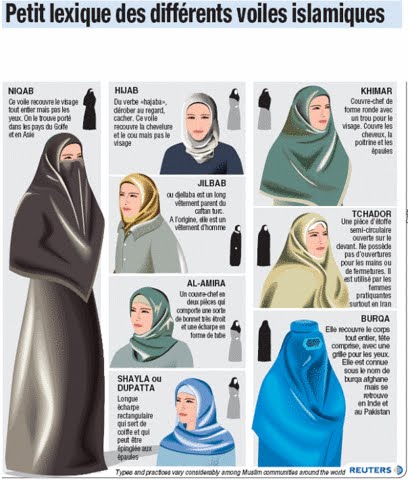
The functions of chastity and hijab in Islam:
Observing the sexual moral standards of Islam has certain functions some of which are named below:
1-Elevating the value of women: Chastity and hijab are ways by a woman preserves her value and status against men. With her innate intelligence and special feeling towards herself, she has realized that considering her physical weakness and even her economic weakness, she cannot domain men; therefore, she has used this desire in men to love and demand, as well as her own characteristic, which is being loved, to increase her value against men. She has done this by covering herself and observing chastity and shyness.
The chastity that a woman shows is a way of preserving her value and status against men. In this regard, the more chastity a woman shows, the more dignified she is, and the less she exposes herself to men, the more she will be respected.
2- Increasing the mental health of individuals in a society: When sexual relations are limited to one’s spouse and one’s home, the society will be free from sexual stimulation and this will prevent early adolescence as well as other problems such as sexual harassment and the creation of illegitimate children, who are rejected by the society. As a result, all kinds of mental problems will be prevented and the mental health of both individuals and the society will be improved.
3- The strengthening of the family: According to Islam, if sexual pleasure is limited to one’s legitimate spouse, the relationship among the members of a family will be made stronger and there will be complete sincerity and intimacy between the wife and the husband.
On the other hand, free sexual relationship in a society will lead to the appearance of rivals for both men and women, and as a result, the cases of sex out of wedlock will increase, men and women will have different partners and will seek variety in their relationships. All this will lead to the creation of instability in the family.
4- The efficiency of the society will increase and the society will be free of sexual stimulations: Hijab is a manifestation of chastity and it does not imprison or limit a woman or deprive her of cultural, social and economic activities, rather hijab refers to the covering of the body, except for the hands and the face, which will not by any means prevent women from taking part in social, cultural and economic activities nor does it waste or ruin women’s talents.
This covering of the body except the face and the hands will clean the society of all kinds of sexual stimulations and illegitimate sexual pleasure. In such a society, by preserving their human dignity and character, women will be able to engage in positive and constructive political, economic and social activities. (Motahari, 1353)
5-The flourishing of pure love: Chastity, hijab and covering the body, self-restraint and inaccessibility of a woman are significant factors in creating profound and ardent love.
In societies where sexual relationship between men and women is limited, the possibility of pure and ardent love and as a result, the creation of works of art will appear. However, societies in which sexual relationship between men and women is not limited, such ardent love will not flourish. In such societies, a woman will be viewed solely as a device for creating temporary and instantaneous whims. (Motahari, 1368)
6- The revelation of superior moral and human values: Showing respect for other people’s wives as well as observing their rights, respecting the concept of family, and the existence of zeal and prejudice towards other’s wives, are all considered values which will be revealed if chastity and hijab in women as well as zeal and commitment in men are institutionalized in the society.
On the other hand, through having family, superior human values such as friendship, tranquility, kindness and compassion will grow in a society.
Holy Quran Chapter 'The Romans', Verse 21: And one of His signs is that He created mates for you from yourselves that you may find rest in them, and He put between you love and compassion; most surely there are signs in this for a people who reflect,
Holy Quran Chapter 'The Cow', Verse 187
It is made lawful to you to go into your wives on the night of the fast, they are apparel for you and you are apparel for them,
7- The flourishing of natural and innate talents: Islam rejects ancient sexual morals which are based on celibacy and rejecting the instinctive human need under the pretext of reaching reality. Through celibacy and the rejection of the innate and natural need in humans, moderation and mental health in individuals will disappear and all the innate talents and powers of an individual will be wasted in fighting against this natural and vital need. Islam also rejects the modern sexual standards which are based on free sexual relationship between men and women. Islam only approves of the fulfillment of an individual’s sexual needs in the family and by observing moral values in observing moderation.
Therefore, Islam has determined the special position of everything in its moral standards. Therefore, by encouraging people to observe moderation in the fulfillment of their sexual instinct and the other aspects of human nature, Islam has specified the place of everything in its moral standards. In other words, not considering one’s sexual instinct as an ultimate goal in the lives of individuals and inviting them to other moral values as well as the flourishing of the other aspects of human nature, Islam has provided the means for all human talents to flourish and not just the sexual instinct.
7- A sound relationship among people of the same sex and people of the opposite sex: The sexual moral standards of Islam encourage women to observe chastity and hijab and encourage men toward zeal and commitment to their wives and families. Men and women are advised to get married in order for the creation of healthy relations among people of both the same sex and the opposite sex. Islam also guarantees a sound relationship among people by constantly feeling God’s presence, belief in the afterworld, and observing moral values in both formal and informal relations.
Ways to achieving chastity and hijab and preserving its results: In order to achieve chastity and to preserve the outcomes, Islam has recommended many ways.
1- Encouraging people to get married: Islam has stressed that men and women have to seek sexual pleasure through marriage only. In other words, they either have to get married or accept absolute deprivation. Contrary to western sexual moral standards that view marriage as a transition from freedom to limitation, the sexual moral standards of Islam are based on the transition from limitation to freedom, and such a marriage will result in stability. A person who has had many sex partners cannot commit himself or herself to a single man or woman.
2- Controlling one’s sexual desires: It is possible to control one’s sexual desires through observing chastity and hijab. Chastity and hijab create a healthy society in which social activities in all aspects can be carried out safely. Thus, chastity and hijab are among the best of human characteristics. Because marriage does not eliminate a person’s desire towards others, controlling one’s sexual desires is essential under all circumstances. Marriage is necessary but not enough, especially, if women enter the society in a stimulating manner and attire.
That is why associations between men and women have certain conditions in Islam and these conditions are solely aimed at preventing all kinds of provocations. Men and women must not stimulate each other’s sexual desires. Regarding this, in verse 31 of The Light God Almighty says, And say to the believing women that they cast down their looks and guard their private parts and do not display their ornaments except what appears thereof, and let them wear their head coverings over their bosoms, and do not display their ornaments except to their husbands, or their fathers, or the fathers of their husbands, or their sons, or the sons of their husbands or their brothers, or their brothers’ sons, or their sisters’ sons, or their women, or those whom their right hands possess, or the male servants not having need of women, or the children who have not attained knowledge of what is hidden of women, and let them not strike their feet so that what they hide of their ornaments may be known, and turn to Allah all of you, O believers! So that you may be successful,
3- Determining punishments for immoral deeds which do not involve chastity: In Islam, adultery is forbidden for both men and women and if they commit adultery, both will be punished. If they are single, they will be flogged a 100 times as God Almighty has said in the Light, verse 2, As for the fornicatress and the fornicator, flog each of them,(giving) a hundred stripes, and let not pity for them detain you in the matter of obedience to Allah, if you believe in Allah and last day, and let a party of believers witness their chastisement,
and if they are married, apart from being flogged a hundred times, they must also be stoned. However, Islam wants adultery not to be proved easily and to prevent accusations against chaste women. Islam has asked for four just witnesses who have seen adultery take place with their own eyes. In other words, if we have three just witnesses who have seen adultery take place with their own eyes, they are not allowed to mention it, because they will not be able to prove it. If they do mention it, they will be flogged 80 times as well as certain social deprivations, for instance, their evidence will not be admitted for good and they will be considered lewd for the rest of their lives. In The Light, Verse 4, God Almighty says, And those who accuse free women then do not bring four witnesses, flog them, (giving) eighty stripes, and do not admit any evidence from them ever, and these it is that are the transgressors,
In the opinion of Islam, if 1000 adulteries are committed and kept a secret, it is better than accusing a chaste woman of adultery. (Motahari, 1369)
Conclusion: One of the problems today is underestimating the principles of chastity, hijab and sexual restraint and moving towards facilitating and underestimating sexual relations and giving it a commercial aspect.
This will lead to the creation of numerous problems in the society and family such as divorce, an increase in the number of single parents, an increase in sexual diseases, especially, aids, an increase in mental diseases, the eliminations of a woman’s dignity, an increase in the number of illegitimate children who are not accepted by the society, the popularity of pornography, the elimination of moral values, expensive sexual relations for both individuals and the society and the lack of desire to get married.
To avoid such dire consequences, it is necessary to institutionalize moral values such as chastity, hijab, sexual restraint and self-control in the new generation as well as providing the means for timely and suitable marriage for them. If the age of marriage goes up, sexual stimulations in the society and media, inability in young men and women to exercise restraint will weaken self-control. That is why, the Holy Prophet of Islam (SAW.) has stressed marriage as a means of observing moral values and has said, “Marriage is my custom, so whoever avoids my custom, is not related to me.” (Majlesi, Bihar-el-Anwar, 1403 after Hejira, p.220.)
He has also said, “Marriage is the best way to avoid being overcome by lust and to observe chastity and human dignity. (Mohades Nouri, 1408 after hejira, p.15)
Islam considers singleness as wicked and believes the worst people are those who can get married but avoid it. (Majlesi, 1403 after hejira, p.221)
Apart from marriage, we must control our sexual desires, clean our souls and carry out the punishments for immoral deeds which destroy a society’s moral security.
Subscribe to:
Posts (Atom)