Showing posts with label Egypt. Show all posts

Monday, July 1, 2013

Intensifying the proxy war in Syria

by Zafar Bangash July, 2013 With the takfiri mercenaries suffering repeated military defeats in recent weeks (they never had any mass support), they and their foreign sponsors have resorted to the most vicious form of sectarian hatred in Syria. With rebel forces on the run in the 27-month long proxy war in Syria, their foreign sponsors have panicked. Led by the US and aided and abetted by Britain, France, Saudi Arabia, Qatar, Jordan and Turkey, the so-called Friends of Syria met in Doha, Qatar on June 22 and pledged more weapons to the rebels. While US Secretary of State John Kerry said they still preferred a political solution to the conflict, their decision to supply more lethal weapons would hardly advance the cause of peace. American officials, however, have always spoken from both sides of their mouth and it is no different in the case of Syria. Only a few weeks earlier, Kerry had urged Russia to convene another conference in Geneva to work out a negotiated settlement to the Syrian conflict. What happens to Geneva-II after Doha? American and British commandos have been training Syrian rebels in Jordan where large stockpiles of weapons are stored for possible use against the Syrian army. Under the guise of conducting military exercises, the real purpose was, and has been for quite some time to train the mercenaries so that they are better able to fight. In recent weeks, the Syrian army has made major gains especially in the strategic town of al-Qusayr with the help of Hizbullah fighters. Located near the Lebanese border, the town has great strategic importance since most of the weapons and mercenaries from Lebanon transited through al-Qusayr. After two weeks of intense fighting, the rebels fled. They had occupied the town for nearly two years destroying it completely. The Syrian army is now closing in on Aleppo to flush the mercenaries from there. The foreign sponsors of the mercenaries see their plans for turning Syria into an imperialist-Zionist outpost unraveling, hence the hurried meeting in Doha.
Nothing demoralizes fighters more than successive defeats. Since they do not enjoy the support of the overwhelming majority of the Syrian people — this was evident from the first day the mayhem was unleashed in March 2011 in a non-descript town like Dar‘a rather than any major city — they are now resorting to more brutal tactics. These are signs of desperation. If people do not join them, their policy is to torture and kill them. Car-bombings, killing leading religious figures like the 84-year-old Shaykh Sa‘id al-Buti in the masjid together with scores of worshippers as well as publicly beheading supporters of President Bashar al-Asad, are standard rebel tactics. They have now turned to cannibalism. By ripping open the body of a dead Syrian soldier and chewing his organs, Abu Sakkar, a well-known rebel commander has shown the rebels’ true face. The video was aired on a rebel website with vows to continue. Such barbarism was witnessed in the Battle of Uhud when Hind, the wife of Abu Sufyan ripped open the body of Hamzah (ra) and chewed his liver in a fit of rage. Muslims then and Muslims now condemn such acts of barbarism and the desecration of dead bodies. Such acts have nothing to do with Islam or its values; this is a return to the days of jahiliyah. This is not the only act of sacrilege perpetrated by the rebels. They slit the throats of children of their opponents and even descecrated the grave of Hujr ibn ‘Adi (ra), a well-known companion of the Prophet (pbuh) who was killed by the Umayyad king, Mu‘awiyah. According to reports, Hujr’s (ra) body was still intact after nearly 1,400 years. He was executed on the orders of Mu‘awiyah because he (Hujr) had objected to the vilification of Imam Ali (a) and Ahl al-Bayt from the minbar. This was a policy instituted by Mu‘awiyah because of his hatred of the family of the noble Messenger (pbuh). Muslims that go berserk and believe it is justifiable to kill fellow Muslims because they criticize some of the Sahabah, have been silent about this sacrilege against the grave and body of a well-known Sahabi. Is it alright to indulge in such behavior if it is perpetrated by people they support? The ongoing mayhem in Syria has exposed a number of players and their true character. First, those leading the so-called Syrian National Council (SNC) have little or no support inside Syria. Most of them reside abroad in five-star hotels or palaces provided by the corrupt Arabian rulers. The regimes supporting rebel fighters who have flooded in from neighboring as well as distant countries, are unrepresentative and tribal dictatorships: Saudi Arabia, Qatar and Jordan. Those calling themselves republican — Turkey, Egypt, etc. — are subservient to the US. The latest addition is President Mohamed Mursi of Egypt. He has disappointed many people both inside Egypt as well as outside by the manner in which he has surrendered to the most oppressive monarchies and to imperialist-Zionist interests. The same goes for Turkish Prime Minister Erdogan. He is already facing a blowback; Mursi will not escape that fate either. While we do not hold any brief for Bashar al-Asad and fully support the right of the Syrian people to have their own representative government, the issue in Syria has gone beyond that. It is an imperialist-Zionist project whose principal aim is to undermine the resistance front against Zionist aggression and occupation, and ultimately push for regime change in Iran. From their affiliations and statements, members of the SNC have exposed themselves as US-Zionist puppets. Those calling for US/NATO intervention should ponder over the plight of Afghanistan, Iraq and especially Libya. Since when has the US or Zionist Israel been friends of the Muslims? What is underway is no longer about the rights of the Syrian people. If the SNC thinks it has mass support in the country, it should participate in next year’s presidential elections and prove it. Destroying Syria to turn it into an imperialist-Zionist outpost will serve the interests of neither the Syrian people, nor of the SNC. Syria is being turned into a hellhole from which only the Israelis will benefit.

Friday, April 12, 2013

Syria… the new Israel?

by Abu Dharr April, 2013 The war on Syria is in reality a battle for survival by the House of Saud that has poured billions into the conflict. Ultimately, however, the Saudis will fail, resulting in their demise. With all the doom and gloom scenarios being painted about Syria, this writer is cautiously optimistic. The Syrian quagmire may not come to a conclusive end tomorrow or the day after, but when it does finally wind down, it will be on terms favorable to Islamic self-determination. That, as far as facts on the ground are concerned, appears almost certain. Two years ago, in the wake of the people’s movements in North Africa, the Syrian people joined the requiem. Some of them sincerely wanted and demanded a representative government and others (the more influential with Euro-American linkages) wanted to grab state power in pursuit of pre-planned (outside) agendas. The Syrian government, hitherto known for its shrewd survivalist calculations and moves, nervously reacted by dispatching its military to put down what the Syrian government reckoned were juvenile events in the southern city of Dar‘a and then firecracker bursts in Homs and its surrounding areas. Obviously, the security-inebriated Ba‘thi officials in Damascus did not read the pulse of their own people correctly. They fell into the trap that was laid for them by those who studied and researched Syria and sectarianism well. And the Syrian security-obsessed personnel continue to be deluded by their military “advantage,” which is reducing Syria to rubble. What began as a low-level protest movement two years ago has escalated into a full-fledged civil war with around 80,000 killed, one million refugees leaving Syria, a couple of million at least who are internally displaced, and historical cities turned into ghost towns. What caused a more-or-less peaceful civic movement in the south and north of the country to spiral out of control and turn into guerrilla warfare and a war-by-proxy? The unspoken answer to that is Saudi Arabia. As much as this is a Syrian civil war, this is also a Saudi Arabian war of destiny. Saudi Arabia — as much as the mainstream media want to conceal this fact — is the main intruder into internal Syrian affairs. Billions of “Saudi” dollars have been set aside for financing mercenaries and guns-for-hire who are tasked with decapitating the Syrian regime. Other billions of “Saudi” dollars are allocated for satellite TV stations, the print media, and everything else between ink and airwaves to propagandize for the Syrian “opposition.” The Saudi regime brings to the Syrian civil war its backups, representatives, and proxies. Saudi intrusion into Syria comes with such outfits as Jund al-Sham and Jabhat al-Nusrah, with al-Qaeda types, and with the Persian Gulf nephews and nieces of Saudi Arabia such as Qatar, the United Arab Emirates, Kuwait, et al. A document leaked a few months ago shows a Saudi interior ministry letterhead with a proposal to release over 2,000 death-row detainees in Saudi Arabia (Egyptians, Yemenis, Lebanese, Iraqis, etc.) who would go to Syria and fight alongside the Saudi sponsored militant units. The enticement was not only to have their death sentences commuted, but also the Saudi government would pay a lifelong monthly subsidy to support their families! The question here is: why is Saudi Arabia going all the way to ensure that the Syrian regime does not pull through this civil war? The answer is so obvious that many observers cannot see it! The fact is that the Islamic Republic of Iran has succeeded in welding together policies and politics that the Saudi officials miscalculate and consider to be threatening. While the Saudis were sleeping on their laurels, their neighbors in Iran were out in the field doing their homework and building their infrastructure. Saudi Arabian rulers-by-whim-and-instinct woke up after 30 years of an anti-Iranian American sponsored strategy to the reality of an “Iranian regional power.” The Islamic Republic of Iran has made it very clear to the Saudi royals that they seek friendly and neighborly relations with the Kingdom. This message has been communicated through numerous channels. Still, the Saudi ruling clan was terrified to realize that its clout was diminishing in the Palestinian arena, in the Arabian domain, and in the Islamic sphere — areas where hitherto criticizing Saudi Arabia was taboo. The American handlers of these late-sleeping Saudis convinced the paranoid ruling class in Riyadh and Jeddah that Iran is a “threat.” And easily convinced they were. So they signed on to a strategy that would pump into the Euro-American military banking complex mountains of cash. To sweeten the pot, Syria was turned into the killing fields that prove to public opinion the canard that Islamic Iran is the real danger — a danger, by admission of many Saudi sponsored politicians and pulpiteers that, in their own words, surpasses Israel and Zionism. We all know the mainstream media myth about Saudi Arabia being the custodians of the two holy places of Makkah and Madinah. If Saudi Arabia is the custodian of any two things, they are imperialism and Zionism. For the record, there are two Saudi islands that are occupied by the Israeli Zionists. No one dare mention this because that would add Saudi Arabia to Lebanon, Syria, Jordan, and Egypt whose territories are occupied by the Israeli Zionist regime. Israel occupies Saudi territories while the Saudis occupy some Islamic movements. The silence of some Islamic movements about Saudi Arabia is as deafening as the silence of the Saudis about Israeli occupation of their own lands. The Islamic level of awareness is growing and the Saudi rulers are feeling the heat. Therefore, to them, the Syrian crisis is a make-or-break issue. If they have it their way (the American-Israeli way), they will have snatched victory from the only serious and studious contemporary strategy to liberate Palestine. One example of the Saudi opposition to enlightenment and the spread of knowledge comes from the prominent Saudi in-religious-apparel Sheikh, ‘Abd al-Rahman al-Barrak. He said that elections are haram (forbidden), they are alien to the Muslims, and they amount to mimicking the kafirs! This is how his logic goes: elections are a means of equating scholars with illiterates, and men with women; and (according to him) this equality is contrary to intellect and al-shar‘ (divine law)! For the record, this Saudi “scholar” also has his own twitter account. So he tweets saying: Adopting an electoral system to decide who will become president or who will become a member of any decision-making body is a haram (prohibited) matter. This (election) crept upon the Muslims via the kafirs! He tells us that assigning such decision-making positions is the function of ahl al-halli wa-al-‘aqd (legislators) and people in power!! But how do these legislators and people in power get to their positions, this scholar does not tell us! He says that this is not up to normal people to decide. This is the same scholar who issued a fatwa saying that the Ka‘bah should be demolished and then rebuilt in a way that makes it impossible for men and women to be in close proximity (or the intermixing of the sexes as he would word it) during the Hajj. If Saudi America flaunts scholars like this who issue fatwas to destroy the Ka‘bah and rebuild it lest the pilgrims there be subjected to their obsession with sex, then it would follow quite naturally that the same Saudi America would have that class of clergymen issue fatwas to destroy a whole country like Syria and rebuild it to fit within their futuristic dreams for perverted sex, voluptuous women, and filthy wealth. The Saudi regime is as errant as the Syrian regime. The Syrian regime misunderstood and miscalculated the temperament of its own people. The Saudi regime misunderstood and miscalculated the temperament of the Muslims at large. Their propaganda has bought them some time. But time is not on their side. They are playing on the victimhood of the Syrian people much like the Syrian regime was playing on the steadfastness of the Syrian people. At this point in time when the fuse has already been lit it is too late to tell the Syrian people, “Stop! Can’t you see what has happened to you? You have been hijacked by imposters. You have no representative government and you have no representative opposition.” To all Muslims of conscience and honor, not duped by Saudi mischief and money, listen in, And a Day on which a dhalim [offender] will bite his hands [in despair], exclaiming, “O, would that I had stayed the course with the Apostle [of Allah]! O, Woe unto me! Would that I had not taken so-and-so as an intimate ally! Indeed, he [in this context, the Saudi-Syrian false dichotomy] led me astray from the consciousness [of Allah] after it had come to me!” For [thus it is]: Satan is ever a betrayer of man (25:27–29). Pull quote: As much as this is a Syrian civil war, this is also a Saudi Arabian war of destiny… Billions of “Saudi” dollars have been set aside for financing mercenaries and guns-for-hire who are tasked with decapitating the Syrian regime.

Saturday, November 17, 2012

Mursi attempts independent foreign policy for Egypt

by Ayman Ahmed October, 2012 President Mohamed Mursi’s attempt to follow an independent foreign policy for Egypt does not sit well with the Americans who want only subservient rulers in the Muslim world. A course correction seems to be underway in relations between Egypt and the US. Arguably the most important country in the Muslim East, Egyptian President Muhammad Mursi is trying to chalk out an independent foreign policy moving out of the shadow of US and Zionist domination. Only time will tell whether this will succeed but recent developments point toward a determined bid by the new president to restore some semblance of dignity to the long-suffering and humiliated people of Egypt. Dr. Mursi’s quest started with visiting China and Iran in August even before going to the US. It did not sit well in Washington that had expected the new Egyptian president to show greater subservience to the Americans who believe that as financiers of Egypt’s economy for decades, they deserve more gratitude. If this was not enough to irk the US, Dr. Mursi proposed a Syria Contact Group at the Makkah summit of the Organization of Islamic Cooperation (August 15–16) that pointedly excluded the US and its Western allies. To the horror of the Americans, the Contact Group is not only limited to regional countries but also includes Iran that the US and allies have been trying to isolate for decades without much success, as was witnessed at the Non-Aligned Movement summit in Tehran in August. Aware that Egypt is in need of financial help at this critical juncture because of 18 months of turmoil that scared away tourists and halted much business activity, Washington has been trying to woo the new Egyptian government. Its foreign exchange reserves have dropped to $15 billion, about half what they were before the uprising began early last year. On September 9, a high level delegation of American businessmen accompanied State Department and White House officials to meet Prime Minister Hisham Qandil in Cairo. At the meeting, American business leaders promised to invest in Egypt’s economy. This was meant to keep Egypt tied to American purse strings. The visit had followed other developments. One was the declaration by US President Barack Obama that he would consider waiving $1 billion of Egypt’s $3 billion debt. The Egyptians of course were asking for the entire amount to be written off. Further, the US said it would support Egypt’s bid to acquire a $4.8 billion loan from the International Monetary Fund. Discussions were underway between Egyptian and American officials about debt relief when these were abruptly suspended by the US on September 18. The massive demonstrations that erupted in Cairo in the aftermath of the blasphemous US-made anti-Islam movie seem to have irked the Americans. On September 11, demonstrators in Cairo scaled the walls of the US embassy and pulled down the US flag amid chants of “Death to America.” While no American official was harmed, the persistent nature of the demonstrations that quickly spread to Libya where US ambassador Chris Stevens and three other Americans were killed in Benghazi on the night of September 11–12, appeared to have really upset US officials. Embassy staff members were evacuated from Cairo amid fears for their safety. A day after the protests erupted and then spread to most parts of the Muslim world, Obama told the Spanish language Telemundo TV (an affiliate of the American station NBC), “Egypt was not an ally of the US.” He said it was not an enemy either but the statement was clearly meant to send a message to Egypt that the US expected greater subservience from the Egyptians who had been receiving handouts for decades. The Americans felt President Mursi had not done enough to condemn the violent protests. His condemnation of the blasphemous video as well as the violence during an official visit to Brussels on September 13 was considered by the Americans as too little, too late. It seems the Americans are using Egypt’s financial difficulties as a way to exert pressure and force Egypt to toe the US line. Whether Dr. Mursi will be forced to surrender to the US, only time will tell, but there are other signifcant developments. For instance, Qatar announced in August that it will invest $18 billion in Egypt over a decade. This was followed by an announcement from Saudi Arabia that it would provide a $4 billion loan. Turkey has also announced a $2 billion loan and said Turkish Airlines will increase flights to Cairo. A delegation of Kuwaiti government and business leaders were also in Cairo to consider investment opportunities. The real test for President Mursi will be whether he can resist American pressure and blackmailing tactics. He will be able to overcome these problems if he shows true leadership and mobilizes the people to sacrifice material comforts in return for dignity and honour. These demand a price but only those that have the support of the people will be able to bear it, as has been shown by Islamic Iran for more than 33 years. The challenges facing Egypt cannot be minimized. With a population of some 85 million and massive unemployment, people need food not platitudes. This is where true leadership stands apart from mere politicians that cater to the whims of the people. Egypt has immense potential. It has a highly educated population and historically Egypt has played a leading role in the Muslim world. It was only in the last 30 years that it accepted subservience to imperialism and Zionism and thus lost its prestigious position to upstarts like Saudi Arabia and more recently Qatar. Even Syria claimed one up on Egypt because the former refused to surrender to US-Zionist machinations until it had secured its rights over the Golan Heights. Egypt, on the other hand, surrendered the Sinai Peninsula that remains demilitarized to this day for a fistful of dollars. Help from the US never comes without strings attached. Often, the price demanded is very high. For instance, Egypt has been forced to abandon the Palestinian people because of the Camp David Accords, which turned Egypt into a virtual colony of the US. Further, the US has cultivated close links with the Egyptian military thereby undermining civilian authority. This will be one of the most important challenges facing the new Egyptian government. If Dr. Mursi is really serious about moving out of the deathly embrace of Uncle Sam, he must develop closer links with Islamic Iran and learn from its experience. He will have to confront the demons of sectarianism that are not far away. In Egypt, the Saudi-backed extremists will try to make life difficult for him. How he navigates his way around these hurdles will determine his level of success. Dignity and honour, however, are priceless commodities; no price is too high to pay for them but to achieve them requires true commitment. “Honour and dignity belong to Allah and His Messenger and those truly committed to Allah…” (63:08).

Wednesday, February 1, 2012

Iran: The Price of Resistance

By Chandra Muzaffar

28 January, 2012


European Union foreign ministers have agreed to a full-fledged embargo on all imports of Iranian crude oil. Towards this end, various measures will be adopted gradually from 23 rd January to 1 st July 2012 . In December 2011, the US Congress (with a 100 to 0 vote in the Senate) presented a mandatory sanctions package to President Obama which starting June 2012 will prohibit any third-country banks and companies from dealing with Iran's Central Bank. Both the EU and US moves, it is alleged, are aimed at pressurising Iran to stop its so-called ‘nuclear weapons' programme through the emasculation of its oil exports which account for more than 80% of its national revenue.

Nuclear Weapons Programme

The first question we should ask is: Does Iran have a nuclear weapons programme? The International Atomic Energy Agency (IAEA) --- its mischievous attempt to raise doubts about Iran 's nuclear energy programme notwithstanding--- admits in its November 2011 Report that there is no evidence of a nuclear weapons programme. Incidentally, every nuclear installation in Iran has been inspected hundreds of times by the IAEA making them the most thoroughly inspected nuclear facilities on earth! Even the US 's own classified National Intelligence Estimate (NIE) 2011--- which the well-known investigative journalist, Seymour Hersh, had exposed in May 2011--- states quite clearly that Iran is not producing nuclear weapons and had in fact halted such a programme way back in 2003. NIE 2011 in a sense reiterates what is contained in NIE 2007.

Of course, Iran continues to enrich uranium up to the 20% level required for the production of medical isotopes. This is far below the 85% plus necessary to manufacture a nuclear bomb. Every major leader in Iran has emphasised over and over again that they have no intention of making a bomb. They regard it --- rightly--- as haram (or prohibited in Islam).

Because its nuclear programme is for peaceful purposes--- medical research and electricity---- the Iranian government agreed to a nuclear fuel swap deal initiated by Brazil and Turkey in May 2010 which would have seen Iran shipping low-enriched uranium to Turkey in return for fuel for a research reactor. The Western powers and Israel rejected the deal.

Their rejection underscores the stark hypocrisy that surrounds the entire issue of Iran 's nuclear programme. If it is nuclear weapons that they are concerned about why didn't they accept a deal that would have, to a large extent, curbed any clandestine move by Iran to produce such weapons? Or, are certain Western powers and Israel against Iran producing nuclear energy even for peaceful purposes --- a right that Iran possesses as a signatory to the Non-Proliferation Treaty (NPT)?

It is important to raise these questions for two other reasons. One, the countries that are most vocal in demanding that Iran terminate its uranium enrichment programme are all nuclear weapon states. The US has an arsenal of more than 5000 nuclear warheads while Israel, an undeclared nuclear state---- the only nuclear weapon state in West Asia and North Africa (WANA)--- has perhaps between 200 and 400 warheads. Two, countries such as the US, Britain, France and even Israel had no qualms about assisting Iran to launch its nuclear programme in the fifties when it was under the Shah, Reza Pahlavi. US President, Dwight Eisenhower, saw it as an “atoms for peace” enterprise. One does not have to second guess why they were all so enthusiastic about the Shah's nuclear energy programme---- because the dictator was their gendarme in that corner of WANA, protecting their strategic, political and oil interests with all his brutal might.

Why did the West and Israel change their attitude towards Iran 's nuclear programme? Was it because an Islamic Revolution had occurred in Iran in 1979? Was Islam the decisive factor? Islam per se was not the major reason for the change in attitude. After all, the West counts as its allies a number of countries that view themselves as ‘Islamic States' and subscribe to a somewhat narrow, exclusive idea of Islam and Muslim identity. Saudi Arabia , Qatar and most of the Gulf Sheikhdoms would be outstanding examples. Colluding and collaborating with these states and other Islamic movements has never been a problem for the centres of power in the West.

Independence

The real reason why the Islamic Republic of Iran and its nuclear programme became anathema for the West and Israel was because of Iran 's defence of its independence and integrity in the face of US and Western hegemony. The Islamic Republic under the guidance of its charismatic leader Ayatollah Khomeini was not prepared to submit to US dominance or acquiesce with Israeli arrogance. From the outset --- from 1979 itself--- Iran was determined to manage its own destiny which is why it nationalised oil and strengthened its self-reliance.

In an earlier period--- in 1953 to be exact--- another Iranian leader, this time a highly principled secular democrat, Mohammad Mosaddegh, had also sought to assert Iranian independence and sovereignty by nationalising oil. This incurred the wrath of the British and American elites whose companies dominated the local oil industry. With the help of their intelligence services, they managed to oust Mosaddegh from his Prime Ministership and restore full authority to the Shah.

Others in WANA, at different times and in different circumstances, have also paid the price for resisting dominance.Gamal Nasser in Egypt, HouriBoumediene in Algeria, Hafiz Assad in Syria, Yasser Arafat in Palestine (and other Palestinian freedom fighters), Saddam Hussein in Iraq, and Muammar Gaddafi in Libya, had all at some point or other in their lives refused to yield to hegemonic power. Today, there are leaders like Hassan Nasrallah in Lebanon , Khalil Meshal in Palestine , and Bashar Assad in Syria who continue to resist Israeli power and US hegemony and are therefore targeted by Tel Aviv and Washington.

It is appropriate to observe at this juncture that resistance to US hegemony has had a longer and perhaps more tragic history in parts of Latin America . From Simon Bolivar and Jose Marti to Salvador Allende, Fidel Castro, Hugo Chavez,Evo Morales, and Rafael Correa these and other illustrious leaders have unflinchingly opposed attempts by the US elite to subjugate the people of Latin America and subordinate the continent to the whims and fancies of its northern neighbour. Indeed, today there is a new determination in Latin America to strengthen the independence of individual states and of the region as a whole through cooperation and collective action that is both innovative and dynamic.

There is no doubt at all that it is Iran 's refusal to be subservient to the US , Israel and their allies, its readiness to resist, that has incensed the powers-that-be. It explains why they are going all out to emasculate the Iranian economy, manufacture mass disaffection with the government and, at the right moment, engineer a regime change. The excuse they are using for this manipulation is of course Iran 's unproven nuclear weapons programme. In the scenario that is unfolding before our eyes, there are shades of the build-up that led to the invasion of Iraq and the overthrow of Saddam Hussein 2003.

Targeting Iran

While Iran's desire to remain independent has been a prominent feature of the nation's personality since the Revolution 33 years ago, there must be situations and circumstances that are more current and contemporarywhich have given rise tothisobsession in Tel Aviv and in certain Western capitals with the targeting and taming of Iran.What are these situations and circumstances? There are many. We shall highlight some of them.

1. In the wake of the Arab uprising, the Israeli elite has become extremely apprehensive about the state's security and its future. It is afraid that popular movements sweeping through WANA would eventually challenge the legitimacy of the Israeli regime. Though Israel's protector, the US, has sought assurances from some of the Islamic parties that have come to power that they will not question the Israeli presence, the Israeli elite regards the increasing influence of states and movements in WANA that are firmly opposed to Israeli suppression of Palestinian rights--- the most powerful of which is of course Iran--- as a huge threat to Israel's very existence. This is why it wants its protector, buttressed by its European allies, to castrate Iran immediately.

2. This fear has increased dramatically in recent months with the economic decline of its protector and the economic crisis embroiling various European states. Israel knows that the US 's decline is part of a general decline which in a sense is irreversible and would therefore want its protector to act decisively against Israel 's foes like Iran now when the US still has the military muscle rather than wait until it is too late. For the US elite itself, the most serious implication of its decline is its loss of control over WANA, the world's major oil exporting region which is, at the same time, of tremendous geostrategic significance. When hegemonic powers are losing their dominance, do they not become more bellicose in attempting to perpetuate their power and privilege? Should we be surprised when they turn against other actors on the ascendancy who are perceived as the cause of their decline?

3. For both the US and Israeli elites and European leaders allied to them, it is Iran which is the lynchpin of the challenge to their hegemony over WANA. Iran maintains a tried and tested link to the Syrian leadership and to the Hezbollah in Lebanon . Hamas is also to a certain degree part of this link which in broad terms constitutes the resistance to US-Israel hegemony. As the fulcrum of this resistance, Iran has displayed remarkable tenacity--- a tenacity which is now expressing itself in its ability to take on US drones and US spies and to openly challenge US military power. Similarly, the Syrian crisis, orchestrated to a large extent by external forces, has revealed the resilience of the Bashar Assad government. Likewise, in defending Lebanon against the Israeli assault in 2006, the Hezbollah showed that it possesses both strategic depth and immense courage which in the end thwarted the Israeli agenda. Both Israel and the US are determined to not only break the link of resistance but also to crush each of the component elements of the link.

4. What has strengthened their determination to act against Iran in particular is the situation in Iraq . The Israeli and US elites had hoped that the conquest of Iraq would help to create a new environment in WANA which would reinforce their grip over oil and strengthen their geostrategic position in the region through a subservient leadership in Baghdad eager to do their bidding. Given Iraq 's importance, the Baghdad leadership, they reckoned, would succeed in shaping an atmosphere in the region conducive to Israel even if it were at the cost of Palestinian self-determination. However, things have not worked according to plan. WhileUS and British companies have managed to secure lucrative oil deals, Israeli and US elites have failed to gain political control over Iraq . A nation that is politically unstable, socially chaotic and deeply divided along sectarian lines, there is endless jockeying for power among contending groups. In the midst of this maelstrom, most of the groups within the majority Shia community seem to have gravitated towards Shia Iran . Shia affinity has undoubtedly smoothened the forging of political ties across the Iraq-Iran border. Recent political developments in Iraq indicate that the influence that emanates from these ties is considerable. It is this that annoys and angers the Israeli, US and British elites. Their political defeat in Iraq which is a major setback for them in WANA and beyond is one of the primary reasons why they are now training their guns on Iran .

5. Iran 's influence over Iraq has also riled some regional actors. The monarchical elite in Saudi Arabia , with its Wahabi orientation, often manifests an almost visceral hatred towards the Shia sect. Some Saudi leaders regard it as their duty to defend the Sunni majority against the rising Shia tide. They are not alone in perceiving growing Shia influence and power --- in Iraq , in Syria through the Alawite elite, in Lebanon via Hezbollah, and in Bahrain--- as a mortal threat to the Sunnis. The Qatari leadership and even some Turkish politicians and intellectuals have begun to ring the alarm bells. The latter, it is said, are backing some hard-line Sunnis in Iraq . These anti-Shia sentiments which are spreading quite rapidly in WANA have heightened the antagonism towards Iran . They have strengthened the hand of the US and Israel and their European allies as they prepare to move against the Iranian Republic .

6. For the US curbing Iran 's influence goes beyond WANA. Iran has become close to Russia in the last couple of years. The relationship is strategic and economic especially since they have overlapping interests in Central Asia and the Caspian region. Russia itself is re-asserting its power in Eastern Europe , Central Asia , West Asia and South Asia , much to the chagrin of the US . That is why it is uneasy about a Russian-Iranian nexus developing in the future.

7. Of even greater significance to the US 's hegemonic agenda is the relationship between Iran and China . Largely economic in nature, China imports 9% of its oil and 15% of its gas from Iran . China has massive investments in the oil and gas industry in Iran , and is helping to upgrade its infrastructure in general. Since access to energy is critical for China 's development, the US which is determined to contain China , is keen on exercising control over China 's sources of energy supply. What this means is that curtailing Iran 's oil and gas exports may in fact be part of a larger agenda whose principal goal is the containment of China , the nation that the US and the West view as the most formidable challenge ever to their centuries old dominance.

8. Iran 's expanding ties with various Latin American countries also irks the US . Countries such as Cuba , Venezuela , Nicaragua , Ecuador , Bolivia and Brazil , among others have become good friends of Iran in recent years. Most of these states are opposed to US dominance over Latin America . A couple of them have become very critical of Israeli occupation of Palestine . Since Venezuela and Ecuador are also major oil exporters, the US is worried that the ties that Iran , also an important oil exporter, is forging with them could enhance their collective clout in the global economy to the detriment of the US . This is yet another reason why the US sees Iran as a challenge to its hegemonic power.

9. It is not just because of Iran 's ties with oil exporting states in Latin America or its export of oil to China that oil is also a factor that explains the targeting of Iran . As one of the top five oil exporters in the world, Iran is an attractive destination for a lot of oil companies especially from the US --- a country which has been excluded from Iran 's petroleum sector for more than three decades. According to petroleum experts there are oil and gas fields that have yet to be explored fully. There is also money to be made from infrastructure investments. US and other Western oil firms are hungering to go in--- just as they moved into Iraq after the invasion in 2003.

10. A final factor that is responsible for this fixation with Iran is perhaps the position of the US dollar. The dollar, needless to say, is one of the most crucial pillars of US global hegemony. This is the reason why any attempt to redefine its role as the world's principal reserve currency elicits an immediate response from US financial and political circles. In the last few years Iran has been steadily distancing itself from the US dollar in its trade transactions. At the end of December 2011, it signed an agreement with China that states that the Iranian rial and the Chinese yuan would be used in bilateral trade. In early January 2012, Iran made a similar arrangement with Russia , the rial and the rouble replacing the US dollar. Iran and India are holding discussions on moving out of dollar settlements. Trading in gold is an option they are considering. These moves by Iran have assumed great significance because others, including US allies, are abandoning the dollar in some of their bilateral trade arrangements. Japan and China , for instance, have announced that they will trade in yen and yuan.Because Iran is perceived as one of those nations pushing hard for the abandonment of the dollar, the US has her in its sights. It has been suggested that one of the reasons why the US decided to invade Iraq in 2003 was because Saddam Hussein had switched from the dollar to the euro for the sale of his country's oil.

Suffering; Mistakes

The ten points elaborated here prove that the US and its allies have zero tolerance for any challenge, however minor, to US hegemonic power or to the position of Israel . Those who resist their power and position will pay the price. In the last 30 odd years, Iran has paid the price of resistance in hundreds of ways. Less than a year after the Islamic Revolution, a war was imposed upon Iran --- a war led by the Iraqi dictator, Saddam Hussein, on behalf of all the Gulf Sheikhdoms, a number of other Arab states, the US, Britain, certain other Western governments, and even the Soviet Union. Though Iran 's adversaries had different motives, their common objective was to crush the Revolution which they saw as a challenge to their interests. A million lives were lost on both sides of the divide in the eight year war which emasculated the Iranian economy and sapped the nation's energy. In June 1981, a vicious bombexplosion wiped out some top political leaders, a huge number of parliamentarians, and leading figures in the Judiciary. This, and other subsequent terrorist attacks, it is alleged,were master-minded by a militant group operating from Iraq called the Mujahideen-e-Khalq. In recent years the Islamic Republic's nuclear programme has been subjected to a cyber- attack and four of its scientists have been assassinated. And for decades, Iran has been under US economic sanctions which have had a negative impact upon its development programme.

Indeed, very few countries have been subjected to the pain and suffering that Iran has gone through in the last 33 years. The perseverance and fortitude of the Iranian people, as we have alluded to, is awe-inspiring. And yet, an objective analysis of Iran 's response to hegemony would suggest that Iranian leaders and activists have also made serious mistakes. From the perspective of international law and diplomacy, it was clearly wrong of Iranian students to seize the US Embassy in Tehran on 4 November 1979 and hold its occupants hostage for 444 days. Storming the British Embassy in the nation's capital on 29 November 2011 was also a foolish act for which Iran 's Minister of Foreign Affairs has apologised. Likewise, allegations of foul-play in the June 2009Presidential Election could have been better handled. The Iranian authorities should have countered those allegations by demonstrating their commitment to total electoral transparency and accountability. The language that the current Iranian President, Mahmoud Ahmadinejad, sometimes employs on matters of grave international significance is intemperate and injudicious. However difficult the situation maybe, there is no need to deliberately provoke or irritate one's enemies. As a case in point, though Ahmadinejad's oft-quoted remarks about Israel were distorted and twisted by the Western media and politicians, the Iranian President could have adopted a more mature yet principled stance vis-à-vis the Jewish state.

Hegemonic Agenda

Ahmadinejad's predecessor, Muhammad Khatami, proved that it was possible to defend Iran 's independence and dignity without being unduly confrontational. He sought to meet the challenge of hegemony by insisting upon dialogue among civilisations and the politics of inclusiveness. Khatami was prepared to talk to the US leadership. But instead of welcoming the offer of dialogue, US President, George Bush Junior, chose to castigate Iran as part of an “axis of evil.”

The demonization of Iran proves yet again that regardless of whether the target adopts a confrontational or conciliatory approach, the hegemon will continue to pursue its agenda. It is an agenda that has a power and potency of its own. In the context of WANA, Israel , it is so apparent, is the driving force behind US hegemonic power.

Making people everywhere aware of this and what its consequences are is one of the most urgent tasks at hand. This task is perhaps a little less difficult today compared to the past for two reasons. One, as we have stated a number of times before, US helmed hegemonic power is declining. People are becoming much more critical of US's global role now. Two, the citizens of WANA in particular are acutely conscious of what hegemonic intervention can lead to after witnessing the chaos and catastrophe that have befallen Iraq and Afghanistan . They are also beginning to sense--- after the initial euphoria---- that Libya may also be heading towards calamity. Foreign intervention they know is not the solution. It is the problem.

Immediate Measures

While mass consciousness building about the danger of hegemony as the ultimate repudiation of human dignity will take time, we could propose some immediate measures thatshould be taken to avert military strikes against Iran and to prevent a war in WANA. The BRICS (Brazil, Russia, India, China and South Africa) grouping could through the UN Security Council suggest a new nuclear deal which would allow Iran limited uranium enrichment under strict supervision within a larger treaty signed by all the states in WANA and other leading powers that pledges to create a nuclear weapon free zone in the region within a certain time-frame. The manufacture, storage, saleand distribution of other weapons of mass destruction should also be prohibited. As the formulation of such a treaty begins in earnest, all sanctions against Iran should also be lifted. There are other challenges notably the Israeli occupation of Arab lands, the establishment of an independent, sovereign Palestinian state and the status of Israel , which should also be resolved at the same time.

Is there still time to persuade the powers-that-be to consider proposals like this? Or is it already too late in the day? Is the hegemon--- or is Israel--- about to strike?

Dr. Chandra Muzaffar is President of the International Movement for a Just World (JUST) and Professor of lobal Studies at UniversitiSains Malaysia .

Malaysia .

27 January 2012

Tuesday, January 3, 2012

The failures of democracy in the West offer hope for Islamic movements everywhere

Iqbal Siddiqui, Perspectives


Every four years the world watches the political soap opera of the US presidential elections with a combination of amusement, bemusement and incredulity as the world’s most powerful nation, and the supposed flag-bearer of democracy, lays open its true nature. Although the polls are not due for over a year, the formal process began months ago, with Barrack Obama having announced the start of his re-election campaign in April. The contest among potential Republican candidates is in its early stages, but already the world is laughing at the ignorance and ineptitude of some of the candidates, particularly Rick Perry and Herman Cain, who have been guilty of many more appalling gaffes than have been seen around the world. At the same time, there is a pervading sense of fear that such a candidate could actually make it to the White House, considering that George W. Bush was actually elected twice and Obama is unlikely to be allowed to be re-elected. For many, the state of American politics has long been convincing evidence for the case against democracy. The problem is that this evidence is hardly new and yet little seems to have changed, in either the US or the rest of the world.


However, a number of recent factors appear to offer more concrete prospects of Muslims finally growing out of the easy myths of democracy. One is the economic crisis of Western capitalism and the various responses to it. In the US and other western countries — long the beneficiaries of the injustices of world capitalism, even though many people in all countries were individually victims of it — the growth of the anti-capitalist sentiment partially represented by the Occupy Wall Street and other similar movements is a sign that the impact of the economic crisis on the lives of ordinary people is having a political impact. The fact that at least some of the protestors are expressing anger not only at the exploitative and profiteering policies of the capitalist elites, but also at the political classes that kow-tow to them, may well have consequences for the nature of politics in many of these countries. Some of these consequences can be foreseen, such as the efforts of the political leaders to provide populist distractions such as spectre of a threat from Iran. Others will no doubt take us all by surprise. Nonetheless, it is inevitable that some of the gloss of democratic politics will be tarnished in the process, although predicting the end of democracy would be grossly premature.


In some European countries, meanwhile, the consequences of the economic crisis on the standing of democracy and democratic politics is taking a far more direct form. In Italy, the democratically-elected government has been replaced by a government consisting entirely of technocrats — professional “experts” with no political background or electoral backing. The problem is that the expertise of these technocrats is all rooted in the same capitalist assumptions and policies that have created the present crises. The IMF and other similar international institutions have a long record of imposing strict economic policies on developing countries in spite of the interests and desires of their people. One of the justifications for this was that it was such capitalist policies that made possible the benefits of democracy and the economic strength of western countries. Few expected ever to see developed European countries seeing their democratically-elected governments replaced by unelected technocrats determined to impose hardline policies dictated by capitalist elites. In Greece, the government was pressured to accept similar prescriptions by the leaders of Europe, with considerable evidence suggesting that the Greek military was preparing to take power under a coup if civilian politicians failed to accept the necessity of such measures, a prospect that was taken very seriously indeed considering that it is less that 40 years since the overthrow of the US-backed, right-wing military dictatorship and the establishment of democratic government. There are genuine fears that similarly drastic measures may have to be taken in countries such as Spain, Portugal and even France if economic conditions in those countries fail to improve.


Such developments in western countries are bound to have an impact on people’s perceptions of the myths on which democratic polities depend, not least the idea that regular elections ensure that governments are primarily answerable to the ordinary people rather than any other interest groups.


And this is bound also to have a knock-on impact on developments in other parts of the world, for example the Arab world, currently is the midst of the so-called “Arab Spring”. This political upheaval represented in this easy catch-all phrase is taking very different forms in different countries, from the supposed democratization in Tunisia, resulting in the victory of the En-nahda Islamic movement in elections in October, to the civil war encouraged by the West in Libya, to the attempts of the political elite in Egypt to manage the process of change to ensure that their interests are not affected. All, however, have two things in common: firstly, that the powers of the West are desperately trying to manipulate events to their own purposes; and secondly, all are being presented as popular movements in support of pro-Western democratic movements, which aim to establish governments whose only ambition is to be part of the Western sphere of influence.


Current developments in Egypt suggest that ordinary people in these countries are less than happy with this prospect. As Egyptians struggle to achieve real freedom, rather than the model offered by the West, the fact that democracy is facing new challenges even in the countries that have hitherto been its supposed shining models, can only make it easier for a counter-democratic discourse to emerge, offering a genuine Islamic alternative as a model for the entire Muslim world. Of course, the problems within the West are not sufficient; numerous other factors will also be essential, not least the vision and leadership offered by Islamic leaders in Egypt and elsewhere. Nonetheless, the fact that the model of democracy is suddenly looking a lot less stable and appealing than it previously appeared can only be a step in the right direction. As so often before, political realities on the ground may be providing concrete and convincing evidence of truths that the words of intellectuals and leaders have long failed to convey.

Sunday, November 6, 2011

Imam Khamenei's Message to Hajj Pilgrims 2011


The spiritual spring of hajj has arrived with its freshness, purity and God-given grandeur and majesty, gathering again the faithful and eager hearts like butterflies encircling the Ka'bah of Divine Unity and Islamic solidarity.

In the name of Allah, the All-beneficent, the All-merciful


All praise belongs to Allah, the Lord of the worlds, and may blessings and greetings be to the Master of creatures, Muhammad al-Mustafa, and his immaculate Family and his Companions.

The spiritual spring of hajj has arrived with its freshness, purity and God-given grandeur and majesty, gathering again the faithful and eager hearts like butterflies encircling the Ka'bah of Divine Unity and Islamic solidarity.

Camped at Mecca and Mina, Arafat and Mash'ar are the fortunate human beings who, having responded to the call of "proclaim the Hajj to all the people", are being honored with the hospitality of the munificent Lord. Here is the blessed House and the source of guidance from which the manifest signs of divinity radiated, and here is where a canopy of safety is set up.

Wash your hearts in the water of piety, humility and God's remembrance. Open the inner eye to the lights of the Divine signs. Embrace the spirit of submission and dedication, which are the hallmarks of the true servant-hood. Keep on refreshing in your hearts, the memory of that patriarch, who, in willing compliance, led his Ishmael to the scene of sacrifice, thus showing us the real path of attaining the friendship of the Glorious Lord, and the manner of traversing it with a resolve infused with faith, and an intent imbued with sincerity.

The station of Abraham is one among these manifest signs. The footprint of Abraham, Peace Be upon Him, by the side of the Holy Ka'bah, is only a symbol of the station of Abraham. The station of Abraham is his station of dedication and self-sacrifice, his fortitude and resistance to personal desires, and fatherly feelings, as well as against the domination of unfaithfulness, polytheism, and Nimrod, the tyrant of the time.

Today these two paths of deliverance lie open before each of us individuals belonging to the Muslim Ummah. Determination, courage and firmness of resolve on part each one of us, can advance us towards the same goals to which mankind has been invited by the Divine envoys, from Adam to Muhammad, with the promise of dignity and felicity in the world and the Hereafter, for those who take this path.

It will be worthy of the Hajj pilgrims at this great assembly of the Islamic Ummah to address the most important issues of the Islamic world. The uprisings and revolutions in some Islamic countries are at the head of these issues. The events that have taken place in the Islamic world in the interval between the previous and the present Hajj pilgrimages can change the destiny of the Islamic Ummah; these events speak of a bright future accompanied with dignity and progress, both material and spiritual. Dictators and 'corrupt' regimes, allied with foreign powers, have been overthrown in Egypt, Tunisia and Libya, and the stormy waves of popular uprisings in some other countries threaten to bring down the castles of wealth and power.

This new chapter in the history of our Ummah reveals certain truths, which are all manifest signs of divinity, and give us vital lessons. These truths should be taken into account by Muslim nations in all their calculations.

First, a young generation has emerged from the heart of these nations, after decades of political subjugation to foreign powers; with its admirable self-confidence, it is ready to face dangers, confront dominant powers, and is determined to change the status-quo.

Second, despite the authority and efforts of secular rulers and their overt and covert measures to curtail the influence of religion in these countries, Islam, with its conspicuous and impressive presence, has become the guiding principle of popular expression and sentiment. Like a fountainhead, it has given vitality and freshness to the rallies and activities of the millions. The mosques and minarets, Islamic slogans and calls of Allahu Akbar, are all clear indications of this fact, and the recent Tunisian elections provide clear evidence for this claim. Without doubt, free elections in any Islamic country will result in nothing but what happened in Tunisia.

Moreover, as revealed for all by this year's events, God Almighty has placed such a force in the resolve and determination of nations, that no power whatsoever, can withstand it. With this God-given power, nations can change their destiny and taste God's help.

During the last decades, arrogant powers, led by the United States, had reduced regional states to a state of subjugation through their political and security ploys. They thought they had opened an obstacle-free highway for their rising economic, cultural and political domination over this sensitive part of the world. But now, they are the primary target of disgust and hatred of the region's nations. To be certain, the governments and powers emerging from these revolutions, will never submit to the disgraceful inequalities of the past; the political geography of the region will be drawn by these nations, which will hopefully result in their dignity and complete independence.

The crafty nature of the hypocritical Western powers has become all too clear for the people of these countries. The US and Europe made their utmost efforts to retain their pawns in Egypt, Tunisia and Libya, each of them in a particular way. But when they were forced to give in to the resolve of the nations, they cast a wily and cunning smile at the triumphant public.

There are further precious facts and manifest Divine signs embedded in the regional events of the past year, which are not hard to discern for reflective minds.

Nevertheless, the entire Islamic Ummah and especially the revolutionary nations stand in need of two basic elements:

First, the continuity of their stance and avoidance of slackness in their resolve. In the Holy Qur'an, God almighty addresses Prophet Muhammad (Peace Be upon Him). He says: "Be steadfast, just as you have been commanded, [you] and whoever has turned [to God] with you; and do not overstep the bounds (11:112)" and elsewhere He tells the Prophet: "Be steadfast, just as you have been commanded (42:15)." Prophet Moses, Peace Be upon Him, is quoted as telling his people: "Turn to God for help and be patient. The earth indeed belongs to God, and He gives its inheritance to whomever He wishes of His servants, and the outcome will be in favor of the God-fearing. (7:128)"

At the present, the most significant aspect of God-fearing for these rising nations is not to stop in their auspicious movement, and not to be complacent. This is the most important part of being pious; whoever is pious, is rewarded with a "favorable outcome."

Second, vigilance against the plots and gimmicks of arrogant international powers, who have suffered a setback from these uprisings and revolutions. They will not stand idle. They will reenter the arena with all their political, financial and security ploys to reestablish their influence in these countries. Their policies are the carrot and stick, and deceit. Experience has shown there are some among the elite who are susceptible to these gimmicks. Fear, greed or negligence prompt them to serve the enemy. The vigilant eyes of the youth, intellectuals and religious scholars, should be watchful.

The biggest danger that threatens unfaithful and arrogant powers is the intervention and influence of the new political systems in these countries, they will do their utmost to see that these new systems do not take on an Islamic and democratic identity. All concerned people in these countries and all those who cherish their homeland's honor, dignity and progress, should work hard to ensure the establishment of a complete and perfect Islamic and democratic character. In this regard, the role of the constitutions will be prominent.
National unity and official recognition of sectarian, tribal and ethic differences, are a precondition of future success.

The brave revolutionary nations of Egypt, Tunisia and Libya, as well as other nations, should know that the only way they can free themselves from the oppression and guile of the United States and other Western powers is the establishment of a balanced global power conducive to their interests. Muslims should take themselves to a level that is equal to where world powers currently stand in order to solve their differences and problems with these world powers. This cannot be achieved except with the cooperation, understanding and solidarity of Islamic countries. This was an unforgettable advice of the great Imam Khomeini.

For months on, the United States and NATO dropped bombs on Libyan people, making Gaddafi, a vicious dictator, an excuse. Gaddafi was someone who was considered their close friend prior to the uprising of the Libyan people. They used to coddle him, steal the wealth of Libya through his hands, and press or kiss his hand in order to dupe him. Following the people's uprising they made him an excuse to destroy the entire infrastructure of Libya. Which state could stop the tragic massacre of the Libyan people and destruction of the country at the hands of NATO? Until the claws and fangs of the bloodthirsty and barbaric Western powers are not broken such dangers will remain conceivable for Islamic countries. Their safety from such dangers is not possible except by transforming the Islamic world into a powerful pole.

Today, the West, the United States and Zionism are weaker than ever before. Economic troubles, successive failures in Afghanistan and Iraq, deep-running public outrage in America and other Western countries, with its daily widening scope, the struggles and sacrifices of the people of Palestine and Lebanon, the daring popular uprisings in Yemen, Bahrain and some other countries under the influence of the US - all these are a good omen for the Islamic Ummah especially for revolutionary nations. Faithful men and women throughout the Islamic world particularly in Egypt, Tunisia and Libya, should make the most of this opportunity for the formation of an international Islamic power-block. The vanguard and the elite of the uprisings should place their trust in Almighty God, and with reliance on his promise of help adorn the new chapter in the history of the Islamic Ummah, with their lasting achievements; thus, earning God's approval and fulfilling the prerequisites of His help.

May Peace Be upon God's righteous servants!

Seyyed Ali Hossaini Khamenei

29 Dhul Qa'adah, 1432
5 Aban, 1390
27 October, 2011

Wednesday, May 18, 2011

Saudis resort to crude sectarianism to create divisions in the Ummah


Abu Dharr

Sectarianism has been a time tested tool in the hands of illegitimate rulers since the Islamic institution of khilafah was subverted into mulukiyah nearly 1,400 years ago. Today, the illegitimate rulers of Bahrain, Qatar, Kuwait, the United Arab Emirates and Saudi Arabia are using this weapon to divert attention away from their oppressive policies and subservience to the West and to Zionist Israel.

Pictured are (left ro right): Kuwait's Crown Prince Nawaf Al Ahmad Al Sabah; the Emir of Qatar, Hamad bin Khalifa Al Thani; a representative of Sultan Qaboos of Oman, Fahad bin Mahmoud Al Saeed; Kuwait's Emir Sabah Al Ahmed Al Jaber Al Sabah; Saudi Arabia's King Abdullah; Bahrain's King Khalifa bin Salman Al Khalifa, and UAE President and Abu Dhabi Ruler Khalifa bin Zayed Al Nahayyan


Until now, the main culprit was the regime in Saudi Arabia followed by Kuwait. Now tiny Bahrain has also joined these troublemakers because its illegitimate rule is being challenged by the people that have been subjected to brutal suppression for decades. Saudi Arabia has established a fatwa factory from where it habitually issues fatwas of takfir against the Shias. Such fatwas, however, are not hurled only at the Shi‘is. Any Muslim that disagrees with their narrow obscurantist views is immediately branded a kafir or accused of indulging in bid‘ah or other “un-Islamic” practices. The underlying message is that only the Saudis are “true” Muslims.

The Saudis are the leading manufacturers and exporters of takfiri fatwas. The uprising in Bahrain where the people are demanding their legitimate rights like people elsewhere in the Muslim East have been dismissed as “Shi‘i agitators.” The Saudis have gone so far as to accuse Islamic Iran of interfering in Bahrain’s affairs. It is interesting to note that while thousands of Saudi troops and tens of thousands of American sailors are prowling all over Bahrain, the Saudis are crying hoarse about Iran. There are no Iranian troops in Bahrain. Even Western officials — no friends of Iran — have said they have found no evidence of Iranian involvement in or instigation of the people’s uprising yet the Saudis have been using the Gulf Cooperation Council (GCC) as a platform to hurl invectives at Tehran.


Bahrain Protests: More Than 100,000 March Through Capital As Helicopters Circle Overhead
On April 17, the frightened rulers of GCC member states — Saudi Arabia, Kuwait, Qatar, Bahrain, UAE and Oman — met in Riyadh and called on the Islamic Republic to stop its “interference” in the GCC. The meeting was called to discuss the rapidly escalating crisis in Yemen but the foreign ministers found time to make allegations against Iran. Without providing proof and in a desperate Saudi and Emirati bid to camouflage their own occupation of Bahrain to crush the legitimate aspirations of the people there, the GCC called on “the international community and the [UN] Security Council to take the necessary measures to make flagrant Iranian interference and provocations aimed at sowing discord and destruction” among the GCC states.

It said the GCC “categorically rejects all foreign interference in its affairs and invites the Iranian regime to stop its provocations.” Unable to justify their brutal clampdown of peaceful protesters especially in Bahrain where the overwhelming majority of the population is Shi‘i (there is also a sizeable Shi‘i population in Saudi Arabia that is equally suppressed and deprived of basic rights), the Saudis are trying to turn this into a sectarian issue. If people ask for their fundamental rights, how does it become a sectarian problem? The Saudis were also opposed to the removal of Hosni Mubarak from power because they felt it would expose them to pressure from people demanding similar rights in the kingdom. This is true. Was sectarianism also involved in Mubarak’s removal? If not — and it clearly was not — how can they categorize the Bahrainis’ demand for rights and dignity as promoting sectarianism? The Saudis feel quite vulnerable; and they should. Their rule is illegitimate and their policies have caused great damage to the larger interests of the Ummah.

The Saudis and their frightened GCC partners, clinging to each other for support, are not content merely with issuing appeals to the “international community and the Security Council” to save their tottering regimes. They know these appeals will not yield much direct help. Western support, even for friendly regimes has limits. Chastened by their experience in Afghanistan and Iraq, the Americans and their allies are not about to rush into another minefield even if they will increase the volume of their rhetoric against Islamic Iran or whoever the Saudis think is causing them grief. The most that will happen is that the West will not support any uprising in these countries as they have shown in the case of Bahrain.

While that may bring some comfort to these regimes, the Saudis have gone further. They have resorted to their favourite ploy to divide the Ummah along sectarian lines. They have sent their court ‘ulama to visit various countries and mobilize Muslim communities to form councils and organizations in “defence of the Sahabah”.

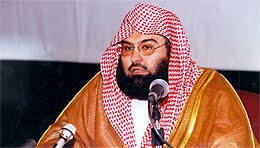
The Imam of Masjid al-Haram, Shaikh Sudais, for instance, was recently in India to rope in the Muslims into the Saudis’ campaign of sowing sectarian discord. Muslims have great attachment to Makkah and Madinah and the imams there are looked upon with respect. Most Muslims also admire their reciting skills but to use these imams for such nefarious activities is not only sad but also dangerous. It is equally disturbing that such imams allow themselves to be used by the corrupt and anti-Islamic rulers of Saudi Arabia.


Let us be clear: there should be no insults of the Sahabah or the Umahat al-Mumineen (the Mothers of the committed Muslims, that is, the wives of the noble Messenger of Allah – r) by anyone. But if the Saudis and their court preachers are really serious about this, we are constrained to ask: why do they not start in the kingdom itself? The Saudis have a strange sense of respecting the Sahabah; they have vandalised most of the historic sites of Islam. In fact, in their inexorable drive to build concrete and glass monstrosities in and around the Haram in Makkah and Madinah, they have obliterated virtually all traces of Islamic history including many monuments associated with the noble Messenger (pbuh) and his Sahabah (companions).

For instance, the house where the noble Messenger (pbuh) spent 25 blissful years of his married life with Khadijah (g), has been turned into a toilet. What kind of respect do these Saudi-Wahhabis show for the Prophet (pbuh) and his beloved wife and family? Even the green dome over the Prophet’s (pbuh) grave in al-Masjid al-Nabawi is not safe from these primitive bedouin vandals from Najd. Plans are afoot to demolish the green dome and remove the Prophet’s (pbuh) body from there. What more proof do Muslims need of the Saudis’ disrespect of the noble Messenger (pbuh) and the vile nature of the Saudi regime?

Why does Shaikh Sudais not raise his voice and lend his prestige to protest real acts of vandalism and desecrations by the House of Saud rather than flying all the way to India to whip up hysteria over a hypothetical issue? Even if the Imam of Masjid al-Haram in Makkah has little sympathy for people struggling for their rights and dignity in the Muslim East — and there is no reason why he should not — what excuse does he have to remain silent about the Saudis’ destructive policies that are obliterating Islamic history and heritage? And why is the Saudi regime not helping the oppressed people of Palestine in the same way that it has joined the crusade against Qaddafi of Libya? Saudi hypocrisy and subservience to the kafirs know no bounds.

It is sad to see such ‘ulama lend their name and prestige — that comes with being imams of such noble sanctuaries — to become tools of the corrupt Saudi monarchy, which is only interested in protecting its own illegitimate rule regardless of the damage it causes to Islam or the honour of the Prophet (pbuh) and his Sahabah. It is also quite revealing that not one imam either in Masjid al-Haram or al-Masjid al-Nabawi has raised his voice about the destruction of masjids by Saudi troops or desecration of copies of the noble Qur’an in Bahrain. Should one conclude that these imams do not know about this or that they are complicit in these crimes?

Either way it is not a good reflection of their character or behaviour. Muslims deserve far better from such ‘ulama than becoming tools in a vicious propaganda campaign against the legitimate aspirations of the people in the Muslim East whether in Bahrain, Yemen or Saudi Arabia. The time for games is over; let the ‘ulama of Saudi Arabia make a clear choice: are they with the Muslim masses struggling for dignity and honour or with the corrupt rulers that are subservient to the forces of kufr, nifaq and zulm?

Thursday, March 3, 2011

Saudis panic amid unrest in the Islamic East


Zafar Bangash, Reflections

Nowhere is there more concern — and panic — about the rapidly escalating protests in North Africa and the Islamic East than inside the marbled, air-conditioned palaces of Saudi Arabia. While the House of Saud faces no imminent threat like despots in Tunisia, Egypt, Libya, Yemen or Bahrain, the fear in Riyadh is genuine. The Saudis know their rule is illegitimate. It was the British that installed them in power by carving out a kingdom from the ruins of the Ottoman Khilafah to serve British colonial interests. Now the Americans are protecting them because the Saudis continue to pump oil to satiate the Americans’ addiction to black gold. But America has lost its clout on the global stage, thanks to its wars of aggression in Afghanistan and Iraq. The US and its Arabian lickspittle can no longer dictate to the world.

The Saudis’ real concern is not only America’s loss of clout; their worry is that Uncle Sam ditched a long-time trusted ally Hosni Mubarak so casually. The Saudis may be cowards but they are not fools. They understand what is afoot. If the Americans can discard Mubarak whose regime was a major bulwark against the rising tide of Islam and loyal ally of the Zionist State of Israel, what chance do the pleasure-loving Saudis have if protests erupt in the kingdom? The Americans might abandon them just as quickly, oil or no oil. Further, the Saudis now feel alone in standing against the emerging power of Islam.

While there is little prospect of a Tunisian, Egyptian or Libyan style uprising in Saudi Arabia — most Saudis are bone lazy — it is the possibility of a palace intrigue that the Saudis worry about. True, a protest is planned for March 11 in Riyadh but it is unrealistic to assume anything significant would come out of it. Saudi society is far too tightly controlled and the religious establishment has been completely compromised to offer an alternative to the corrupt and decrepit monarchy. It is, however, developments elsewhere, especially in Egypt, Yemen and Bahrain that worry the Saudis so much. With Mubarak gone, the Saudis feel dangerously exposed. And to this end, to placate any hint of frustration in the people, the Saudi King on his return from a convalescense holiday in Morocco has offered up over $10 billion to his people in various economic concessions like the government of Algeria and Syria. The ailing and aged King Abdullah (he is 87 and suffering from multiple ailments) feels the Americans have betrayed their Arabian allies.

Uprisings in Yemen and Bahrain also have a direct bearing on Saudi Arabia. The kingdom shares borders with both. With Yemen, it is 1,100 miles long and many Yemenis — including the Bin Ladens — hail from there. Instability in Yemen can easily spill over into the kingdom. This explains the Saudis’ attack on the Houthis last year in one of the Forbidden Months, even if it was badly bungled, and exposed the Saudi military’s incompetence. Bahrain is even more problematic. The tiny Gulf State has a Shi‘i majority ruled by a Sunni minority. Bahrain is linked to the kingdom by a 15-mile causeway that is used by the Saudis not merely to drive across and enjoy Bahrain’s nightlife, but for a more serious purpose: in case of unrest the Saudis would rush in troops to Bahrain to contain it. It is better to fight their battle for survival in the streets of Manama than in Riyadh or Jeddah.

Further, any success by the Bahraini majority may encourage similar protests in the Eastern provinces of Saudi Arabia that have long been suppressed by the Nejdi tribe from Dar‘iyah. This in turn may spread to the rest of the kingdom and undermine the House of Saud.

Far from welcoming the people’s aspirations for dignified existence, the Saudi rulers stand completely exposed as the enemies of Islam and the Islamic movement. Saudi-linked and financed Islamic organizations should take note: the blood of innocent people killed in Tunisia, Egypt, Bahrain, Libya, Morocco and Yemen would be on their hands as well if they fail to sever links with the corrupt Saudi royals.

The Saudis view any challenge to the status quo as a direct threat to their survival. In fact, changes in the region are viewed as a gain for Islamic Iran, and its allies: Syria, Hizbullah and Hamas.

People in the Peninsula must grasp the opportunity offered by the uprisings elsewhere. They must also rise above sectarianism to establish a system based on the pristine principles of Islam. They can either walk in the footsteps of the noble Messenger of Allah (pbuh) or cling to the jahili practices of the likes of Abu Jahl and Abu Lahab. History will render a very harsh judgement if they fail to rise to the occasion. The choice is theirs.


Zafar Bangash is Director of the Institute of Contemporary Islamic Thought