Showing posts with label Turkey. Show all posts
Thursday, July 18, 2013
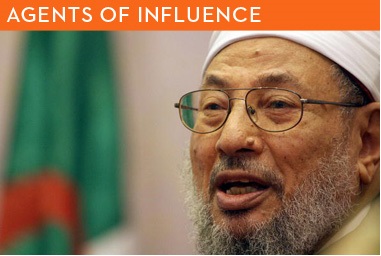
Consequences of Qardhawi seditious stances
Head of the so-called Union of Muslim Ulama in Qatar Sheikh Yusuf Al-Qardhawi has launched a new wave of Iranophobia and Shiaphobia.
While demanding the Sunni youths to be dispatched to Syria to fight on the side of the opposition, Qardhawi claimed that the Iranians intend to kill the Sunnis through pre-planning.
The Egyptian Qardhawi residing in Qatar used an insulting language against the leader of the anti-terrorist Lebanese Hezbollah Sayyed Hassan Nasrallah and called him the devil Hassan and Hezbollah as the party of the Satan.
Meanwhile the Saudi Mufti Sheikh Abdul-Aziz bin Abdullah bin Muhammad Al-Sheikh voiced his support for the unfounded and biased remarks of Qardhawi against Lebanese Hezbollah and the Islamic Republic of Iran.
Living in Qatar for some years, Sheikh Qardhawi has actually turned into a court mullah who has obtained with the support of Aljazeera TV network a status in political circles and the media. The Fatwas of this extremist mullah are aimed at aggravating differences between the Shiites and Sunnis within the framework of the western governments' policy of Iranophobia and Shiaphobia.
Unfortunately Qardhawi has been entrapped by the Zionist regime and western governments to ignite sectarian wars in the Islamic states and strengthen the fake Israeli regime. Saudi Arabia and Qatar are the main supporters of the armed groups in Syria who are seeking to overthrow the government of Bashar Assad.
The armed terrorists are fighting the Syrian army within the framework of the policies of the Zionist regime and its western supporters for eliminate Syria from the forefront of resistance against the Zionist regime.
Sheikh Qardhawi is one of those who legitimize the measures of terrorists in Syria whereas they are actually destroying the country and the Syrian nation under the pretext of freedom-seeking. Representing the western governments, the extremist armed groups have entered Syria and committed many crimes some of which have been revealed by independent media. Following the failure of terrorist groups in Syria, Qardhawi and the biased and hostile scholars like him are seeking to deceive more youths with their illogical Fatwas and send them to Syria to shed more blood.
The Fatwas are in full compliance with the demand of the western states in a manner that Qardhawi has become known as the Sheikh of NATO. He also assured the Zionist regime that the Takfiri groups in Syria pose no threat to the regime.
Leader of the Islamic revolution Ayatollah Sayyed Ali Khamenei in his speech on the day of Mab'ath or the ordainment of Prophet Mohammad (SAWA) emphasized on distancing from discord and the necessity of unity among Muslims.
Addressing the reciters and memorizers participating in the 30th international Qur’an Competitions, the leader stressed that one of the important commands of the holy Qur’an to Muslims is preservation of unity and solidarity and said:
"Any throat or tongue that calls Muslims to unity is a divine throat and any throat that calls on Muslims and Islamic denominations to fight one another is the throat of Satan."
Ayatollah Khamenei added: "One of the Qur’anic commands to Muslims is that they should stick to the rope of Allah all together and avoid disunity. In contrast to this command, there is the colonial teach and method whose aim is to create discord among the Islamic Ummah and intensify sectarian prejudices."
The leader said that certain Muslim governments have been deceived and are playing in the enemy's ground. He reiterated: "Unity among Muslims is an urgent necessity.”
Leader of the Islamic Revolution said that bloodshed, blind terrorism and the resulting tragedies, and creating opportunities for the usurper Zionist regime are among the consequences of discord among the Islamic Ummah. He added: "Today is the day of a great test for Muslims and Islamic governments, and Muslim nations should be completely vigilant."
Ayatollah Khamenei referred to the wave of Islamophobia and stressed: "The Western enemies have unsheathed their swords against Muslims; so the Islamic Ummah should strengthen the factors that contribute to its internal power and capabilities. One of the most important factors in this regard is unity, solidarity and concentration on commonalities."
The seditious statements of Qardhawi have widely echoes among Islamic states. The Friday leader of holy Najjaf Seyyed Sadreddin Qabanchi said that instead of inviting Muslims to unity Qardhawi invites them to sedition and his remarks are unacceptable in Islam.
The United Ulama Council of Greater Syria in a statement declared as null and voids the so-called Fatwa issued by the controversial Qardhawi sanctioning the killing of fellow Muslims. The council added that Qardhawi’s instigation for bloodshed in Syria is far from the principles of religion, Hadith and practice of the holy Prophet of Islam.
The statement declared that the conduct of Qardhawi as the head of the International Muslim Union has questioned the union's credibility.
The Algerian daily Al-Watan severely criticized the stances of Qardhawi and wrote: "Sheikh Qardhawi who has several times released Fatwas on the Arab revolutions has no religious sanctity to us anymore, for; he has impudently abused his religious status in the service of Qatari regime's diplomacy.” The Algerian newspaper seriously criticized Qardhawi for his resort to provocative Fatwas aimed at creating sedition in the Arab states.
Al-Watan added: "The peace birds which Qardhawi was supposed to lay on the ground flew up and instead of them eagles of war landed.” Regarding Qardhawi’s role in the Syrian crisis, the Algerian daily writes:
"The forces of Al-Nusra front who fight the Syrian army always laud the provocative role of Qardhawi.”
The British Daily Telegraph in a report on the biased and seditious remarks of Qardhawi wrote: "By inviting the Sunnis for war against the Alavis and Shiites in Syria, Qardhawi showed that he is seeking to intensify religious tensions all over the Middle East.”
These are just part of reactions to the seditious remarks of the Egyptian Sheikh who considers permissible the killing of women and children for being Alavi. But are these hostile Fatwas compatible to the Islamic teachings?
Which part of the holy Qur’an and the holy Prophet’s practice and behavior says that if a group does not think like us they should be killed? In his entire life the holy Prophet respected the life of those who lived under Muslim conquest but did not embrace Islam as long as they did not resort to arms.
The Islamic ruler was mandated to preserve their life just as the life of Muslims. Which Qur’anic ayahs allow Qardhawi to dub the Alavis as worse than the Jews and Christians and shedding their blood Halal?
What Qardhawi says about Iran and Shiites is unfounded and results from his hostility towards Shiites. Before becoming an anti-Shiite Sheikh he attended the assembly for proximity of Islamic schools and praised the Lebanese Hezbollah and the status of Seyyed Hassan Nasrallah in countering the Zionist regime.
The reality is that differences among Islamic denominations do not cause discord and separation. The Assembly for proximity of Islamic schools was shaped on this idea, for; there are far more commonalities among various religious factions rather than differences. Qardhawi and the Wahabbi mullahs who consider discord among Muslims as their goal are well aware of this point.
Therefore they try to introduce the Shiite ideas improperly to the Islamic communities and by distorting the Shiite books they inculcate the lie that the Shiites have no faith in the holy Qur’an.
Just like the western regimes portray Islam as promoter and spreader of violence, Qardhawi and the Wahabbis try to create a negative picture of the Shiites. With this propaganda, they want with the aid of Saudi and Qatari rulers to distract attentions from the realities in the Islamic world and push forward their objectives.
The objectives that the western governments pursue in the Islamic lands especially in the Middle East are implemented by Qatar and Saudi Arabia and confirmed by Qardhawi.
Monday, July 1, 2013
Intensifying the proxy war in Syria
by Zafar Bangash
July, 2013
With the takfiri mercenaries suffering repeated military defeats in recent weeks (they never had any mass support), they and their foreign sponsors have resorted to the most vicious form of sectarian hatred in Syria.
With rebel forces on the run in the 27-month long proxy war in Syria, their foreign sponsors have panicked. Led by the US and aided and abetted by Britain, France, Saudi Arabia, Qatar, Jordan and Turkey, the so-called Friends of Syria met in Doha, Qatar on June 22 and pledged more weapons to the rebels. While US Secretary of State John Kerry said they still preferred a political solution to the conflict, their decision to supply more lethal weapons would hardly advance the cause of peace. American officials, however, have always spoken from both sides of their mouth and it is no different in the case of Syria. Only a few weeks earlier, Kerry had urged Russia to convene another conference in Geneva to work out a negotiated settlement to the Syrian conflict. What happens to Geneva-II after Doha?
American and British commandos have been training Syrian rebels in Jordan where large stockpiles of weapons are stored for possible use against the Syrian army. Under the guise of conducting military exercises, the real purpose was, and has been for quite some time to train the mercenaries so that they are better able to fight. In recent weeks, the Syrian army has made major gains especially in the strategic town of al-Qusayr with the help of Hizbullah fighters. Located near the Lebanese border, the town has great strategic importance since most of the weapons and mercenaries from Lebanon transited through al-Qusayr. After two weeks of intense fighting, the rebels fled. They had occupied the town for nearly two years destroying it completely. The Syrian army is now closing in on Aleppo to flush the mercenaries from there. The foreign sponsors of the mercenaries see their plans for turning Syria into an imperialist-Zionist outpost unraveling, hence the hurried meeting in Doha.
Nothing demoralizes fighters more than successive defeats. Since they do not enjoy the support of the overwhelming majority of the Syrian people — this was evident from the first day the mayhem was unleashed in March 2011 in a non-descript town like Dar‘a rather than any major city — they are now resorting to more brutal tactics. These are signs of desperation. If people do not join them, their policy is to torture and kill them.
Car-bombings, killing leading religious figures like the 84-year-old Shaykh Sa‘id al-Buti in the masjid together with scores of worshippers as well as publicly beheading supporters of President Bashar al-Asad, are standard rebel tactics. They have now turned to cannibalism. By ripping open the body of a dead Syrian soldier and chewing his organs, Abu Sakkar, a well-known rebel commander has shown the rebels’ true face. The video was aired on a rebel website with vows to continue. Such barbarism was witnessed in the Battle of Uhud when Hind, the wife of Abu Sufyan ripped open the body of Hamzah (ra) and chewed his liver in a fit of rage. Muslims then and Muslims now condemn such acts of barbarism and the desecration of dead bodies. Such acts have nothing to do with Islam or its values; this is a return to the days of jahiliyah.
This is not the only act of sacrilege perpetrated by the rebels. They slit the throats of children of their opponents and even descecrated the grave of Hujr ibn ‘Adi (ra), a well-known companion of the Prophet (pbuh) who was killed by the Umayyad king, Mu‘awiyah. According to reports, Hujr’s (ra) body was still intact after nearly 1,400 years. He was executed on the orders of Mu‘awiyah because he (Hujr) had objected to the vilification of Imam Ali (a) and Ahl al-Bayt from the minbar. This was a policy instituted by Mu‘awiyah because of his hatred of the family of the noble Messenger (pbuh). Muslims that go berserk and believe it is justifiable to kill fellow Muslims because they criticize some of the Sahabah, have been silent about this sacrilege against the grave and body of a well-known Sahabi. Is it alright to indulge in such behavior if it is perpetrated by people they support?
The ongoing mayhem in Syria has exposed a number of players and their true character. First, those leading the so-called Syrian National Council (SNC) have little or no support inside Syria. Most of them reside abroad in five-star hotels or palaces provided by the corrupt Arabian rulers. The regimes supporting rebel fighters who have flooded in from neighboring as well as distant countries, are unrepresentative and tribal dictatorships: Saudi Arabia, Qatar and Jordan. Those calling themselves republican — Turkey, Egypt, etc. — are subservient to the US. The latest addition is President Mohamed Mursi of Egypt. He has disappointed many people both inside Egypt as well as outside by the manner in which he has surrendered to the most oppressive monarchies and to imperialist-Zionist interests. The same goes for Turkish Prime Minister Erdogan. He is already facing a blowback; Mursi will not escape that fate either.
While we do not hold any brief for Bashar al-Asad and fully support the right of the Syrian people to have their own representative government, the issue in Syria has gone beyond that. It is an imperialist-Zionist project whose principal aim is to undermine the resistance front against Zionist aggression and occupation, and ultimately push for regime change in Iran. From their affiliations and statements, members of the SNC have exposed themselves as US-Zionist puppets. Those calling for US/NATO intervention should ponder over the plight of Afghanistan, Iraq and especially Libya. Since when has the US or Zionist Israel been friends of the Muslims?
What is underway is no longer about the rights of the Syrian people. If the SNC thinks it has mass support in the country, it should participate in next year’s presidential elections and prove it. Destroying Syria to turn it into an imperialist-Zionist outpost will serve the interests of neither the Syrian people, nor of the SNC. Syria is being turned into a hellhole from which only the Israelis will benefit.
Friday, April 12, 2013
Syria… the new Israel?
by Abu Dharr
April, 2013
The war on Syria is in reality a battle for survival by the House of Saud that has poured billions into the conflict. Ultimately, however, the Saudis will fail, resulting in their demise.
With all the doom and gloom scenarios being painted about Syria, this writer is cautiously optimistic. The Syrian quagmire may not come to a conclusive end tomorrow or the day after, but when it does finally wind down, it will be on terms favorable to Islamic self-determination. That, as far as facts on the ground are concerned, appears almost certain.
Two years ago, in the wake of the people’s movements in North Africa, the Syrian people joined the requiem. Some of them sincerely wanted and demanded a representative government and others (the more influential with Euro-American linkages) wanted to grab state power in pursuit of pre-planned (outside) agendas. The Syrian government, hitherto known for its shrewd survivalist calculations and moves, nervously reacted by dispatching its military to put down what the Syrian government reckoned were juvenile events in the southern city of Dar‘a and then firecracker bursts in Homs and its surrounding areas.
Obviously, the security-inebriated Ba‘thi officials in Damascus did not read the pulse of their own people correctly. They fell into the trap that was laid for them by those who studied and researched Syria and sectarianism well. And the Syrian security-obsessed personnel continue to be deluded by their military “advantage,” which is reducing Syria to rubble. What began as a low-level protest movement two years ago has escalated into a full-fledged civil war with around 80,000 killed, one million refugees leaving Syria, a couple of million at least who are internally displaced, and historical cities turned into ghost towns.
What caused a more-or-less peaceful civic movement in the south and north of the country to spiral out of control and turn into guerrilla warfare and a war-by-proxy? The unspoken answer to that is Saudi Arabia. As much as this is a Syrian civil war, this is also a Saudi Arabian war of destiny. Saudi Arabia — as much as the mainstream media want to conceal this fact — is the main intruder into internal Syrian affairs. Billions of “Saudi” dollars have been set aside for financing mercenaries and guns-for-hire who are tasked with decapitating the Syrian regime. Other billions of “Saudi” dollars are allocated for satellite TV stations, the print media, and everything else between ink and airwaves to propagandize for the Syrian “opposition.”
The Saudi regime brings to the Syrian civil war its backups, representatives, and proxies. Saudi intrusion into Syria comes with such outfits as Jund al-Sham and Jabhat al-Nusrah, with al-Qaeda types, and with the Persian Gulf nephews and nieces of Saudi Arabia such as Qatar, the United Arab Emirates, Kuwait, et al. A document leaked a few months ago shows a Saudi interior ministry letterhead with a proposal to release over 2,000 death-row detainees in Saudi Arabia (Egyptians, Yemenis, Lebanese, Iraqis, etc.) who would go to Syria and fight alongside the Saudi sponsored militant units. The enticement was not only to have their death sentences commuted, but also the Saudi government would pay a lifelong monthly subsidy to support their families!
The question here is: why is Saudi Arabia going all the way to ensure that the Syrian regime does not pull through this civil war? The answer is so obvious that many observers cannot see it! The fact is that the Islamic Republic of Iran has succeeded in welding together policies and politics that the Saudi officials miscalculate and consider to be threatening. While the Saudis were sleeping on their laurels, their neighbors in Iran were out in the field doing their homework and building their infrastructure. Saudi Arabian rulers-by-whim-and-instinct woke up after 30 years of an anti-Iranian American sponsored strategy to the reality of an “Iranian regional power.”
The Islamic Republic of Iran has made it very clear to the Saudi royals that they seek friendly and neighborly relations with the Kingdom. This message has been communicated through numerous channels. Still, the Saudi ruling clan was terrified to realize that its clout was diminishing in the Palestinian arena, in the Arabian domain, and in the Islamic sphere — areas where hitherto criticizing Saudi Arabia was taboo.
The American handlers of these late-sleeping Saudis convinced the paranoid ruling class in Riyadh and Jeddah that Iran is a “threat.” And easily convinced they were. So they signed on to a strategy that would pump into the Euro-American military banking complex mountains of cash. To sweeten the pot, Syria was turned into the killing fields that prove to public opinion the canard that Islamic Iran is the real danger — a danger, by admission of many Saudi sponsored politicians and pulpiteers that, in their own words, surpasses Israel and Zionism.
We all know the mainstream media myth about Saudi Arabia being the custodians of the two holy places of Makkah and Madinah. If Saudi Arabia is the custodian of any two things, they are imperialism and Zionism. For the record, there are two Saudi islands that are occupied by the Israeli Zionists. No one dare mention this because that would add Saudi Arabia to Lebanon, Syria, Jordan, and Egypt whose territories are occupied by the Israeli Zionist regime.
Israel occupies Saudi territories while the Saudis occupy some Islamic movements. The silence of some Islamic movements about Saudi Arabia is as deafening as the silence of the Saudis about Israeli occupation of their own lands. The Islamic level of awareness is growing and the Saudi rulers are feeling the heat. Therefore, to them, the Syrian crisis is a make-or-break issue. If they have it their way (the American-Israeli way), they will have snatched victory from the only serious and studious contemporary strategy to liberate Palestine.
One example of the Saudi opposition to enlightenment and the spread of knowledge comes from the prominent Saudi in-religious-apparel Sheikh, ‘Abd al-Rahman al-Barrak. He said that elections are haram (forbidden), they are alien to the Muslims, and they amount to mimicking the kafirs! This is how his logic goes: elections are a means of equating scholars with illiterates, and men with women; and (according to him) this equality is contrary to intellect and al-shar‘ (divine law)!
For the record, this Saudi “scholar” also has his own twitter account. So he tweets saying: Adopting an electoral system to decide who will become president or who will become a member of any decision-making body is a haram (prohibited) matter. This (election) crept upon the Muslims via the kafirs! He tells us that assigning such decision-making positions is the function of ahl al-halli wa-al-‘aqd (legislators) and people in power!! But how do these legislators and people in power get to their positions, this scholar does not tell us! He says that this is not up to normal people to decide.
This is the same scholar who issued a fatwa saying that the Ka‘bah should be demolished and then rebuilt in a way that makes it impossible for men and women to be in close proximity (or the intermixing of the sexes as he would word it) during the Hajj.
If Saudi America flaunts scholars like this who issue fatwas to destroy the Ka‘bah and rebuild it lest the pilgrims there be subjected to their obsession with sex, then it would follow quite naturally that the same Saudi America would have that class of clergymen issue fatwas to destroy a whole country like Syria and rebuild it to fit within their futuristic dreams for perverted sex, voluptuous women, and filthy wealth.
The Saudi regime is as errant as the Syrian regime. The Syrian regime misunderstood and miscalculated the temperament of its own people. The Saudi regime misunderstood and miscalculated the temperament of the Muslims at large. Their propaganda has bought them some time. But time is not on their side. They are playing on the victimhood of the Syrian people much like the Syrian regime was playing on the steadfastness of the Syrian people.
At this point in time when the fuse has already been lit it is too late to tell the Syrian people, “Stop! Can’t you see what has happened to you? You have been hijacked by imposters. You have no representative government and you have no representative opposition.”
To all Muslims of conscience and honor, not duped by Saudi mischief and money, listen in,
And a Day on which a dhalim [offender] will bite his hands [in despair], exclaiming, “O, would that I had stayed the course with the Apostle [of Allah]! O, Woe unto me! Would that I had not taken so-and-so as an intimate ally! Indeed, he [in this context, the Saudi-Syrian false dichotomy] led me astray from the consciousness [of Allah] after it had come to me!” For [thus it is]: Satan is ever a betrayer of man (25:27–29).
Pull quote:
As much as this is a Syrian civil war, this is also a Saudi Arabian war of destiny… Billions of “Saudi” dollars have been set aside for financing mercenaries and guns-for-hire who are tasked with decapitating the Syrian regime.
Labels:
Aale saud,
al qaida,
Dr.Mohamed Mursi of Egypt,
Egypt,
ikhwan al-Muslimoon,
Qatar,
Syria,
terrorists,
Turkey,
Zionists
Tuesday, January 10, 2012
External powers destabilizing al-Asad regime in Syria
By Tahir Mustafa
Haytham Manna‘, not a lightweight in Syrian opposition circles, has taken a principled position, despite losing relatives in the current situation, to be skeptical of any opposition member that gets its marching orders and weapons from Washington, Paris, Istanbul, or Riyadh (through its Arab League surrogates).
It is now well established that foreign powers are deeply involved in destabilizing the regime of Bashar al-Asad in Syria. Such interference is not confined merely to anti-regime propaganda, although it plays a significant role by presenting misleading reports about civilian casualties to stoke anti-regime sentiment. The tribal-owned network, al-Jazeera, is in the forefront of such propaganda reinforcing the belief that it is working according to a US-Zionist-Saudi script that was agreed upon in Paris as early as February 2011. Recent reports that US forces have been sighted near the Jordanian-Syrian border give credence to the regime’s assertions that it is facing armed attacks from gangs as well as foreign mercenaries. Creation of the Syrian Free Army (SFA) is part of the same plot to provide cover to US-Israeli attacks inside Syria while claiming that defected soldiers are carrying out such attacks. Their number remains relatively small.
Where the foreign powers, including Turkey, miscalculated was in assuming that the Asad regime, like those in Tunisia and Egypt, would collapse quickly. They also made the mistake of assuming that once uprisings are staged in one part of the country — north near the Jordanian border because of easier smuggling of weapons — they would quickly spread to other areas including the capital Damascus. This has not happened. Not only has the regime been able to withstand the pressure, no uprisings have occurred in the two most important cities: Damascus and Aleppo. In fact, massive rallies have been staged in support of the regime that both al-Jazeera and the Washington Post presented as being anti-regime. Such reporting can hardly enhance their credibility.
Haytham Manna‘, chairman of the Arab Human Rights Commission, admitted in an interview with Mandiaal Nieuws (December 9) that people in Damascus and Aleppo are waiting on the sidelines because they are not clear about who or what would follow if Bashar al-Asad were ousted from power. Manna‘’s concern springs from the deep divisions that exist within the ranks of the opposition. The Syrian National Council (SNC) claims to represent all opposition groups and to speak on behalf of all the Syrian people but it has little support inside Syria. Led by Burhan Ghalioun, a Paris-based university professor, its members are mainly Syrian intellectuals in exile. The SNC was cobbled together in Istanbul at the beginning of October. The group held its first congress in Gammarth, north of Tunis, on December 16–18 to agree on a clearer strategy but little came out of the meeting despite its symbolic importance; it coincided with the first anniversary of the Tunisian uprising.
“We need to unite the opposition and make it stronger,” Ghalioun told the AFP news agency. This was a clear admission that the opposition is disunited. It did not help the SNC when a day earlier (December 15) another group of Syrians meeting in Istanbul, announced the formation of the National Alliance. Turkey is beginning to assume the role of headquarters of all Syrian opposition groups. “We need to emerge from this congress with a higher level of organization, clearer targets and more momentum,” Ghalioun said. These appear to have eluded the congress because despite claiming to have agreed to co-ordinate with the Free Syrian Army, the rebels — comprising a tiny minority — are pursuing their own agenda. It is this free for all that has frustrated the emergence of a coherent opposition strategy or how to pursue it. As Manna‘ pointed out, who will replace Asad? The opposition has no clue and this is what makes most Syrians reluctant to join them.
While Syrian opposition groups go through the motions of holding “grand” congresses, “extraordinary” meetings and other high sounding get-togethers, their net result is marginal. This explains why they are so dependent on outside help. The SNC in particular has called for UN intervention although it has stopped short of asking for armed intervention as in Libya, aware of the consequences that would follow. Besides, foreign, mainly Western powers know that Syria is no pushover, unlike Qaddafi’s Libya. The Syrian army and establishment have remained largely intact. There have been no defections of prominent members of the Syrian ruling elite. Defections from the army are small despite the Western media giving them great prominence and presenting them as large.
Perhaps realizing that Asad’s departure was not imminent, the Arab League tried to change its stance. After issuing threats to the Syrian regime to comply with its demands, it has now adopted a more conciliatory approach. The Arab League has never achieved anything in its entire tortuous existence. It is a conglomerate of potentates and tyrants that do not allow any freedom to their own people so how can they expect Asad to comply with their demands. On December 19, Syria signed an agreement with the Arab League to allow foreign observers into the country. Syrian Foreign Minister Walid Muallam said the League had accepted a number of demands put forward by Damascus that included prohibition on visits to military bases or installations. In return, Syria agreed to an immediate end to firing on protesters and allowing League observers to oversee implementation of the agreement.
While opposition groups within Syria are willing to accept the agreement that would end the violence and usher in political reforms even if Asad remained in power, those residing outside are adamant that Asad must go. It is such divisions that have led many Syrians to conclude that opposition groups are incapable of offering them a better alternative to the present set-up. They are also unhappy with foreign-based groups whom they accuse of working at the behest of their foreign sponsors that have no interest in seeing a stable and peaceful Syria. In fact, they feel external powers have their own agenda to engulf Syria in turmoil.
Given that a meeting of Syrian opposition figures had taken place in Paris last February at which plans were agreed to launch an uprising against the Asad regime, gives credence to people’s skepticism. Those present at the Paris meeting included Syria’s former vice president, Abdul Halim Khaddam; Saudi security advisor, Bandar bin Sultan; US Assistant Secretary of State Jeffrey Feltman; US ambassador to Israel, Dan Shapiro; and chairman of the Arab Human Rights Commission, Haytham Manna‘. The line-up of participants is revealing. It was not a meeting of Syrian opposition groups per se but such troublemakers as the US, Israel and Saudi Arabia. Even representatives of the Hariri clan from Lebanon were present.
At the Paris meeting the Saudis and the Americans pushed for smuggling weapons into Syria from Jordan to launch the uprising. Manna‘ was opposed to the idea and so concerned about its consequences that he immediately sent word to the tribal elders in Deraa, his home town, asking them not to allow any weapons to be smuggled in or used in the uprising. Manna‘ rightly feared that it would result in another Hama-type massacre as happened in 1982 and end in similar failure. Manna‘ is no softy. He belongs to a family with a long history of opposition to the regime. His father has spent many years in jail; his brother was killed in the uprising last August but he can see clearly what others are refusing to see. He does not want Syria to emerge with an even worse situation than it currently has.
While the Deraa elders accepted Manna‘’s advice, this did not prevent others from resorting to armed attacks. There have been numerous instances of masked gunmen appearing suddenly and firing indiscriminately at protesters before disappearing. They have also attacked police and other security personnel. While the BBC World Service never tires of reminding its readers about UN estimates of 5,000 people killed in nine months, it fails to mention that these include at least 1,100 security personnel. This is a very large number of police and soldiers to die at the hands of “peaceful” protesters. Further, the figure of 5,000 dead is quite arbitrary. This is based on claims made by opposition spokesmen without providing proof. True, one cannot belittle the number of civilian deaths, it must also be borne in mind that there are external players that want to destabilize Syria as part of the larger plan to undermine the resistance front against Zionist Israel. Manna‘ describes this as “negative intervention,” saying it “destroys but does not create.”
The concern that Syrian opposition figures abroad are working to the US-Israeli game plan is not unfounded. After all, for the US, survival and protection of Zionist Israel takes precedence over all other considerations. If the Asad regime were destroyed, it would deal a severe blow to the resistance front and both the Palestinians and Hizbullah would be exposed to grave danger. Some Syrians argue that their interests cannot be sacrificed for the sake of the Palestinians or Hizbullah. They must explain why they deserve any support or sympathy if they are willing to act as stooges of the US-Zionist duopoly financed by the Saudis?
Manna‘ has been quite clear about why he opposes the Syrian National Council. “I don’t know where it will take us…” He also fears foreign military intervention in Syria and wants change to come about from within. “We want the revolution to be an authentic realization of the people,” and he does not want to see the blood of the people “to be traded or sold — not in Washington, and not in any Arab capital whatsoever.”
Haytham Manna‘, not a lightweight in Syrian opposition circles, has taken a principled position, despite losing relatives in the current situation, to be skeptical of any opposition member that gets its marching orders and weapons from Washington, Paris, Istanbul, or Riyadh (through its Arab League surrogates).
It is now well established that foreign powers are deeply involved in destabilizing the regime of Bashar al-Asad in Syria. Such interference is not confined merely to anti-regime propaganda, although it plays a significant role by presenting misleading reports about civilian casualties to stoke anti-regime sentiment. The tribal-owned network, al-Jazeera, is in the forefront of such propaganda reinforcing the belief that it is working according to a US-Zionist-Saudi script that was agreed upon in Paris as early as February 2011. Recent reports that US forces have been sighted near the Jordanian-Syrian border give credence to the regime’s assertions that it is facing armed attacks from gangs as well as foreign mercenaries. Creation of the Syrian Free Army (SFA) is part of the same plot to provide cover to US-Israeli attacks inside Syria while claiming that defected soldiers are carrying out such attacks. Their number remains relatively small.
Where the foreign powers, including Turkey, miscalculated was in assuming that the Asad regime, like those in Tunisia and Egypt, would collapse quickly. They also made the mistake of assuming that once uprisings are staged in one part of the country — north near the Jordanian border because of easier smuggling of weapons — they would quickly spread to other areas including the capital Damascus. This has not happened. Not only has the regime been able to withstand the pressure, no uprisings have occurred in the two most important cities: Damascus and Aleppo. In fact, massive rallies have been staged in support of the regime that both al-Jazeera and the Washington Post presented as being anti-regime. Such reporting can hardly enhance their credibility.
Haytham Manna‘, chairman of the Arab Human Rights Commission, admitted in an interview with Mandiaal Nieuws (December 9) that people in Damascus and Aleppo are waiting on the sidelines because they are not clear about who or what would follow if Bashar al-Asad were ousted from power. Manna‘’s concern springs from the deep divisions that exist within the ranks of the opposition. The Syrian National Council (SNC) claims to represent all opposition groups and to speak on behalf of all the Syrian people but it has little support inside Syria. Led by Burhan Ghalioun, a Paris-based university professor, its members are mainly Syrian intellectuals in exile. The SNC was cobbled together in Istanbul at the beginning of October. The group held its first congress in Gammarth, north of Tunis, on December 16–18 to agree on a clearer strategy but little came out of the meeting despite its symbolic importance; it coincided with the first anniversary of the Tunisian uprising.
“We need to unite the opposition and make it stronger,” Ghalioun told the AFP news agency. This was a clear admission that the opposition is disunited. It did not help the SNC when a day earlier (December 15) another group of Syrians meeting in Istanbul, announced the formation of the National Alliance. Turkey is beginning to assume the role of headquarters of all Syrian opposition groups. “We need to emerge from this congress with a higher level of organization, clearer targets and more momentum,” Ghalioun said. These appear to have eluded the congress because despite claiming to have agreed to co-ordinate with the Free Syrian Army, the rebels — comprising a tiny minority — are pursuing their own agenda. It is this free for all that has frustrated the emergence of a coherent opposition strategy or how to pursue it. As Manna‘ pointed out, who will replace Asad? The opposition has no clue and this is what makes most Syrians reluctant to join them.
While Syrian opposition groups go through the motions of holding “grand” congresses, “extraordinary” meetings and other high sounding get-togethers, their net result is marginal. This explains why they are so dependent on outside help. The SNC in particular has called for UN intervention although it has stopped short of asking for armed intervention as in Libya, aware of the consequences that would follow. Besides, foreign, mainly Western powers know that Syria is no pushover, unlike Qaddafi’s Libya. The Syrian army and establishment have remained largely intact. There have been no defections of prominent members of the Syrian ruling elite. Defections from the army are small despite the Western media giving them great prominence and presenting them as large.
Perhaps realizing that Asad’s departure was not imminent, the Arab League tried to change its stance. After issuing threats to the Syrian regime to comply with its demands, it has now adopted a more conciliatory approach. The Arab League has never achieved anything in its entire tortuous existence. It is a conglomerate of potentates and tyrants that do not allow any freedom to their own people so how can they expect Asad to comply with their demands. On December 19, Syria signed an agreement with the Arab League to allow foreign observers into the country. Syrian Foreign Minister Walid Muallam said the League had accepted a number of demands put forward by Damascus that included prohibition on visits to military bases or installations. In return, Syria agreed to an immediate end to firing on protesters and allowing League observers to oversee implementation of the agreement.
While opposition groups within Syria are willing to accept the agreement that would end the violence and usher in political reforms even if Asad remained in power, those residing outside are adamant that Asad must go. It is such divisions that have led many Syrians to conclude that opposition groups are incapable of offering them a better alternative to the present set-up. They are also unhappy with foreign-based groups whom they accuse of working at the behest of their foreign sponsors that have no interest in seeing a stable and peaceful Syria. In fact, they feel external powers have their own agenda to engulf Syria in turmoil.
Given that a meeting of Syrian opposition figures had taken place in Paris last February at which plans were agreed to launch an uprising against the Asad regime, gives credence to people’s skepticism. Those present at the Paris meeting included Syria’s former vice president, Abdul Halim Khaddam; Saudi security advisor, Bandar bin Sultan; US Assistant Secretary of State Jeffrey Feltman; US ambassador to Israel, Dan Shapiro; and chairman of the Arab Human Rights Commission, Haytham Manna‘. The line-up of participants is revealing. It was not a meeting of Syrian opposition groups per se but such troublemakers as the US, Israel and Saudi Arabia. Even representatives of the Hariri clan from Lebanon were present.
At the Paris meeting the Saudis and the Americans pushed for smuggling weapons into Syria from Jordan to launch the uprising. Manna‘ was opposed to the idea and so concerned about its consequences that he immediately sent word to the tribal elders in Deraa, his home town, asking them not to allow any weapons to be smuggled in or used in the uprising. Manna‘ rightly feared that it would result in another Hama-type massacre as happened in 1982 and end in similar failure. Manna‘ is no softy. He belongs to a family with a long history of opposition to the regime. His father has spent many years in jail; his brother was killed in the uprising last August but he can see clearly what others are refusing to see. He does not want Syria to emerge with an even worse situation than it currently has.
While the Deraa elders accepted Manna‘’s advice, this did not prevent others from resorting to armed attacks. There have been numerous instances of masked gunmen appearing suddenly and firing indiscriminately at protesters before disappearing. They have also attacked police and other security personnel. While the BBC World Service never tires of reminding its readers about UN estimates of 5,000 people killed in nine months, it fails to mention that these include at least 1,100 security personnel. This is a very large number of police and soldiers to die at the hands of “peaceful” protesters. Further, the figure of 5,000 dead is quite arbitrary. This is based on claims made by opposition spokesmen without providing proof. True, one cannot belittle the number of civilian deaths, it must also be borne in mind that there are external players that want to destabilize Syria as part of the larger plan to undermine the resistance front against Zionist Israel. Manna‘ describes this as “negative intervention,” saying it “destroys but does not create.”
The concern that Syrian opposition figures abroad are working to the US-Israeli game plan is not unfounded. After all, for the US, survival and protection of Zionist Israel takes precedence over all other considerations. If the Asad regime were destroyed, it would deal a severe blow to the resistance front and both the Palestinians and Hizbullah would be exposed to grave danger. Some Syrians argue that their interests cannot be sacrificed for the sake of the Palestinians or Hizbullah. They must explain why they deserve any support or sympathy if they are willing to act as stooges of the US-Zionist duopoly financed by the Saudis?
Manna‘ has been quite clear about why he opposes the Syrian National Council. “I don’t know where it will take us…” He also fears foreign military intervention in Syria and wants change to come about from within. “We want the revolution to be an authentic realization of the people,” and he does not want to see the blood of the people “to be traded or sold — not in Washington, and not in any Arab capital whatsoever.”
Tuesday, January 3, 2012
The failures of democracy in the West offer hope for Islamic movements everywhere
Iqbal Siddiqui, Perspectives
Every four years the world watches the political soap opera of the US presidential elections with a combination of amusement, bemusement and incredulity as the world’s most powerful nation, and the supposed flag-bearer of democracy, lays open its true nature. Although the polls are not due for over a year, the formal process began months ago, with Barrack Obama having announced the start of his re-election campaign in April. The contest among potential Republican candidates is in its early stages, but already the world is laughing at the ignorance and ineptitude of some of the candidates, particularly Rick Perry and Herman Cain, who have been guilty of many more appalling gaffes than have been seen around the world. At the same time, there is a pervading sense of fear that such a candidate could actually make it to the White House, considering that George W. Bush was actually elected twice and Obama is unlikely to be allowed to be re-elected. For many, the state of American politics has long been convincing evidence for the case against democracy. The problem is that this evidence is hardly new and yet little seems to have changed, in either the US or the rest of the world.
However, a number of recent factors appear to offer more concrete prospects of Muslims finally growing out of the easy myths of democracy. One is the economic crisis of Western capitalism and the various responses to it. In the US and other western countries — long the beneficiaries of the injustices of world capitalism, even though many people in all countries were individually victims of it — the growth of the anti-capitalist sentiment partially represented by the Occupy Wall Street and other similar movements is a sign that the impact of the economic crisis on the lives of ordinary people is having a political impact. The fact that at least some of the protestors are expressing anger not only at the exploitative and profiteering policies of the capitalist elites, but also at the political classes that kow-tow to them, may well have consequences for the nature of politics in many of these countries. Some of these consequences can be foreseen, such as the efforts of the political leaders to provide populist distractions such as spectre of a threat from Iran. Others will no doubt take us all by surprise. Nonetheless, it is inevitable that some of the gloss of democratic politics will be tarnished in the process, although predicting the end of democracy would be grossly premature.
In some European countries, meanwhile, the consequences of the economic crisis on the standing of democracy and democratic politics is taking a far more direct form. In Italy, the democratically-elected government has been replaced by a government consisting entirely of technocrats — professional “experts” with no political background or electoral backing. The problem is that the expertise of these technocrats is all rooted in the same capitalist assumptions and policies that have created the present crises. The IMF and other similar international institutions have a long record of imposing strict economic policies on developing countries in spite of the interests and desires of their people. One of the justifications for this was that it was such capitalist policies that made possible the benefits of democracy and the economic strength of western countries. Few expected ever to see developed European countries seeing their democratically-elected governments replaced by unelected technocrats determined to impose hardline policies dictated by capitalist elites. In Greece, the government was pressured to accept similar prescriptions by the leaders of Europe, with considerable evidence suggesting that the Greek military was preparing to take power under a coup if civilian politicians failed to accept the necessity of such measures, a prospect that was taken very seriously indeed considering that it is less that 40 years since the overthrow of the US-backed, right-wing military dictatorship and the establishment of democratic government. There are genuine fears that similarly drastic measures may have to be taken in countries such as Spain, Portugal and even France if economic conditions in those countries fail to improve.
Such developments in western countries are bound to have an impact on people’s perceptions of the myths on which democratic polities depend, not least the idea that regular elections ensure that governments are primarily answerable to the ordinary people rather than any other interest groups.
And this is bound also to have a knock-on impact on developments in other parts of the world, for example the Arab world, currently is the midst of the so-called “Arab Spring”. This political upheaval represented in this easy catch-all phrase is taking very different forms in different countries, from the supposed democratization in Tunisia, resulting in the victory of the En-nahda Islamic movement in elections in October, to the civil war encouraged by the West in Libya, to the attempts of the political elite in Egypt to manage the process of change to ensure that their interests are not affected. All, however, have two things in common: firstly, that the powers of the West are desperately trying to manipulate events to their own purposes; and secondly, all are being presented as popular movements in support of pro-Western democratic movements, which aim to establish governments whose only ambition is to be part of the Western sphere of influence.
Current developments in Egypt suggest that ordinary people in these countries are less than happy with this prospect. As Egyptians struggle to achieve real freedom, rather than the model offered by the West, the fact that democracy is facing new challenges even in the countries that have hitherto been its supposed shining models, can only make it easier for a counter-democratic discourse to emerge, offering a genuine Islamic alternative as a model for the entire Muslim world. Of course, the problems within the West are not sufficient; numerous other factors will also be essential, not least the vision and leadership offered by Islamic leaders in Egypt and elsewhere. Nonetheless, the fact that the model of democracy is suddenly looking a lot less stable and appealing than it previously appeared can only be a step in the right direction. As so often before, political realities on the ground may be providing concrete and convincing evidence of truths that the words of intellectuals and leaders have long failed to convey.
Every four years the world watches the political soap opera of the US presidential elections with a combination of amusement, bemusement and incredulity as the world’s most powerful nation, and the supposed flag-bearer of democracy, lays open its true nature. Although the polls are not due for over a year, the formal process began months ago, with Barrack Obama having announced the start of his re-election campaign in April. The contest among potential Republican candidates is in its early stages, but already the world is laughing at the ignorance and ineptitude of some of the candidates, particularly Rick Perry and Herman Cain, who have been guilty of many more appalling gaffes than have been seen around the world. At the same time, there is a pervading sense of fear that such a candidate could actually make it to the White House, considering that George W. Bush was actually elected twice and Obama is unlikely to be allowed to be re-elected. For many, the state of American politics has long been convincing evidence for the case against democracy. The problem is that this evidence is hardly new and yet little seems to have changed, in either the US or the rest of the world.
However, a number of recent factors appear to offer more concrete prospects of Muslims finally growing out of the easy myths of democracy. One is the economic crisis of Western capitalism and the various responses to it. In the US and other western countries — long the beneficiaries of the injustices of world capitalism, even though many people in all countries were individually victims of it — the growth of the anti-capitalist sentiment partially represented by the Occupy Wall Street and other similar movements is a sign that the impact of the economic crisis on the lives of ordinary people is having a political impact. The fact that at least some of the protestors are expressing anger not only at the exploitative and profiteering policies of the capitalist elites, but also at the political classes that kow-tow to them, may well have consequences for the nature of politics in many of these countries. Some of these consequences can be foreseen, such as the efforts of the political leaders to provide populist distractions such as spectre of a threat from Iran. Others will no doubt take us all by surprise. Nonetheless, it is inevitable that some of the gloss of democratic politics will be tarnished in the process, although predicting the end of democracy would be grossly premature.
In some European countries, meanwhile, the consequences of the economic crisis on the standing of democracy and democratic politics is taking a far more direct form. In Italy, the democratically-elected government has been replaced by a government consisting entirely of technocrats — professional “experts” with no political background or electoral backing. The problem is that the expertise of these technocrats is all rooted in the same capitalist assumptions and policies that have created the present crises. The IMF and other similar international institutions have a long record of imposing strict economic policies on developing countries in spite of the interests and desires of their people. One of the justifications for this was that it was such capitalist policies that made possible the benefits of democracy and the economic strength of western countries. Few expected ever to see developed European countries seeing their democratically-elected governments replaced by unelected technocrats determined to impose hardline policies dictated by capitalist elites. In Greece, the government was pressured to accept similar prescriptions by the leaders of Europe, with considerable evidence suggesting that the Greek military was preparing to take power under a coup if civilian politicians failed to accept the necessity of such measures, a prospect that was taken very seriously indeed considering that it is less that 40 years since the overthrow of the US-backed, right-wing military dictatorship and the establishment of democratic government. There are genuine fears that similarly drastic measures may have to be taken in countries such as Spain, Portugal and even France if economic conditions in those countries fail to improve.
Such developments in western countries are bound to have an impact on people’s perceptions of the myths on which democratic polities depend, not least the idea that regular elections ensure that governments are primarily answerable to the ordinary people rather than any other interest groups.
And this is bound also to have a knock-on impact on developments in other parts of the world, for example the Arab world, currently is the midst of the so-called “Arab Spring”. This political upheaval represented in this easy catch-all phrase is taking very different forms in different countries, from the supposed democratization in Tunisia, resulting in the victory of the En-nahda Islamic movement in elections in October, to the civil war encouraged by the West in Libya, to the attempts of the political elite in Egypt to manage the process of change to ensure that their interests are not affected. All, however, have two things in common: firstly, that the powers of the West are desperately trying to manipulate events to their own purposes; and secondly, all are being presented as popular movements in support of pro-Western democratic movements, which aim to establish governments whose only ambition is to be part of the Western sphere of influence.
Current developments in Egypt suggest that ordinary people in these countries are less than happy with this prospect. As Egyptians struggle to achieve real freedom, rather than the model offered by the West, the fact that democracy is facing new challenges even in the countries that have hitherto been its supposed shining models, can only make it easier for a counter-democratic discourse to emerge, offering a genuine Islamic alternative as a model for the entire Muslim world. Of course, the problems within the West are not sufficient; numerous other factors will also be essential, not least the vision and leadership offered by Islamic leaders in Egypt and elsewhere. Nonetheless, the fact that the model of democracy is suddenly looking a lot less stable and appealing than it previously appeared can only be a step in the right direction. As so often before, political realities on the ground may be providing concrete and convincing evidence of truths that the words of intellectuals and leaders have long failed to convey.
Tuesday, June 7, 2011
Has the Arab Spring wilted before its blossom?

Zafar Bangash
Expectations for rapid change in the Muslim East have not materialized despite two long-entrenched dictators in Tunisia and Egypt respectively being driven from power in quick succession. What has prevented change in places like Yemen, Bahrain, Saudi Arabia, Libya and Syria, that the people in Tunisia and Egypt were able to achieve in short order? Are conditions in these societies so different than in Tunisian and Egypt to frustrate change? Let us be clear: there are few representative governments anywhere in the Middle East. The two examples in the region are those of Turkey and Islamic Iran. The other wall-to-wall Middle Eastern dictatorships have managed to fight off challenge to their rule, which General Zine el-Abidine Ben Ali and Hosni Mubarak were unable to do.
At the outset we must acknowledge the undoubted courage of the people participating in the uprisings. They managed to shed their fear of the dreaded security forces. Fear has been a powerful instrument in the hands of all oppressors throughout the ages. There is also no doubt that the ubiquitous security and intelligence forces have acted with absolute ruthlessness to crush any attempt at dissent. But this was also the case in Tunisia and Egypt. Thus, in order to understand fully what is afoot we need to look a little deeper. Both in Tunisia and Egypt, the militaries refused to obey the dictators’ orders to open fire on unarmed civilians. When the police forces failed to quell the protests, the dictators were forced to flee. The credit for all the uprisings belongs to the people of Tunisia who were the first to take a stand. Their example has been emulated by people elsewhere.
We must also recognize that the conditions in each society are not identical. Further, there is external interference both in support of the dictators as well as against them. Again, this represents a curious paradox. For instance, in the case of Libya and Syria, external powers are actively backing the people’s movements. In Libya, the West led by Britain, France, Italy and the US, has gotten involved directly. They have now overstepped their original dubious mandate given by the UN Security Council to impose a no-fly zone over Libya ostensibly to prevent the Libyan government from attacking the rebels from the air. The Libyan government immediately declared a ceasefire and offered to negotiate with the rebels but the West was not interested. Since the March 17 no-fly resolution, Western planes have bombed Libyan ground formations, their equipment, oil installations and even residential areas. At the end of April, Colonel Muammar Qaddafi’s house was attacked killing his youngest son and three grandchildren. How does this advance enforcement of the no-fly zone? This was an act of cold-blooded murder perpetrated by Western forces. NATO attacks on residential areas have continued unabated as reported in this edition of the Crescent International. While Western forces have not intervened in the same manner in Syria, there is active support for the rebels there and money and guns are being supplied by the Saudis, Lebanese and Israelis.
The West’s policy toward Libya and Syria stands in sharp contrast to its behaviour in Bahrain, Saudi Arabia and Yemen. In all three cases, the West has not only maintained a studied silence but has actually supported suppression of peaceful protesters. This is most shocking in the case of Bahrain where peaceful protesters including women and children have been attacked and killed. Even medical personnel have not been spared because they treated those that had been injured during the protests. Entire neighbourhoods have been placed under curfew while armed thugs of the regime have gone about arresting and dragging youth from their homes as well as vandalising their properties and cars. Even masjids have been destroyed and copies of the Qur’an desecrated. Women have been raped. Such crimes have evoked little reaction from the West or its human rights organizations that are quick to denounce those they do not like. Why the double standards?
Saudi Arabia managed to both crush the meek attempts at uprising as well as bribe others into silence. The Saudi regime has also used its court ‘ulama’ to issue “fatwas” to declare uprisings against the ruler as “haram”. One is forced to ask: what ayat of the Qur’an or what hadith of the noble Messenger (pbuh) support such contention? If per chance, this is true, then why has the Saudi regime joined in the assault on Qaddafi’s regime and why is it supporting the uprising in Syria?
So we see that there is more at work than meets the eye. Many of these dictators quickly re-adjusted their policies once they had overcome the shock of the overthrow of Ben Ali and Mubarak. In fact, it is known that Saudi king Abdullah was upset with US President Barack Obama for allowing the overthrow of Mubarak who was a major lynchpin of the US-crafted order in the region. After Mubarak’s removal, the new dispensation in Egypt announced on May 26 that the Rafah crossing with Ghazzah would be opened so that the long-besieged and oppressed Palestinians can get much needed supplies of food, medicine and cement and steel to rebuild their homes.
It is clear that rulers like Qaddafi, the two Abdullahs and Ali Abdullah Saleh in Yemen will fight back to retain power. Saleh also has the support of the Americans because he is seen as a bulwark against al-Qaeda in the Arabian Peninsula. Whether there is any substance to this claim is open to debate but Saleh has convinced the Americans that he is their man to fight the al-Qaeda “menace”. Thus, while the regimes are fighting back, the West’s hypocrisy stands exposed as does the brutal nature of these regimes. Finally, the lack of leadership of all these movements is a major cause for concern. They can and are being manipulated. That is why Islam lays so much emphasis on leadership.
While one must extend every support to the people’s movements in these countries, it must be admitted that change will not come about easily or without huge cost. The dictators are fighting back and will show no respect for people’s rights or lives. They never have in the past; why should they behave differently now that they are fighting for their lives?
Wednesday, January 5, 2011
Erdogan shows the way toward Muslim unity
Even as US-Zionist agents were attacking ‘Ashura ceremonies in Pakistan and Iran, in Turkey something remarkable was taking place. Turkish Prime Minister Recep Tayyip Erdogan’s appearance at an ‘Ashura commemoration ceremony of Imam Husayn’s martyrdom sent a powerful message of Muslim unity. Erdogan is the first Prime Minister of Turkey to attend such a ceremony organized to commemorate the tragedy at Karbala.
The martyrdom of Imam Husayn more than 1,300 years ago has been reduced to something of a sectarian issue when in fact, it relates to the very core of Islamic teachings: the issue of justice and legitimacy. The Qur’an is very clear on the issue justice; there are numerous ayat exhorting Muslims to be just, fair and balanced. How much greater is this responsibility when it involves the family of the noble Messenger of Allah (pbuh)?

A careful study of Islamic history shows that Imam Husayn is revered just as much by those Muslims calling themselves “Sunnis” as those that call themselves “Shi‘is”. One need not go too far back into Islamic history. Even recent scholars have dealt with the martyrdom of Imam Husayn in a remarkably moving way. One can cite the stirring poetry of Dr. Muhammad Iqbal (also referred to as Allama Iqbal in Pakistan and Iqbal Lahori in Iran), the writings of Syed Qutb Shahid and also those of Maulana Abul Ala Maududi. Even among Indian Muslim scholars of the recent past, Imam Husayn’s martyrdom is treated with great respect and almost all scholars look upon Yazid with disdain and contempt.
So what has caused the misunderstandings? Under official patronage, a body of opinion has been deliberately cultivated to gloss over the events of Karbala, to treat them merely as unfortunate and to suggest it is better not to discuss these because it reflects badly on Muslims. It is not difficult to see who benefits from such thinking: the illegitimate rulers in the Muslim world that have usurped power, like Yazid, and are unwilling to return to the principles of shura and bay‘ah. These illegitimate rulers and their court ulama have assiduously peddled the line that “Sunnis” should have nothing to do with commemorating the martyrdom of Imam Husayn otherwise it would only create disappointment among Muslims. They have also promoted the argument that Imam Husayn’s martyrdom is of concern only to the “Shi‘is”. Regrettably, some Shi‘is have also helped promote this misunderstanding by passion plays and some of their zakirs indulging in vilification of the Sahaba.
Gradually, more mature thinking is taking hold. We recall the fatwa issued by the Rahbar, Imam Sayyed Ali Khamenei at the beginning of October declaring vilification of the Sahaba and the wives of the noble Messenger (pbuh) as haram. This is a giant step forward and was welcomed by most leading scholars in the Muslim world. Regrettably, media outlets, especially those affiliated with or influenced by the Saudis did not give much coverage to this historic fatwa.

At the political front, however, some very important developments have taken place. One of these is the participation of Prime Minister Erdogan in the ‘Ashura ceremonies in Turkey. This is a great step forward for Muslim Unity. Interestingly, in many communities across the Muslim world, including Toronto, many commemoration ceremonies, organized by Shi‘is and Sunnis alike have been held on the occasion of ‘Ashura. This tradition is especially strong among the Sufis that have great respect for the Ahlul Bayt and narrate the events of the martyrdom of Imam Husayn with great reverence and respect. At the official level, however, Prime Minister Erdogan seems to have established a truly remarkable standard.
During his twenty-three minute speech at the recent ‘Ashura ceremony, Prime Minister Erdogan underlined the importance of the events of Karbala to Muslim unity and the struggle for justice. The connection made by Erdogan between the current situation in the Muslim world and events in Karbala showed that Sunni and Shi‘i Muslims think within the same framework and concepts. Erdogan’s scholarly and contemporary analysis of the tragedy at Karbala demolished the decades-long work of the takfiri palace clergy of Arabia. Attempts to portray the events in Karbala as merely a “Shi‘i tradition” was challenged in a powerful way by Erdogan in his speech that will go down in history as a major step towards rebuilding trust and Muslim unity.
Since the AKP was voted into power in 2002, Western imperialist forces have attempted to create discord between Islamic Iran and Turkey by playing the Sunni-Shi‘i card. However, Erdogan’s acknowledgement of the fact that Shi‘i Muslims, just like all other minorities in Turkey are part of the Turkish fabric, dismantled an environment of sectarianism the West so eagerly wanted to integrate into the Turkish state apparatus. Western pundits will still talk about the “historic Sunni-Shi‘i” rivalry in Turkish-Iranian relations, but contemporary reality is showing that this rivalry is now history. The presence of former Iranian Foreign Minister, Ali Akbar Velayati who is currently an advisor on International Affairs to the Rahbar, Imam Sayyed Ali Khamenei at the ‘Ashura ceremony attended by Erdogan, shows that the Iranians, like their Turkish brothers, understand the urgent need for unity.
The fact that Muslim unity is gaining momentum even after the US-instigated internal Muslim violence in Iraq is a clear sign that it will ultimately be achieved. Ten years ago it would have been unthinkable to see a Turkish Prime Minister at a religious ceremony, much less one building bridges of Muslim unity. The Muslim world is slowly emerging from its artificially created divisive past. This will deal a blow to those who sow discord among Muslims to serve US-Zionist interests.
The martyrdom of Imam Husayn more than 1,300 years ago has been reduced to something of a sectarian issue when in fact, it relates to the very core of Islamic teachings: the issue of justice and legitimacy. The Qur’an is very clear on the issue justice; there are numerous ayat exhorting Muslims to be just, fair and balanced. How much greater is this responsibility when it involves the family of the noble Messenger of Allah (pbuh)?

A careful study of Islamic history shows that Imam Husayn is revered just as much by those Muslims calling themselves “Sunnis” as those that call themselves “Shi‘is”. One need not go too far back into Islamic history. Even recent scholars have dealt with the martyrdom of Imam Husayn in a remarkably moving way. One can cite the stirring poetry of Dr. Muhammad Iqbal (also referred to as Allama Iqbal in Pakistan and Iqbal Lahori in Iran), the writings of Syed Qutb Shahid and also those of Maulana Abul Ala Maududi. Even among Indian Muslim scholars of the recent past, Imam Husayn’s martyrdom is treated with great respect and almost all scholars look upon Yazid with disdain and contempt.
So what has caused the misunderstandings? Under official patronage, a body of opinion has been deliberately cultivated to gloss over the events of Karbala, to treat them merely as unfortunate and to suggest it is better not to discuss these because it reflects badly on Muslims. It is not difficult to see who benefits from such thinking: the illegitimate rulers in the Muslim world that have usurped power, like Yazid, and are unwilling to return to the principles of shura and bay‘ah. These illegitimate rulers and their court ulama have assiduously peddled the line that “Sunnis” should have nothing to do with commemorating the martyrdom of Imam Husayn otherwise it would only create disappointment among Muslims. They have also promoted the argument that Imam Husayn’s martyrdom is of concern only to the “Shi‘is”. Regrettably, some Shi‘is have also helped promote this misunderstanding by passion plays and some of their zakirs indulging in vilification of the Sahaba.
Gradually, more mature thinking is taking hold. We recall the fatwa issued by the Rahbar, Imam Sayyed Ali Khamenei at the beginning of October declaring vilification of the Sahaba and the wives of the noble Messenger (pbuh) as haram. This is a giant step forward and was welcomed by most leading scholars in the Muslim world. Regrettably, media outlets, especially those affiliated with or influenced by the Saudis did not give much coverage to this historic fatwa.

At the political front, however, some very important developments have taken place. One of these is the participation of Prime Minister Erdogan in the ‘Ashura ceremonies in Turkey. This is a great step forward for Muslim Unity. Interestingly, in many communities across the Muslim world, including Toronto, many commemoration ceremonies, organized by Shi‘is and Sunnis alike have been held on the occasion of ‘Ashura. This tradition is especially strong among the Sufis that have great respect for the Ahlul Bayt and narrate the events of the martyrdom of Imam Husayn with great reverence and respect. At the official level, however, Prime Minister Erdogan seems to have established a truly remarkable standard.
During his twenty-three minute speech at the recent ‘Ashura ceremony, Prime Minister Erdogan underlined the importance of the events of Karbala to Muslim unity and the struggle for justice. The connection made by Erdogan between the current situation in the Muslim world and events in Karbala showed that Sunni and Shi‘i Muslims think within the same framework and concepts. Erdogan’s scholarly and contemporary analysis of the tragedy at Karbala demolished the decades-long work of the takfiri palace clergy of Arabia. Attempts to portray the events in Karbala as merely a “Shi‘i tradition” was challenged in a powerful way by Erdogan in his speech that will go down in history as a major step towards rebuilding trust and Muslim unity.
Since the AKP was voted into power in 2002, Western imperialist forces have attempted to create discord between Islamic Iran and Turkey by playing the Sunni-Shi‘i card. However, Erdogan’s acknowledgement of the fact that Shi‘i Muslims, just like all other minorities in Turkey are part of the Turkish fabric, dismantled an environment of sectarianism the West so eagerly wanted to integrate into the Turkish state apparatus. Western pundits will still talk about the “historic Sunni-Shi‘i” rivalry in Turkish-Iranian relations, but contemporary reality is showing that this rivalry is now history. The presence of former Iranian Foreign Minister, Ali Akbar Velayati who is currently an advisor on International Affairs to the Rahbar, Imam Sayyed Ali Khamenei at the ‘Ashura ceremony attended by Erdogan, shows that the Iranians, like their Turkish brothers, understand the urgent need for unity.
The fact that Muslim unity is gaining momentum even after the US-instigated internal Muslim violence in Iraq is a clear sign that it will ultimately be achieved. Ten years ago it would have been unthinkable to see a Turkish Prime Minister at a religious ceremony, much less one building bridges of Muslim unity. The Muslim world is slowly emerging from its artificially created divisive past. This will deal a blow to those who sow discord among Muslims to serve US-Zionist interests.
Labels:
ahl al bayt,
Ashura,
Erdogan,
Imam Ali,
Imam Hassan,
Imam Hussain,
imam khomeini,
Islamic Unity,
Turkey
Subscribe to:
Posts (Atom)