Showing posts with label Bahrain. Show all posts

Sunday, November 6, 2011

Imam Khamenei's Message to Hajj Pilgrims 2011


The spiritual spring of hajj has arrived with its freshness, purity and God-given grandeur and majesty, gathering again the faithful and eager hearts like butterflies encircling the Ka'bah of Divine Unity and Islamic solidarity.

In the name of Allah, the All-beneficent, the All-merciful


All praise belongs to Allah, the Lord of the worlds, and may blessings and greetings be to the Master of creatures, Muhammad al-Mustafa, and his immaculate Family and his Companions.

The spiritual spring of hajj has arrived with its freshness, purity and God-given grandeur and majesty, gathering again the faithful and eager hearts like butterflies encircling the Ka'bah of Divine Unity and Islamic solidarity.

Camped at Mecca and Mina, Arafat and Mash'ar are the fortunate human beings who, having responded to the call of "proclaim the Hajj to all the people", are being honored with the hospitality of the munificent Lord. Here is the blessed House and the source of guidance from which the manifest signs of divinity radiated, and here is where a canopy of safety is set up.

Wash your hearts in the water of piety, humility and God's remembrance. Open the inner eye to the lights of the Divine signs. Embrace the spirit of submission and dedication, which are the hallmarks of the true servant-hood. Keep on refreshing in your hearts, the memory of that patriarch, who, in willing compliance, led his Ishmael to the scene of sacrifice, thus showing us the real path of attaining the friendship of the Glorious Lord, and the manner of traversing it with a resolve infused with faith, and an intent imbued with sincerity.

The station of Abraham is one among these manifest signs. The footprint of Abraham, Peace Be upon Him, by the side of the Holy Ka'bah, is only a symbol of the station of Abraham. The station of Abraham is his station of dedication and self-sacrifice, his fortitude and resistance to personal desires, and fatherly feelings, as well as against the domination of unfaithfulness, polytheism, and Nimrod, the tyrant of the time.

Today these two paths of deliverance lie open before each of us individuals belonging to the Muslim Ummah. Determination, courage and firmness of resolve on part each one of us, can advance us towards the same goals to which mankind has been invited by the Divine envoys, from Adam to Muhammad, with the promise of dignity and felicity in the world and the Hereafter, for those who take this path.

It will be worthy of the Hajj pilgrims at this great assembly of the Islamic Ummah to address the most important issues of the Islamic world. The uprisings and revolutions in some Islamic countries are at the head of these issues. The events that have taken place in the Islamic world in the interval between the previous and the present Hajj pilgrimages can change the destiny of the Islamic Ummah; these events speak of a bright future accompanied with dignity and progress, both material and spiritual. Dictators and 'corrupt' regimes, allied with foreign powers, have been overthrown in Egypt, Tunisia and Libya, and the stormy waves of popular uprisings in some other countries threaten to bring down the castles of wealth and power.

This new chapter in the history of our Ummah reveals certain truths, which are all manifest signs of divinity, and give us vital lessons. These truths should be taken into account by Muslim nations in all their calculations.

First, a young generation has emerged from the heart of these nations, after decades of political subjugation to foreign powers; with its admirable self-confidence, it is ready to face dangers, confront dominant powers, and is determined to change the status-quo.

Second, despite the authority and efforts of secular rulers and their overt and covert measures to curtail the influence of religion in these countries, Islam, with its conspicuous and impressive presence, has become the guiding principle of popular expression and sentiment. Like a fountainhead, it has given vitality and freshness to the rallies and activities of the millions. The mosques and minarets, Islamic slogans and calls of Allahu Akbar, are all clear indications of this fact, and the recent Tunisian elections provide clear evidence for this claim. Without doubt, free elections in any Islamic country will result in nothing but what happened in Tunisia.

Moreover, as revealed for all by this year's events, God Almighty has placed such a force in the resolve and determination of nations, that no power whatsoever, can withstand it. With this God-given power, nations can change their destiny and taste God's help.

During the last decades, arrogant powers, led by the United States, had reduced regional states to a state of subjugation through their political and security ploys. They thought they had opened an obstacle-free highway for their rising economic, cultural and political domination over this sensitive part of the world. But now, they are the primary target of disgust and hatred of the region's nations. To be certain, the governments and powers emerging from these revolutions, will never submit to the disgraceful inequalities of the past; the political geography of the region will be drawn by these nations, which will hopefully result in their dignity and complete independence.

The crafty nature of the hypocritical Western powers has become all too clear for the people of these countries. The US and Europe made their utmost efforts to retain their pawns in Egypt, Tunisia and Libya, each of them in a particular way. But when they were forced to give in to the resolve of the nations, they cast a wily and cunning smile at the triumphant public.

There are further precious facts and manifest Divine signs embedded in the regional events of the past year, which are not hard to discern for reflective minds.

Nevertheless, the entire Islamic Ummah and especially the revolutionary nations stand in need of two basic elements:

First, the continuity of their stance and avoidance of slackness in their resolve. In the Holy Qur'an, God almighty addresses Prophet Muhammad (Peace Be upon Him). He says: "Be steadfast, just as you have been commanded, [you] and whoever has turned [to God] with you; and do not overstep the bounds (11:112)" and elsewhere He tells the Prophet: "Be steadfast, just as you have been commanded (42:15)." Prophet Moses, Peace Be upon Him, is quoted as telling his people: "Turn to God for help and be patient. The earth indeed belongs to God, and He gives its inheritance to whomever He wishes of His servants, and the outcome will be in favor of the God-fearing. (7:128)"

At the present, the most significant aspect of God-fearing for these rising nations is not to stop in their auspicious movement, and not to be complacent. This is the most important part of being pious; whoever is pious, is rewarded with a "favorable outcome."

Second, vigilance against the plots and gimmicks of arrogant international powers, who have suffered a setback from these uprisings and revolutions. They will not stand idle. They will reenter the arena with all their political, financial and security ploys to reestablish their influence in these countries. Their policies are the carrot and stick, and deceit. Experience has shown there are some among the elite who are susceptible to these gimmicks. Fear, greed or negligence prompt them to serve the enemy. The vigilant eyes of the youth, intellectuals and religious scholars, should be watchful.

The biggest danger that threatens unfaithful and arrogant powers is the intervention and influence of the new political systems in these countries, they will do their utmost to see that these new systems do not take on an Islamic and democratic identity. All concerned people in these countries and all those who cherish their homeland's honor, dignity and progress, should work hard to ensure the establishment of a complete and perfect Islamic and democratic character. In this regard, the role of the constitutions will be prominent.
National unity and official recognition of sectarian, tribal and ethic differences, are a precondition of future success.

The brave revolutionary nations of Egypt, Tunisia and Libya, as well as other nations, should know that the only way they can free themselves from the oppression and guile of the United States and other Western powers is the establishment of a balanced global power conducive to their interests. Muslims should take themselves to a level that is equal to where world powers currently stand in order to solve their differences and problems with these world powers. This cannot be achieved except with the cooperation, understanding and solidarity of Islamic countries. This was an unforgettable advice of the great Imam Khomeini.

For months on, the United States and NATO dropped bombs on Libyan people, making Gaddafi, a vicious dictator, an excuse. Gaddafi was someone who was considered their close friend prior to the uprising of the Libyan people. They used to coddle him, steal the wealth of Libya through his hands, and press or kiss his hand in order to dupe him. Following the people's uprising they made him an excuse to destroy the entire infrastructure of Libya. Which state could stop the tragic massacre of the Libyan people and destruction of the country at the hands of NATO? Until the claws and fangs of the bloodthirsty and barbaric Western powers are not broken such dangers will remain conceivable for Islamic countries. Their safety from such dangers is not possible except by transforming the Islamic world into a powerful pole.

Today, the West, the United States and Zionism are weaker than ever before. Economic troubles, successive failures in Afghanistan and Iraq, deep-running public outrage in America and other Western countries, with its daily widening scope, the struggles and sacrifices of the people of Palestine and Lebanon, the daring popular uprisings in Yemen, Bahrain and some other countries under the influence of the US - all these are a good omen for the Islamic Ummah especially for revolutionary nations. Faithful men and women throughout the Islamic world particularly in Egypt, Tunisia and Libya, should make the most of this opportunity for the formation of an international Islamic power-block. The vanguard and the elite of the uprisings should place their trust in Almighty God, and with reliance on his promise of help adorn the new chapter in the history of the Islamic Ummah, with their lasting achievements; thus, earning God's approval and fulfilling the prerequisites of His help.

May Peace Be upon God's righteous servants!

Seyyed Ali Hossaini Khamenei

29 Dhul Qa'adah, 1432
5 Aban, 1390
27 October, 2011

Thursday, August 4, 2011

Muslim East: revolutions and counter-revolutions

Power is not given up voluntarily, at least not by those who have usurped it by force in the first place. The Muslim East (Middle East) is witnessing unprecedented uprisings by peoples that were hitherto considered too apathetic to move. There was a sense of resignation until, that is, the uprising in Tunisia sparked by the self-immolation of Mohamed Bouazizi, the street vendor who could not take the public insults of a female police officer any longer, changed everything. His act set the entire Muslim East ablaze; the flames are still raging. How many dictators will ultimately be consumed is still uncertain but a clearer understanding of the reality is crucial.


Long entrenched dictators can be dislodged from power; that is often the easy part. It is not the dictators but the system that maintains them in power that must be better understood. Dictators do not rule in a vacuum; they represent the tip of the iceberg. The ingredients that make up this iceberg are the military, the police, the bureaucracy, the political parties (the ones permitted to operate), judges, courts and a vast network of patronage in which businessmen and politicians develop close relations to help sustain the system and the dictator in power. Since everyone’s personal interests are tied to the system, it is not so easy to dismantle. In fact, the system would often sacrifice the individual in order to dissipate public anger and help stabilize and situation. Tunisia falls into this category.

Let us consider specific examples. Both in Tunisia and Egypt, two long-serving dictators — Zine el-Abidine and Hosni Mubarak — were driven from office within a short period. Yet it would be wrong to assume that the systems that sustained them have also gone. In both countries, vested interests are fighting back to subvert gains made by the people. The military appears to be the first but not the only line of defence. There is another, more invidious factor at work: withdrawal of capital from society, leaving protesters and the disadvantaged even more vulnerable. This is evident in both countries.

Billions have been taken out of each country and there is little likelihood that this money would be returned as long as the political environment remains uncertain. Moneyed classes are also linked with foreign financial interests. In fact, they often work in tandem to advance each other’s interests. Foreign governments, international financial institutions such as the World Bank, the IMF and foreign banks withhold capital at the most critical juncture to force governments to tailor their policies to suit external players. If money is given it comes with powerful strings attached. It is during times of upheavals that governments most urgently need cash because production is disrupted while workers still have to be paid. These are the people that live from one weekly wage to the next.

Further, many societies especially Egypt, Tunisia and Jordan, are also dependent on tourism for revenue that dries up in times of political turmoil. Why would foreign tourists wish to visit a country engulfed in riots? Naturally, it affects the livelihood of that segment of society that services the tourist industry. Under such conditions, it becomes easier to turn one group of people against another. This has been attempted in Egypt where government-sponsored thugs, disguised as street vendors, were unleashed against the protesters camped in Tahrir Square accusing them of undermining their livelihood. Revolutionary fervor in the absence of power and authority to make decisions can take people only so far. This is the dilemma facing the young protesters in Egypt. They understand the challenges facing them but appear powerless on many issues. It would be unrealistic to assume that they will gain their rights without further sacrifices and vigilance against subversion.

This is the story of the revolutionaries. There are also counter-revolutions underway in places like Bahrain, Saudi Arabia, Jordan and Yemen. After overcoming the initial shock of losing two dictators in rapid succession, especially Mubarak of Egypt who was viewed as the lynchpin of the colonial occupation of the Muslim East, the Saudis were able to formulate a counter-revolutionary strategy. Their first line of attack was Bahrain where they dispatched troops to crush the people’s aspirations. This has largely been successful. They are also deeply involved in Yemen where President Ali Abdullah Saleh, badly injured in a missile strike on his residence on June 3, is undergoing treatment in a Riyadh hospital. He refuses to relinquish power and the Saudis do not appear keen to nudge him out. In contrast, the Saudis are actively involved in undermining regimes in Libya and Syria with Western help and to plant their own agents in power.

The reasons for undermining the regimes in Libya and Syria are not the same. In Libya the aim is to subvert Colonel Muammar Qaddafi’s plans to break loose of the Western economic and financial stranglehold, especially in Africa. This is seen as a threat to Western economic hegemony that could inspire people elsewhere to emulate his example and hasten collapse of the West’s financial system. Syria does not pose a financial threat but it is part of the resistance front against Zionist colonialism. Israel’s weakening would undermine Western strategic and military dominance in the region. In both Libya and Syria, the Saudis are acting as Western Zionist agents by financing anti-government rebels.

While there is no single theory that fits all Middle Eastern uprisings, the struggles of peoples in these lands are not only for fundamental rights. There are also external players involved in manipulating local grievances in order to advance their own agenda. This is most clearly evident in Libya and Syria where the people’s legitimate grievances are being exploited for Western political and geo-strategic purposes. In Bahrain, the situation is reversed: the people’s legitimate demands are being suppressed in order to maintain the rule of a corrupt monarchy subservient to the West.

Tuesday, June 7, 2011

Has the Arab Spring wilted before its blossom?


Zafar Bangash

Expectations for rapid change in the Muslim East have not materialized despite two long-entrenched dictators in Tunisia and Egypt respectively being driven from power in quick succession. What has prevented change in places like Yemen, Bahrain, Saudi Arabia, Libya and Syria, that the people in Tunisia and Egypt were able to achieve in short order? Are conditions in these societies so different than in Tunisian and Egypt to frustrate change? Let us be clear: there are few representative governments anywhere in the Middle East. The two examples in the region are those of Turkey and Islamic Iran. The other wall-to-wall Middle Eastern dictatorships have managed to fight off challenge to their rule, which General Zine el-Abidine Ben Ali and Hosni Mubarak were unable to do.

At the outset we must acknowledge the undoubted courage of the people participating in the uprisings. They managed to shed their fear of the dreaded security forces. Fear has been a powerful instrument in the hands of all oppressors throughout the ages. There is also no doubt that the ubiquitous security and intelligence forces have acted with absolute ruthlessness to crush any attempt at dissent. But this was also the case in Tunisia and Egypt. Thus, in order to understand fully what is afoot we need to look a little deeper. Both in Tunisia and Egypt, the militaries refused to obey the dictators’ orders to open fire on unarmed civilians. When the police forces failed to quell the protests, the dictators were forced to flee. The credit for all the uprisings belongs to the people of Tunisia who were the first to take a stand. Their example has been emulated by people elsewhere.

We must also recognize that the conditions in each society are not identical. Further, there is external interference both in support of the dictators as well as against them. Again, this represents a curious paradox. For instance, in the case of Libya and Syria, external powers are actively backing the people’s movements. In Libya, the West led by Britain, France, Italy and the US, has gotten involved directly. They have now overstepped their original dubious mandate given by the UN Security Council to impose a no-fly zone over Libya ostensibly to prevent the Libyan government from attacking the rebels from the air. The Libyan government immediately declared a ceasefire and offered to negotiate with the rebels but the West was not interested. Since the March 17 no-fly resolution, Western planes have bombed Libyan ground formations, their equipment, oil installations and even residential areas. At the end of April, Colonel Muammar Qaddafi’s house was attacked killing his youngest son and three grandchildren. How does this advance enforcement of the no-fly zone? This was an act of cold-blooded murder perpetrated by Western forces. NATO attacks on residential areas have continued unabated as reported in this edition of the Crescent International. While Western forces have not intervened in the same manner in Syria, there is active support for the rebels there and money and guns are being supplied by the Saudis, Lebanese and Israelis.

The West’s policy toward Libya and Syria stands in sharp contrast to its behaviour in Bahrain, Saudi Arabia and Yemen. In all three cases, the West has not only maintained a studied silence but has actually supported suppression of peaceful protesters. This is most shocking in the case of Bahrain where peaceful protesters including women and children have been attacked and killed. Even medical personnel have not been spared because they treated those that had been injured during the protests. Entire neighbourhoods have been placed under curfew while armed thugs of the regime have gone about arresting and dragging youth from their homes as well as vandalising their properties and cars. Even masjids have been destroyed and copies of the Qur’an desecrated. Women have been raped. Such crimes have evoked little reaction from the West or its human rights organizations that are quick to denounce those they do not like. Why the double standards?

Saudi Arabia managed to both crush the meek attempts at uprising as well as bribe others into silence. The Saudi regime has also used its court ‘ulama’ to issue “fatwas” to declare uprisings against the ruler as “haram”. One is forced to ask: what ayat of the Qur’an or what hadith of the noble Messenger (pbuh) support such contention? If per chance, this is true, then why has the Saudi regime joined in the assault on Qaddafi’s regime and why is it supporting the uprising in Syria?

So we see that there is more at work than meets the eye. Many of these dictators quickly re-adjusted their policies once they had overcome the shock of the overthrow of Ben Ali and Mubarak. In fact, it is known that Saudi king Abdullah was upset with US President Barack Obama for allowing the overthrow of Mubarak who was a major lynchpin of the US-crafted order in the region. After Mubarak’s removal, the new dispensation in Egypt announced on May 26 that the Rafah crossing with Ghazzah would be opened so that the long-besieged and oppressed Palestinians can get much needed supplies of food, medicine and cement and steel to rebuild their homes.

It is clear that rulers like Qaddafi, the two Abdullahs and Ali Abdullah Saleh in Yemen will fight back to retain power. Saleh also has the support of the Americans because he is seen as a bulwark against al-Qaeda in the Arabian Peninsula. Whether there is any substance to this claim is open to debate but Saleh has convinced the Americans that he is their man to fight the al-Qaeda “menace”. Thus, while the regimes are fighting back, the West’s hypocrisy stands exposed as does the brutal nature of these regimes. Finally, the lack of leadership of all these movements is a major cause for concern. They can and are being manipulated. That is why Islam lays so much emphasis on leadership.

While one must extend every support to the people’s movements in these countries, it must be admitted that change will not come about easily or without huge cost. The dictators are fighting back and will show no respect for people’s rights or lives. They never have in the past; why should they behave differently now that they are fighting for their lives?

Wednesday, May 18, 2011

Saudis resort to crude sectarianism to create divisions in the Ummah


Abu Dharr

Sectarianism has been a time tested tool in the hands of illegitimate rulers since the Islamic institution of khilafah was subverted into mulukiyah nearly 1,400 years ago. Today, the illegitimate rulers of Bahrain, Qatar, Kuwait, the United Arab Emirates and Saudi Arabia are using this weapon to divert attention away from their oppressive policies and subservience to the West and to Zionist Israel.

Pictured are (left ro right): Kuwait's Crown Prince Nawaf Al Ahmad Al Sabah; the Emir of Qatar, Hamad bin Khalifa Al Thani; a representative of Sultan Qaboos of Oman, Fahad bin Mahmoud Al Saeed; Kuwait's Emir Sabah Al Ahmed Al Jaber Al Sabah; Saudi Arabia's King Abdullah; Bahrain's King Khalifa bin Salman Al Khalifa, and UAE President and Abu Dhabi Ruler Khalifa bin Zayed Al Nahayyan


Until now, the main culprit was the regime in Saudi Arabia followed by Kuwait. Now tiny Bahrain has also joined these troublemakers because its illegitimate rule is being challenged by the people that have been subjected to brutal suppression for decades. Saudi Arabia has established a fatwa factory from where it habitually issues fatwas of takfir against the Shias. Such fatwas, however, are not hurled only at the Shi‘is. Any Muslim that disagrees with their narrow obscurantist views is immediately branded a kafir or accused of indulging in bid‘ah or other “un-Islamic” practices. The underlying message is that only the Saudis are “true” Muslims.

The Saudis are the leading manufacturers and exporters of takfiri fatwas. The uprising in Bahrain where the people are demanding their legitimate rights like people elsewhere in the Muslim East have been dismissed as “Shi‘i agitators.” The Saudis have gone so far as to accuse Islamic Iran of interfering in Bahrain’s affairs. It is interesting to note that while thousands of Saudi troops and tens of thousands of American sailors are prowling all over Bahrain, the Saudis are crying hoarse about Iran. There are no Iranian troops in Bahrain. Even Western officials — no friends of Iran — have said they have found no evidence of Iranian involvement in or instigation of the people’s uprising yet the Saudis have been using the Gulf Cooperation Council (GCC) as a platform to hurl invectives at Tehran.


Bahrain Protests: More Than 100,000 March Through Capital As Helicopters Circle Overhead
On April 17, the frightened rulers of GCC member states — Saudi Arabia, Kuwait, Qatar, Bahrain, UAE and Oman — met in Riyadh and called on the Islamic Republic to stop its “interference” in the GCC. The meeting was called to discuss the rapidly escalating crisis in Yemen but the foreign ministers found time to make allegations against Iran. Without providing proof and in a desperate Saudi and Emirati bid to camouflage their own occupation of Bahrain to crush the legitimate aspirations of the people there, the GCC called on “the international community and the [UN] Security Council to take the necessary measures to make flagrant Iranian interference and provocations aimed at sowing discord and destruction” among the GCC states.

It said the GCC “categorically rejects all foreign interference in its affairs and invites the Iranian regime to stop its provocations.” Unable to justify their brutal clampdown of peaceful protesters especially in Bahrain where the overwhelming majority of the population is Shi‘i (there is also a sizeable Shi‘i population in Saudi Arabia that is equally suppressed and deprived of basic rights), the Saudis are trying to turn this into a sectarian issue. If people ask for their fundamental rights, how does it become a sectarian problem? The Saudis were also opposed to the removal of Hosni Mubarak from power because they felt it would expose them to pressure from people demanding similar rights in the kingdom. This is true. Was sectarianism also involved in Mubarak’s removal? If not — and it clearly was not — how can they categorize the Bahrainis’ demand for rights and dignity as promoting sectarianism? The Saudis feel quite vulnerable; and they should. Their rule is illegitimate and their policies have caused great damage to the larger interests of the Ummah.

The Saudis and their frightened GCC partners, clinging to each other for support, are not content merely with issuing appeals to the “international community and the Security Council” to save their tottering regimes. They know these appeals will not yield much direct help. Western support, even for friendly regimes has limits. Chastened by their experience in Afghanistan and Iraq, the Americans and their allies are not about to rush into another minefield even if they will increase the volume of their rhetoric against Islamic Iran or whoever the Saudis think is causing them grief. The most that will happen is that the West will not support any uprising in these countries as they have shown in the case of Bahrain.

While that may bring some comfort to these regimes, the Saudis have gone further. They have resorted to their favourite ploy to divide the Ummah along sectarian lines. They have sent their court ‘ulama to visit various countries and mobilize Muslim communities to form councils and organizations in “defence of the Sahabah”.

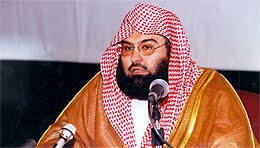
The Imam of Masjid al-Haram, Shaikh Sudais, for instance, was recently in India to rope in the Muslims into the Saudis’ campaign of sowing sectarian discord. Muslims have great attachment to Makkah and Madinah and the imams there are looked upon with respect. Most Muslims also admire their reciting skills but to use these imams for such nefarious activities is not only sad but also dangerous. It is equally disturbing that such imams allow themselves to be used by the corrupt and anti-Islamic rulers of Saudi Arabia.


Let us be clear: there should be no insults of the Sahabah or the Umahat al-Mumineen (the Mothers of the committed Muslims, that is, the wives of the noble Messenger of Allah – r) by anyone. But if the Saudis and their court preachers are really serious about this, we are constrained to ask: why do they not start in the kingdom itself? The Saudis have a strange sense of respecting the Sahabah; they have vandalised most of the historic sites of Islam. In fact, in their inexorable drive to build concrete and glass monstrosities in and around the Haram in Makkah and Madinah, they have obliterated virtually all traces of Islamic history including many monuments associated with the noble Messenger (pbuh) and his Sahabah (companions).

For instance, the house where the noble Messenger (pbuh) spent 25 blissful years of his married life with Khadijah (g), has been turned into a toilet. What kind of respect do these Saudi-Wahhabis show for the Prophet (pbuh) and his beloved wife and family? Even the green dome over the Prophet’s (pbuh) grave in al-Masjid al-Nabawi is not safe from these primitive bedouin vandals from Najd. Plans are afoot to demolish the green dome and remove the Prophet’s (pbuh) body from there. What more proof do Muslims need of the Saudis’ disrespect of the noble Messenger (pbuh) and the vile nature of the Saudi regime?

Why does Shaikh Sudais not raise his voice and lend his prestige to protest real acts of vandalism and desecrations by the House of Saud rather than flying all the way to India to whip up hysteria over a hypothetical issue? Even if the Imam of Masjid al-Haram in Makkah has little sympathy for people struggling for their rights and dignity in the Muslim East — and there is no reason why he should not — what excuse does he have to remain silent about the Saudis’ destructive policies that are obliterating Islamic history and heritage? And why is the Saudi regime not helping the oppressed people of Palestine in the same way that it has joined the crusade against Qaddafi of Libya? Saudi hypocrisy and subservience to the kafirs know no bounds.

It is sad to see such ‘ulama lend their name and prestige — that comes with being imams of such noble sanctuaries — to become tools of the corrupt Saudi monarchy, which is only interested in protecting its own illegitimate rule regardless of the damage it causes to Islam or the honour of the Prophet (pbuh) and his Sahabah. It is also quite revealing that not one imam either in Masjid al-Haram or al-Masjid al-Nabawi has raised his voice about the destruction of masjids by Saudi troops or desecration of copies of the noble Qur’an in Bahrain. Should one conclude that these imams do not know about this or that they are complicit in these crimes?

Either way it is not a good reflection of their character or behaviour. Muslims deserve far better from such ‘ulama than becoming tools in a vicious propaganda campaign against the legitimate aspirations of the people in the Muslim East whether in Bahrain, Yemen or Saudi Arabia. The time for games is over; let the ‘ulama of Saudi Arabia make a clear choice: are they with the Muslim masses struggling for dignity and honour or with the corrupt rulers that are subservient to the forces of kufr, nifaq and zulm?

Wednesday, May 4, 2011

Arabia Without Sultanism

The Arab streets everywhere are now teeming
with popular demands for real change.

By Kaveh Afrasiabi

The late Fred Halliday, a keen observer of the laboratory of Middle East politics, once at the tender age of 28 penned an impressive book titled Arabia Without Sultan,
in mid-1970s. Years later, Halliday, who was a friend of this author,(1) once told me that he no longer subscribed to a bulk of his analysis in that book -- that was written from a Marxian perspective and vested undue hope in the leftnationalist movements ‘from the blow’ to topple the western- backed sultanist regimes in the oil region of Persian Gulf.

Still, Halliday clung to his historical materialist view that the narrow elites of those oil sheikhdoms and their fragmentary legitimation due to the profound social stratifications and unjust hierarchies and exclusionary politics were bound to experience significant jolts sooner or later and that it was simply a matter of time before the winds of change traversed the semi-closed waters of Persian Gulf and reached them too in the contemporary context of “post-cold war era.” Nearly 40 yrears later, Halliday’s astute predictions appear to be somewhat exonerated by the prospects of an Arabia without Sultanism that is a shade different from the type of wholesale regime change foreseen by him, for in both the Persian Gulf region and the wider Arab world we are witnessing the dawn of a new era where the volcanic rupture of mass movements for democracy, as in Jordan, Kuwait and Bahrain, may culminate less in outright regime change and more in incremental, albeit significant, democratization, understood as a process of institutional change portending the wresting away of concentrated power in the monarchical hands and into the representative hands of assemblies, councils, etc., altogether featuring a rapid metamorphosis, or said otherwise re-inventing, of those regimes along inclusionary and participatory lines. Enough hand-picked and rubber-stamped “consultative” councils or assemblies, and limited and exclusionary elections that defy the elementary meaning of true elections with genuine impact on the reified and antiquated status quo aptly perpetuated by the praetorian guards and foreign powers. The Arab streets everywhere are now teeming with popular demands for real change, and in the case of Arabia’s sultans this means the end of business as usual mandating drastic measures to make the necessary adjustments that may be painful to the ruling families and their system of patronage keenly cultivated throughout their political systems, yet inevitable if they want to prevent a massive revolution from the below.

King Abdullah II Of Jordan 10 Year Anniversary Celebration
Thus, the cabinet changes and shuffling of government personalities, witnessed nowadays
in several Arab monarchies, go hand in hand with the reluctant nods from the top to the popular demands for accountability, anti-corruption and nepotism, independence and democracy (within limits). After decades of development without liberalization, the stage is now set to close the gap and sail through the turbulent channels of change that dictate the abrogation of big chunks of monarchical power and privilege in favor of “people’s power.” Spelling doom for the future of dynastic Sultanism, the current trend is toward a new political narrative that indicates the acidic mixture of democratic institutions, such as effective, representative parliaments and an independent judiciary, with the relics of the past, above all the monarchies.


Sheikh Nawaf Al-Ahmad Al-Jaber Al-Sabah, King of Kuwait
The irony of conservative monarchies, forced into the uncomfortable position of initiating self-reform as a result of intensifying pressures from the below, is incomprehensible save through the intricate lenses of democratization in tune with the intricacies of local customs and traditions. In the new Arabia without Sultanism the sultans can survive only by being the grave diggers of their own sultanist power and authority, that is nowadays the focus of popular anger seeking a more diffuse and participatory political system. Whether or not the co-habitation remains temporary depends on multiple factors, chiefly the balance of forces and the ability of rulers to re-invent themselves as stakeholders in the movement for change, rather than as simply the targets of those changes.

In the case of Bahrain, where the embattled ruler has put the crown prince in charge of mapping a new course of action to appease the revolting population, now squarely in possession of the Pearl Square in Manama, this would mean power-sharing with the hitherto disenfranchised Shiite majority who yearn for citizen input and equal rights. The Sunni-led order, backed by Saudi Arabia and US power, is no longer tenable and nothing can prevent the winds of change that drift in the direction of a future coalition of Sunnis and Shiites running the government and controlling its various branches including its legislative and judicial branches. Without doubt, Bahrain’s foreign behavior and its present allegiances to US power will not remain immuned from the important domestic changes gripping the country, no matter what the degree of US’s unhappiness over these developments ringing “chaos” and “insecurity” for US’s vested interests in the region. A corresponding diminishing role and influence of US power in Bahrain is inserted in the scripts for change, albeit in a subtle way that will likely become more pronounced in the future as the internal dynamics of change shows is foreign ramifications. The US may end up keeping its naval headquarters and bases in Bahrain, but will likely come under increased pressure and scrutiny that will, in turn, put certain limits on the conduct of US military power, e.g., the US will no longer be able to take for granted that Bahrain will be a passive observer of any action against the neighboring Iran. Instead, the “new Bahrain” may consent to continuing US military presence on the condition that it will refrain from any unilateral action against Iran or any other regional player. This would clearly represent a net loss for the hitherto unfettered US military movement and power projection in the region, but one that the US may have to bite the bullet and accept, as still a better alternative than pushing the status quo ante to a reluctant population to no avail. The end-game may be not just the decline but the evaporation of US, and altogether
western, hegemony in the region, but the intermediate future bespeaks of a mixed narrative that is wrought with the tensions of an odd coupling, the strange bedfellows of monarchy and democracy.

Thursday, April 7, 2011

Closer look at the uprisings in the Islamic East


By Zafar Bangash

Since the first stirrings of revolt erupted in Tunisia on December 17, 2010, the entire Islamic East has been engulfed in civil uprisings. Two tyrants — General Zine el-Abidine Ben Ali and General Hosni Mubarak — have been swept from power. Other dictators are feeling the heat to varying degrees. The uprisings have been described variously as “pro-democracy movements”, the “Arab Awakening” or even “revolution”. Absent from all these is mention of any Islamic movement. In the West this is greeted with much relief. While Muslims make up the overwhelming majority of Islamic East’s population, the West does not want Islam to have anything to do with shaping the socio-political order in these societies. Similarly, Islamic parties — al-Ikhwan al-Muslimoon, al-Nahdah and others — are either banned or seldom mentioned as having played any role in the uprisings. This, however, is only one dimension of the problem.

The more important question is whether these uprisings can be characterized as revolutions. At one level, perhaps they could be, insofar as new methods of protest, such as twitter and facebook, are being utilized for mass mobilization. Additionally, in almost all countries, the youth are in the vanguard. This, too, is a new phenomenon but it would be simplistic to get carried away with this. The youth can and have offered great impetus to movements in all countries; they usually do but in the current uprisings, they are not following any particular leader or ideology. At one level this may be considered a blessing since an identifiable leader can be arrested and the movement dealt a blow but one should not fall for romanticism. In the real world, there are certain requirements that must be in place for a movement to succeed. It is not enough to get rid of a tyrant or be content with a change of faces. What follows next is equally, if not more important. Thus we need to have a better understanding of certain basic rules.

First, let us be clear about the phenomenon of revolution. While the word revolution has great romantic appeal, the minimum requirement for any movement to be called revolutionary is that it overthrows the existing order and replaces it with a new, radically different one. This has not happened either in Tunisia or Egypt where old-time dictators have been removed from power but the old order is still in place and does not appear to be in any danger of collapse. The Egyptian military, an important pillar of the old regime, is fully in control. The newly appointed foreign minister, Nabil al-Araby, endorsed the Saudi invasion and occupation of Bahrain in order to crush the people’s uprising there. The state of emergency remains in place; the border with Gaza remains sealed and even the old pharaoh, Hosni Mubarak, who presided over decades of torture, is living comfortably in his opulent villa in Sharm al-Shaikh. So what has changed in Egypt?

The same is true of other countries — Libya, Yemen, Bahrain, Saudi Arabia, Jordan and Syria — where uprisings are underway. With the exception of Bahrain and Jordan, there are no identifiable leaders or movements leading these protests. In Bahrain, the movement is led by the ‘ulama while in Jordan, the Islamic Action Front (IAF) is in the lead but its demands are modest. The IAF has not demanded abolition of the monarchy; it is only calling for resignation of the prime minister and curtailment of some of the king’s vast powers. These can hardly qualify as revolutionary demands much less leading to any revolutionary change.

Muslims must understand that the systems in their societies are constructs imposed by colonial occupiers. These are not designed to serve the interests of the people. The ruling elites in every Muslim society barring Islamic Iran are all subservient to the West. Unless Muslims strive to dismantle these systems completely as happened in Iran in 1979, their desire for change will not be realized. For change to occur, certain conditions must be met. There must be an Islamic movement led by charismatic muttaqi leadership that will give a directional course to the movement. All energies of the people must be channeled toward the goal of not only overthrowing the old order but also replacing it with an Islamic order. Such a movement can have no parochial, tribal or national interests. Further, the movement and leadership must not be dependent on any outside powers, such as the US, Britain, France etc. In Egypt, for instance, the new regime is still pursuing old policies and the movement that forced the removal of Mubarak is too consumed by internal, purely nationalistic issues to worry about the plight of the Palestinians. This nationalistic trend is worrying. Similarly, the rebels in Libya want the West to help them against Colonel Muammar Qaddafi’s forces. Since when has the West supported people’s yearning for freedom and fundamental rights? If Qaddafi is overthrown, the Libyan people may find themselves entering a period of direct colonialism once again.

While one must applaud the courage and dedication of the youth and other segments of society in the Islamic East for rising up against their tyrannical rulers, there is still a long way to go before they will taste true freedom. This will not come about by espousing nationalistic slogans or accepting servitude to the West, regardless of how much they may hate their present rulers. The ruling oligarchies in the West are not their friends; they are nobody’s friends, not even their own people whom they oppress and exploit. No amount of wishful thinking can change this reality.

Muslims struggling for dignity and freedom must have a much clearer understanding of the reality both in their own societies and of the global setup if they are to achieve success in their undoubtedly genuine struggles. Nothing comes easy. This is what we learn from the Sunnah and Sirah of the noble Messenger of Allah (pbuh). Muslims should not harbor any illusions about the price that freedom demands.

Thursday, March 3, 2011

Saudis panic amid unrest in the Islamic East


Zafar Bangash, Reflections

Nowhere is there more concern — and panic — about the rapidly escalating protests in North Africa and the Islamic East than inside the marbled, air-conditioned palaces of Saudi Arabia. While the House of Saud faces no imminent threat like despots in Tunisia, Egypt, Libya, Yemen or Bahrain, the fear in Riyadh is genuine. The Saudis know their rule is illegitimate. It was the British that installed them in power by carving out a kingdom from the ruins of the Ottoman Khilafah to serve British colonial interests. Now the Americans are protecting them because the Saudis continue to pump oil to satiate the Americans’ addiction to black gold. But America has lost its clout on the global stage, thanks to its wars of aggression in Afghanistan and Iraq. The US and its Arabian lickspittle can no longer dictate to the world.

The Saudis’ real concern is not only America’s loss of clout; their worry is that Uncle Sam ditched a long-time trusted ally Hosni Mubarak so casually. The Saudis may be cowards but they are not fools. They understand what is afoot. If the Americans can discard Mubarak whose regime was a major bulwark against the rising tide of Islam and loyal ally of the Zionist State of Israel, what chance do the pleasure-loving Saudis have if protests erupt in the kingdom? The Americans might abandon them just as quickly, oil or no oil. Further, the Saudis now feel alone in standing against the emerging power of Islam.

While there is little prospect of a Tunisian, Egyptian or Libyan style uprising in Saudi Arabia — most Saudis are bone lazy — it is the possibility of a palace intrigue that the Saudis worry about. True, a protest is planned for March 11 in Riyadh but it is unrealistic to assume anything significant would come out of it. Saudi society is far too tightly controlled and the religious establishment has been completely compromised to offer an alternative to the corrupt and decrepit monarchy. It is, however, developments elsewhere, especially in Egypt, Yemen and Bahrain that worry the Saudis so much. With Mubarak gone, the Saudis feel dangerously exposed. And to this end, to placate any hint of frustration in the people, the Saudi King on his return from a convalescense holiday in Morocco has offered up over $10 billion to his people in various economic concessions like the government of Algeria and Syria. The ailing and aged King Abdullah (he is 87 and suffering from multiple ailments) feels the Americans have betrayed their Arabian allies.

Uprisings in Yemen and Bahrain also have a direct bearing on Saudi Arabia. The kingdom shares borders with both. With Yemen, it is 1,100 miles long and many Yemenis — including the Bin Ladens — hail from there. Instability in Yemen can easily spill over into the kingdom. This explains the Saudis’ attack on the Houthis last year in one of the Forbidden Months, even if it was badly bungled, and exposed the Saudi military’s incompetence. Bahrain is even more problematic. The tiny Gulf State has a Shi‘i majority ruled by a Sunni minority. Bahrain is linked to the kingdom by a 15-mile causeway that is used by the Saudis not merely to drive across and enjoy Bahrain’s nightlife, but for a more serious purpose: in case of unrest the Saudis would rush in troops to Bahrain to contain it. It is better to fight their battle for survival in the streets of Manama than in Riyadh or Jeddah.

Further, any success by the Bahraini majority may encourage similar protests in the Eastern provinces of Saudi Arabia that have long been suppressed by the Nejdi tribe from Dar‘iyah. This in turn may spread to the rest of the kingdom and undermine the House of Saud.

Far from welcoming the people’s aspirations for dignified existence, the Saudi rulers stand completely exposed as the enemies of Islam and the Islamic movement. Saudi-linked and financed Islamic organizations should take note: the blood of innocent people killed in Tunisia, Egypt, Bahrain, Libya, Morocco and Yemen would be on their hands as well if they fail to sever links with the corrupt Saudi royals.

The Saudis view any challenge to the status quo as a direct threat to their survival. In fact, changes in the region are viewed as a gain for Islamic Iran, and its allies: Syria, Hizbullah and Hamas.

People in the Peninsula must grasp the opportunity offered by the uprisings elsewhere. They must also rise above sectarianism to establish a system based on the pristine principles of Islam. They can either walk in the footsteps of the noble Messenger of Allah (pbuh) or cling to the jahili practices of the likes of Abu Jahl and Abu Lahab. History will render a very harsh judgement if they fail to rise to the occasion. The choice is theirs.


Zafar Bangash is Director of the Institute of Contemporary Islamic Thought