Showing posts with label divisions in the Ummah. Show all posts

Thursday, January 9, 2014

The Prophet (saws) and Muslim unity

by Zafar Bangash January, 2014
Merely verbalizing love for the noble Messenger (saws) will not bring glory to Muslims; emulating his noble example in practice will. A pre-requisite is to understand the Sirah in its totality, not through anecdotal episodes. There is no Muslim who does not have deep love for the noble Messenger (pbuh). This is Allah’s (swt) command to His faithful servants articulated in the majestic Qur’an. Muslims express their love for the Prophet (pbuh) in many different ways based on their level of understanding and commitment. Closely related to this is the aspect of unity among Muslims. Again, this is spelled out very clearly in the noble Book. Muslims are referred to as one Ummah (21:92; 23:52) with all its varied and important implications. In a set of ayat, the Qur’an says, O you have become firmly committed [to Allah]! Be on guard [against Allah’s corrective justice] as is due to Him, and do not pass on before you have surrendered yourselves to Him [become Muslims]. And hold fast, all together, to the bond with Allah, and do not separate from one another. And remember the blessings that Allah has bestowed upon you; how, when you were enemies, He brought your hearts together, so that through His blessings, you became brethren… (3:102–103).
Allah (swt) is addressing the committed Muslims (the category referred to as al-ladhina amanu in the Qur’an) telling them “…to hold fast to the bond of Allah and do not separate from one another.” He is also reminding them that previously, they were enemies but Allah (swt) brought their hearts together. Allah (swt) does not say He made them all of one ethnicity or language. Instead, He says their hearts were reconciled and brought together. This was done through the exemplary personality of the noble Messenger (pbuh) who was sent as a mercy to all the worlds (21:107). It was his mercy and grace that brought the warring tribes of Madinah together. His was a gentle personality that preferred compassion and justice instead of retribution. This was demonstrated at the time of Makkah’s liberation when all his former enemies and tormentors stood trembling before him. He could have ordered their execution but he chose instead to forgive them. He administered justice with compassion, and compassion with justice to all and sundry. His noble personality combined in it all the elements in perfect balance. He was chosen by Allah (swt) to be the last and final messenger to deliver His final message to all humanity. As a result of his exemplary character, he converted the savage tribes of the Arabian Peninsula into the best of human beings in a short span of 23 years. Muslims truly became one Ummah above tribe or class distinctions under the leadership of the noble Messenger (pbuh). His success has forced even non-Muslims (Alan Hart, for instance) to admit that he was the most brilliant leader humankind has ever known.
But we must ask: what has happened to the two billion Muslims today that hardly register on the global scene? Muslims are so badly divided along national, tribal and sectarian lines that the concept of the Ummah appears non-existent. Where is the Muhammadi Ummah, raised as the “best community” that is supposed to be a model for all humanity (3:110)? True, there is much external interference in Muslim societies but that is to be expected. The Muslims’ enemies are not there to foster unity among them but we must examine the Muslims’ own conduct. Why have some Muslims embarked on campaigns of denunciation of fellow Muslims as kafirs and even resorted to wholesale slaughter? Does declaring everyone we disagree with a kafir serve the interests of Islam and Muslims? Did the noble Messenger (pbuh) ever indulge in such behavior? Possibly, those involved in the indiscriminate killing of Muslims and non-Muslims through car and suicide bombings as well as gruesome beheadings also read the Qur’an and may even insist they love the noble Messenger (pbuh). On what basis do they justify their behavior then? Suppose these groups were to kill all the people they disagree with; would that establish justice and peace in society? Those Muslims that claim to be faithful to their social contract with Allah (swt) — that is, have made a faith-commitment to Him — must evaluate their behavior in light of the teachings of the Qur’an and the Sunnah and the Sirah of the noble Messenger (pbuh). Allah (swt) reminds us of our base social reality in His glorious Book: we were divided and disunited, and our psychological makeup was one of enmity and hostility yet through His ni‘mah (favor and prerogative), we became brothers and friends (3:103; 49:10). The attitude of some contemporary Muslims has reverted back to that of pre-Islamic peoples where dog-eat-dog attitude and the law of the jungle prevailed. Muslims will have to make the transition from a fragmented understanding of the Qur’an, and the Sunnah and Sirah of the noble Messenger (pbuh) to the consolidated meanings with all its socio-political implications to assume their rightful place in the world as the “best community.” Racism, tribalism and sectarianism have no place in this higher calling. No people in history have ever achieved progress through wholesale slaughter. True, they may have achieved temporary success but were quickly overpowered by others with more refined values. In these troubled times, only Muslims can provide the kind of leadership the errant humanity needs. That, however, will only be realized if Muslims are true to their din as explained in the noble Book and as exemplified by the noble Messenger (pbuh).

Tuesday, January 3, 2012

Islamic concept of legitimacy

As mass popular movements sweep the Muslim East (aka Middle East) predatory Western powers and their local satraps are involved in desperate attempts to hijack them. They are offering the same failed systems in a new garb. Since the overwhelming majority in the region is Muslim, it is natural that they would want a social order connected to Islamic principles that represent and ennoble their unique identity. The people’s uprisings have made clear what they do not want: the old decrepit order. What they want instead and what shape the new order would take is as yet unclear.


Both in Tunisia where elections were held on October 23 and in Egypt where mass protests erupted again as Crescent went to press (before the November 28 election date), attempts are underway to keep the political process on a secularist track and Islam at bay to prevent its shaping the order in society. It is argued that Islam has no solutions to contemporary problems. We need to confront this argument and expose the forces behind such thinking but first let us understand the concept of legitimacy in Islam and how it is derived.


It is not the majority that confers legitimacy; Islamic legitimacy comes from divine commands. If the overwhelming majority in society, for instance, decides to kill the minority or to institute cannibalism would that make such acts acceptable? Based on Western notions of democracy, this would be perfectly legitimate but not in Islam. Let us go further. From the Islamic point of view, every Prophet of Allah (a) had legitimacy because he received the message from on high even if the people to whom it was delivered did not accept it. Islamic legitimacy is not contingent upon people’s acceptance or rejection but on following the commands of Allah (swt).


We must also have a clearer understanding of Islam. The Qur’an refers to it as deen, meaning a way of life. Thus, Islam encompasses more than the set of rituals that people perform as part of their religious obligation. Unlike other religions, Islam offers a complete set of principles that guides every adherent through life. It has rules for every aspect: social, political and economic. This is not mere theory; Islamic principles have been put into practice and have produced results that are far superior to any other system.


The West’s greatest claim to superiority has rested on its ability to produce vast amounts of goods to satisfy people’s needs. The financial tsunami sweeping North America and Europe and the realization among people that their ruling elites have lied to them and robbed them of their livelihood has finally exposed this myth. If Western-style democracy and capitalism have failed their own people, why should others buy into them? But that is precisely what is being offered to Muslims in the Muslim East. Not only the ruling elites, that are beneficiaries of the old corrupt order, but also some leaders of Islamic movements have fallen for this fraud. It is tragic and depressing to hear otherwise intelligent and sincere leaders of Islamic movements talk about the virtues of secularism.


When Muslims embark on creating political systems in their societies, they must be clear about what they want. For a system to be legitimate and enjoy the support of the masses, it must be based on Islamic principles of which the most fundamental is justice. Without justice, there can be no peace or security in society.


We must also understand one other point: not everyone is created equal. Some are strong, others are weak; some are tall, others are short. The same applies to wealth and health. Yet such power differentiations must not be used to exploit or oppress the weak and poor. Unlike the Western system where the rich and, therefore, the powerful use their privileges to amass great wealth and power and deprive others of their basic rights, Islam regulates the use of power.


Unfortunately, in most Muslim societies too, the rich and powerful exploit the weak and poor. Western powers prop up the corrupt elites so that they institute policies beneficial to the West even if they are detrimental to the interests of their own people. Thus, Saudi Arabia must pump excessive amounts of oil, far beyond its own needs, to satiate America’s thirst. For toeing Washington’s line, the illegitimate House of Saud is kept in power. The same holds true for the city-states on the western shores of the Persian Gulf and regimes elsewhere in the Muslim East. The way out of this mess is not to apply the failed Western model but to create a system based on the values of Islam. It is only then that Muslim societies can be truly liberated.


Without Islam, no regime in the Muslim world can claim legitimacy regardless of the number of elections it holds. If the people desire a life of dignity and honour, they must continue to agitate and resist until they have established an Islamic system of governance.

Wednesday, May 18, 2011

Saudis resort to crude sectarianism to create divisions in the Ummah


Abu Dharr

Sectarianism has been a time tested tool in the hands of illegitimate rulers since the Islamic institution of khilafah was subverted into mulukiyah nearly 1,400 years ago. Today, the illegitimate rulers of Bahrain, Qatar, Kuwait, the United Arab Emirates and Saudi Arabia are using this weapon to divert attention away from their oppressive policies and subservience to the West and to Zionist Israel.

Pictured are (left ro right): Kuwait's Crown Prince Nawaf Al Ahmad Al Sabah; the Emir of Qatar, Hamad bin Khalifa Al Thani; a representative of Sultan Qaboos of Oman, Fahad bin Mahmoud Al Saeed; Kuwait's Emir Sabah Al Ahmed Al Jaber Al Sabah; Saudi Arabia's King Abdullah; Bahrain's King Khalifa bin Salman Al Khalifa, and UAE President and Abu Dhabi Ruler Khalifa bin Zayed Al Nahayyan


Until now, the main culprit was the regime in Saudi Arabia followed by Kuwait. Now tiny Bahrain has also joined these troublemakers because its illegitimate rule is being challenged by the people that have been subjected to brutal suppression for decades. Saudi Arabia has established a fatwa factory from where it habitually issues fatwas of takfir against the Shias. Such fatwas, however, are not hurled only at the Shi‘is. Any Muslim that disagrees with their narrow obscurantist views is immediately branded a kafir or accused of indulging in bid‘ah or other “un-Islamic” practices. The underlying message is that only the Saudis are “true” Muslims.

The Saudis are the leading manufacturers and exporters of takfiri fatwas. The uprising in Bahrain where the people are demanding their legitimate rights like people elsewhere in the Muslim East have been dismissed as “Shi‘i agitators.” The Saudis have gone so far as to accuse Islamic Iran of interfering in Bahrain’s affairs. It is interesting to note that while thousands of Saudi troops and tens of thousands of American sailors are prowling all over Bahrain, the Saudis are crying hoarse about Iran. There are no Iranian troops in Bahrain. Even Western officials — no friends of Iran — have said they have found no evidence of Iranian involvement in or instigation of the people’s uprising yet the Saudis have been using the Gulf Cooperation Council (GCC) as a platform to hurl invectives at Tehran.


Bahrain Protests: More Than 100,000 March Through Capital As Helicopters Circle Overhead
On April 17, the frightened rulers of GCC member states — Saudi Arabia, Kuwait, Qatar, Bahrain, UAE and Oman — met in Riyadh and called on the Islamic Republic to stop its “interference” in the GCC. The meeting was called to discuss the rapidly escalating crisis in Yemen but the foreign ministers found time to make allegations against Iran. Without providing proof and in a desperate Saudi and Emirati bid to camouflage their own occupation of Bahrain to crush the legitimate aspirations of the people there, the GCC called on “the international community and the [UN] Security Council to take the necessary measures to make flagrant Iranian interference and provocations aimed at sowing discord and destruction” among the GCC states.

It said the GCC “categorically rejects all foreign interference in its affairs and invites the Iranian regime to stop its provocations.” Unable to justify their brutal clampdown of peaceful protesters especially in Bahrain where the overwhelming majority of the population is Shi‘i (there is also a sizeable Shi‘i population in Saudi Arabia that is equally suppressed and deprived of basic rights), the Saudis are trying to turn this into a sectarian issue. If people ask for their fundamental rights, how does it become a sectarian problem? The Saudis were also opposed to the removal of Hosni Mubarak from power because they felt it would expose them to pressure from people demanding similar rights in the kingdom. This is true. Was sectarianism also involved in Mubarak’s removal? If not — and it clearly was not — how can they categorize the Bahrainis’ demand for rights and dignity as promoting sectarianism? The Saudis feel quite vulnerable; and they should. Their rule is illegitimate and their policies have caused great damage to the larger interests of the Ummah.

The Saudis and their frightened GCC partners, clinging to each other for support, are not content merely with issuing appeals to the “international community and the Security Council” to save their tottering regimes. They know these appeals will not yield much direct help. Western support, even for friendly regimes has limits. Chastened by their experience in Afghanistan and Iraq, the Americans and their allies are not about to rush into another minefield even if they will increase the volume of their rhetoric against Islamic Iran or whoever the Saudis think is causing them grief. The most that will happen is that the West will not support any uprising in these countries as they have shown in the case of Bahrain.

While that may bring some comfort to these regimes, the Saudis have gone further. They have resorted to their favourite ploy to divide the Ummah along sectarian lines. They have sent their court ‘ulama to visit various countries and mobilize Muslim communities to form councils and organizations in “defence of the Sahabah”.

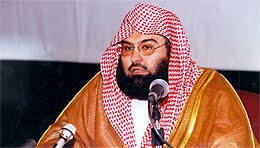
The Imam of Masjid al-Haram, Shaikh Sudais, for instance, was recently in India to rope in the Muslims into the Saudis’ campaign of sowing sectarian discord. Muslims have great attachment to Makkah and Madinah and the imams there are looked upon with respect. Most Muslims also admire their reciting skills but to use these imams for such nefarious activities is not only sad but also dangerous. It is equally disturbing that such imams allow themselves to be used by the corrupt and anti-Islamic rulers of Saudi Arabia.


Let us be clear: there should be no insults of the Sahabah or the Umahat al-Mumineen (the Mothers of the committed Muslims, that is, the wives of the noble Messenger of Allah – r) by anyone. But if the Saudis and their court preachers are really serious about this, we are constrained to ask: why do they not start in the kingdom itself? The Saudis have a strange sense of respecting the Sahabah; they have vandalised most of the historic sites of Islam. In fact, in their inexorable drive to build concrete and glass monstrosities in and around the Haram in Makkah and Madinah, they have obliterated virtually all traces of Islamic history including many monuments associated with the noble Messenger (pbuh) and his Sahabah (companions).

For instance, the house where the noble Messenger (pbuh) spent 25 blissful years of his married life with Khadijah (g), has been turned into a toilet. What kind of respect do these Saudi-Wahhabis show for the Prophet (pbuh) and his beloved wife and family? Even the green dome over the Prophet’s (pbuh) grave in al-Masjid al-Nabawi is not safe from these primitive bedouin vandals from Najd. Plans are afoot to demolish the green dome and remove the Prophet’s (pbuh) body from there. What more proof do Muslims need of the Saudis’ disrespect of the noble Messenger (pbuh) and the vile nature of the Saudi regime?

Why does Shaikh Sudais not raise his voice and lend his prestige to protest real acts of vandalism and desecrations by the House of Saud rather than flying all the way to India to whip up hysteria over a hypothetical issue? Even if the Imam of Masjid al-Haram in Makkah has little sympathy for people struggling for their rights and dignity in the Muslim East — and there is no reason why he should not — what excuse does he have to remain silent about the Saudis’ destructive policies that are obliterating Islamic history and heritage? And why is the Saudi regime not helping the oppressed people of Palestine in the same way that it has joined the crusade against Qaddafi of Libya? Saudi hypocrisy and subservience to the kafirs know no bounds.

It is sad to see such ‘ulama lend their name and prestige — that comes with being imams of such noble sanctuaries — to become tools of the corrupt Saudi monarchy, which is only interested in protecting its own illegitimate rule regardless of the damage it causes to Islam or the honour of the Prophet (pbuh) and his Sahabah. It is also quite revealing that not one imam either in Masjid al-Haram or al-Masjid al-Nabawi has raised his voice about the destruction of masjids by Saudi troops or desecration of copies of the noble Qur’an in Bahrain. Should one conclude that these imams do not know about this or that they are complicit in these crimes?

Either way it is not a good reflection of their character or behaviour. Muslims deserve far better from such ‘ulama than becoming tools in a vicious propaganda campaign against the legitimate aspirations of the people in the Muslim East whether in Bahrain, Yemen or Saudi Arabia. The time for games is over; let the ‘ulama of Saudi Arabia make a clear choice: are they with the Muslim masses struggling for dignity and honour or with the corrupt rulers that are subservient to the forces of kufr, nifaq and zulm?