Wednesday, October 6, 2010

Modesty and Hijab from an Islamic viewpoint


Islam views women with respect. From the very beginning, Islam saved women from the ignorance of the pre-Islamic Arabs, and revived the human esteem, status and character which they had lost due to the patriarchal culture of the pre-Islamic period in Arabia.

Although in the modern era, feminism, which supports women’s rights, has strived to remove all sorts of discrimination imposed upon women, it has not observed moderation and has therefore, ignored the nature of women and the natural differences between men and women. Moreover, feminism has also eliminated and destroyed the healthy relationship between the two sexes and even between women and girls by supporting homosexuality and as a result, feminism has led to the instability of the family.

The existence of such ideas in the world as well as in our society due to the expansion of global communications, has more than ever before stressed the need for studying and investigating the recommendations of moral values such as chastity and hijab as well as their function.

Objective: The clarification of the function of hijab and chastity or modesty in the point of view of Islam has been referred to in this essay in an analytical and descriptive manner.

The results of this research include:

The strengthening of the family, valuing women and preserving their human character, the revelation of the great moral and human values, the flourishing of natural and innate talents, maintaining and preserving the mental health of individuals in the family and society, the growth of pure love, an increase in cultural, economic and social efficiency, the elimination of sexual provocation in the society, a healthy relationship among people of the same sex as well as people of the opposite sex.

Conclusion: In order to preserve the function of hijab and chastity, Islam has stressed the controlling of sexual desires, inviting and encouraging people to get married, punishment for immoral behavior aimed at maintaining the moral security of citizens.

Keywords: Hijab, chastity, Islam, feminism.

Introduction: Considering the expansion of feminism due to the revolution in communications in different societies, including the world of Islam, and as a result, the popularity of western moral values regarding sex, the need to pay attention to Islamic ethics on sex has become ever more obvious.

This essay investigates feminism and its achievements as well as mentioning a criticism of feminism from the point of view of Islam, the position and stand of chastity and hijab in Islamic ethics regarding sex, the functions of chastity and hijab in Islam, the methods to achieve chastity and observing hijab as well as preserving the results and achievements following chastity and the observance of hijab.

As a philosophical, cultural, political and social movement, feminism appeared following the Renaissance, the industrial revolution and other social, political and cultural changes in the late 18th century.

Feminism aims to revive women’s lost rights in a patriarchal system which has imposed numerous limitations upon women and strictly controls them, and has based men’s relations with women at home or in the society on severe restrictions and control.

In the modern era, feminist movements have through different approaches like, liberal, Marxist, radical socialist, existentialist, psychological and post-modern, tried to eliminate social, sexual, economic and educational differences as well as sexual oppression and harassment in the family and the environment. These differences are due to the existing patriarchal system. The question however, is what do these differences include? “They refer to those differences among individuals and positions which have been socially defined and individuals have occupied them, and which affect people’s lifestyle, especially, their rights, opportunities, privileges and bonuses.” (Grab, translated by Mohammad Taghi Siahpush, 1373, p.10)

Sexual differences are a subgroup of social differences referring to less value regarding women’s status in comparison with men’s status even in the same position. (Bastan, 1382, p.32)

We can see examples of this inequality between men and women in economic situations, women’s wages are lower than men’s wages and women are deprived of well-paid professional occupations, in education there is a lower rate of educated women and women possess lower qualifications, in politics, women are deprived of sensitive political posts and hold fewer political posts in comparison with men, in culture, the status of women is lower in cultural discussions and debates which are presented in the form of films and other educational material and in general, women have to observe more social norms and limitations in comparison with men.

But what does sexual harassment and maltreatment refer to? “Sexual maltreatment and oppression refers to the unjust exercise of power or the exercise of power together with violence and aggression.” (Bastan, p.33)

Based on the mentioned criteria, we can say sexual oppression refers to the unjust exercise of power or the exercise of power together with violence of one sex against the other sex. Examples of this are murder, beating, violence and aggression, rape and sexual exploitation of women.

Due to the fact that the existing sexual discrimination and sexual oppression regarding women takes place in a patriarchal system, feminists aim to eliminate patriarchy in different areas, because the concept of patriarchy refers to male-dominance in most social, cultural, economic and political fields. This is of course due to the characteristics of a patriarchal system which are as follows.

1. The extensive authority of men both at home and in the society.

2. A patriarchal system is paternal, the father’s name is taken by children, and women move from their fathers’ homes to their husbands’ homes after marriage.

3-In a patriarchal system, considering the distinctions and differences between men and women inheritance, credit, power, etc, are different between men and women.

4-Being a man means you are automatically stronger than women and traditions and customs are preferable and more valid in all cases.

Because of the existence and dominance of a patriarchal system, feminists are trying to eliminate this system through political campaign, passing certain laws and informing the women who live in a patriarchal system. Feminists are also trying to eliminate other factors which cause sexual discrimination and sexual oppression against women. Some examples of this discrimination are the limitations women face both at home and in the society, discriminatory laws and customs, economic factors and private ownership, different educational paradigms in bringing up girls and boys, sexual identity and the existence of different roles for men and women based on their gender……..

The achievements of feminism:

The achievements of feminism are as follows:

1- The elimination of sexual discrimination in the realm of politics for example, having the right to vote and holding political posts; in the field of education for example, increasing the rate of literacy among women and increasing the rate of academic education among women; in the field of economy, for example, women’s presence in industrial and trade centers, increasing employment among women, trying to receive equal wages and other factors like increasing women’s awareness concerning their right.

2. Trying to eliminate patriarchy, condemning patriarchal autocracy in the family, condemning rape and sexual violence against women and passing laws to defend women.

3.The belief that the difference between men and women is due to the existence of different educational and cultural clichés in the society and not due to the nature of men and women.

4- Increasing women’s esteem.

5- Feminism rejects the idea that men and women have to observe different standards of sexual behavior and sexual morals and gives women the right to have relationship outside marriage (independent of marriage.)

6-The creation of families without legal marriage, the legalization of abortion and negative advertisements against men and children as obstacles on the way of women’s freedom in different fields and regarding different activities, questioning the role of mothers and wives in the family which was once the symbol of sincerity, sympathy, kindness, love and sacrifice with the pretext that the role of mothers and wives limits women’s freedom. (Ghavi, 1384, p.9, introduction.)

7- The elimination of chastity and a complete change in the moral values because feminists believe that these moral values have been created by men for the exploitation of women. Regarding this, Wendy Shalit says, “In the past, people had to hide their sexual relationships, but now they have to be ashamed of not being unrestrained and have to hide their belief in chastity very carefully. (Shalit, translated by Samaneh Madany, 1384, p.33)

8- Lack of sincerity and affection in relationships between men and women. Regarding this Kant says, “Love based on sex views the lover as an appetizing object and as soon as the beloved is accessed and the thirst for sexual relationship is quenched, the lover will be thrown away just like throwing away a lemon which has been completely squeezed. Kant believes that sexual relationship alone and when not followed by love is a sign of contempt for human nature. (Ibid, p.35).

9. The elimination of men’s commitment towards women following the disappearance of different and specific standards of sexual behavior for each sex.

10. The elimination of financial support for women after divorce.

11- The popularity of homosexuality among women and legitimizing the practice of homosexuality.

The criticism of feminism in the point of view of Islam:

Because feminism believes in equality between women and men in all aspects of existence and as a result, in complete sexual equality, it therefore, considers all forms of sexual discrimination as a kind of oppression

Feminism also believes that sexual discrimination is derived as a result of a patriarchal system, the teaching of different roles regarding men and women and other social, cultural and educational factors.

Regarding the aim of feminism which is equality between women and men, Motahri says, “In feminism, attention has not been paid to the fact that there are other issues except equality and freedom. Equality and freedom are necessary but definitely, they are not considered enough. Equality of rights is one issue, and similarity of rights in the viewpoint of spiritual and material values is another issue.

In feminism, either on purpose or by mistake, equality is used instead of similarity or equality of rights is considered the same as similarity of rights. As a result, quality is overshadowed by quantity and being a woman is overshadowed by being a human. In the past, the problem was that it had been forgotten that women were humans, and nowadays, the problem is that either on purpose or by mistake, a woman’s natural and innate conditions, her role, her instinctive differences and specific talents have been forgotten. (Motahari, 1357, p.18-21)

As a result of the belief in the sameness between women and men, the standards of sexual behavior and different sexual morals specific to each sex disappeared. For women, the standards of sexual behavior for women included, chastity, shyness, modesty and monogamy, and for men these standards of sexual behavior specific to men included, jealousy, responsibility towards women, polygamy in case of being able to create justice in ones behavior and affection towards his wives and all other roles dedicated to each sex.

In feminism, it is believed that moral values in the realm of standards of sexual behavior have been created by men to control and limit women; therefore, chastity for girls and dignity for men are not considered values and actually, chastity in girls is considered to be rooted in the psychological complexes which should be found in her childhood period. Diane Passno considers the social damages created by feminism as follows:

1- The elimination of moral values.

2- Feminism has destroyed healthy relations among individuals of the same sex. Healthy relations among people of the same sex are controlled by homosexual women.

3- It has created a generation of men who do not respect women and abuse them sexually.

4- Feminism has weakened the family.

5- The alteration and distortion of the Holy book regarding the responsibilities of women and men. (Pasto, translated by Zeinab Farahmand, 1384, p.84)

However, in the sexual moral standards of Islam, chastity, modesty and shyness in women and jealousy and a sense of responsibility in men, have all been stressed as great values. Observing the mentioned values will lead to love and sincerity in the family, a healthy society, the prevention of dissipation, an increase in the dignity and respect towards women and the mental and emotional health of children who grow up in such families.

Regarding this, Wendy Shalit says, “Chastity in women is a natural reaction which helps a woman to protect her hopes, especially, the hope for having a man who will stay with her forever, not several different men who ultimately leave her. (Shalit, 1383, translated by Samaneh Madani, p.60.)

In the point of view of feminism, differences between men and women mean that one sex is considered superior in comparison with the other sex. However, in Islam it is not so. In Islam accepting the differences between men and women turns to the biological aspect of humans and the interest of the family and no one views the differences as a sign of superiority. Both men and women will be granted their rewards for the specific roles they have.

The values of Islam are different from those of feminism; therefore, many of the differences between men and women are not discriminatory and oppressive in the point of view of Islam.

Islam believes these differences are derived from justice, and aim to fulfill both individual and social convenience.

It absolutely rejects sexual oppression in the form of rape, sexual violence and physical, mental and verbal harassment. It also rejects all forms of unjust behavior towards women. Nevertheless, it officially recognizes some of the natural differences which are spiritual and innate rather than being acquired.

Certain differences in Islam, like differences between the rights of men and women in the field of marriage, divorce, inheritance, attestation, the kind and extent of retribution and the blood money received.

The mentioned differences are not innate. They are acquired and are aimed at creating the ideal society which Islam has planned.

Nevertheless, Islam does not believe that these differences lead to the superiority of one sex. In other words, Islam does not believe that these differences make women inferior and men superior. Actually, women can like men achieve scientific, material and spiritual degrees and men are not considered the superior sex.

God Almighty in ‘The Clans’ says, Surely, the men who submit and the women who submit, and the believing men and the believing women, and the obeying men and the obeying women, and the truthful men and the truthful women, and the patient men and the patient women, and the humble men and the humble women, and the alms giving men and the almsgiving women, and the fasting men and the fasting women, and the men who guard their private parts and the women who guard their private parts, and the men who remember Allah much and the women who remember Allah much, Allah has prepared for them forgiveness and a mighty reward.

The position of chastity and hijab in the sexual moral standards of Islam:

Chastity, as an internal and exalted moral value, has a special place in the sexual moral standards of Islam. Chastity as the root of hijab and hijab as an external practice, reflect chastity as an internal value. In other words, chastity is the root and source of hijab. Islam has stressed certain moral values regarding sex. Values such as chastity and hijab and in doing so, it wants to maintain a woman’s dignity and respect and also wants to prevent the God-given talents of women to be wasted in mere sexual activity.

Therefore, chastity and hijab in Islam, are rooted in a more general and fundamental issue. This fundamental question is whether a man should be allowed to take pleasure in women freely anywhere he wants or should sexual pleasure be limited to married couples at home? Should sexual pleasure be possible at the level of the society or should it be limited to the family and people’s homes?

Contrary to the sexual moral standards of Islam, western sexual moral standards are based on free relations between men and women as long as the freedom of others is observed.

Islam wants all kinds of sexual pleasure to be limited to one’s legitimate spouse and the family and it wants the society to be solely dedicated to work and activity.

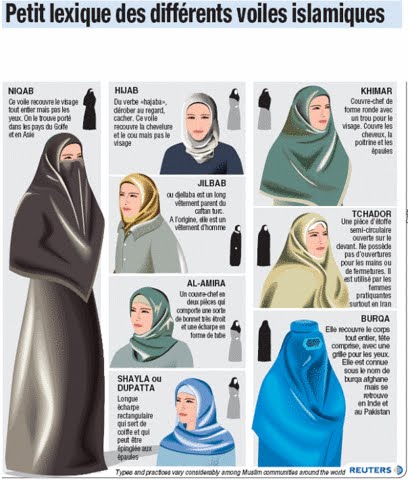
Therefore, Islam does not permit women to appear in the society in a stimulating manner when she leaves her home, neither does it allow men to ogle. Thus, it has stressed moral values such as chastity and hijab.


The functions of chastity and hijab in Islam:

Observing the sexual moral standards of Islam has certain functions some of which are named below:

1-Elevating the value of women: Chastity and hijab are ways by a woman preserves her value and status against men. With her innate intelligence and special feeling towards herself, she has realized that considering her physical weakness and even her economic weakness, she cannot domain men; therefore, she has used this desire in men to love and demand, as well as her own characteristic, which is being loved, to increase her value against men. She has done this by covering herself and observing chastity and shyness.

The chastity that a woman shows is a way of preserving her value and status against men. In this regard, the more chastity a woman shows, the more dignified she is, and the less she exposes herself to men, the more she will be respected.

2- Increasing the mental health of individuals in a society: When sexual relations are limited to one’s spouse and one’s home, the society will be free from sexual stimulation and this will prevent early adolescence as well as other problems such as sexual harassment and the creation of illegitimate children, who are rejected by the society. As a result, all kinds of mental problems will be prevented and the mental health of both individuals and the society will be improved.

3- The strengthening of the family: According to Islam, if sexual pleasure is limited to one’s legitimate spouse, the relationship among the members of a family will be made stronger and there will be complete sincerity and intimacy between the wife and the husband.

On the other hand, free sexual relationship in a society will lead to the appearance of rivals for both men and women, and as a result, the cases of sex out of wedlock will increase, men and women will have different partners and will seek variety in their relationships. All this will lead to the creation of instability in the family.

4- The efficiency of the society will increase and the society will be free of sexual stimulations: Hijab is a manifestation of chastity and it does not imprison or limit a woman or deprive her of cultural, social and economic activities, rather hijab refers to the covering of the body, except for the hands and the face, which will not by any means prevent women from taking part in social, cultural and economic activities nor does it waste or ruin women’s talents.

This covering of the body except the face and the hands will clean the society of all kinds of sexual stimulations and illegitimate sexual pleasure. In such a society, by preserving their human dignity and character, women will be able to engage in positive and constructive political, economic and social activities. (Motahari, 1353)

5-The flourishing of pure love: Chastity, hijab and covering the body, self-restraint and inaccessibility of a woman are significant factors in creating profound and ardent love.

In societies where sexual relationship between men and women is limited, the possibility of pure and ardent love and as a result, the creation of works of art will appear. However, societies in which sexual relationship between men and women is not limited, such ardent love will not flourish. In such societies, a woman will be viewed solely as a device for creating temporary and instantaneous whims. (Motahari, 1368)

6- The revelation of superior moral and human values: Showing respect for other people’s wives as well as observing their rights, respecting the concept of family, and the existence of zeal and prejudice towards other’s wives, are all considered values which will be revealed if chastity and hijab in women as well as zeal and commitment in men are institutionalized in the society.

On the other hand, through having family, superior human values such as friendship, tranquility, kindness and compassion will grow in a society.

Holy Quran Chapter 'The Romans', Verse 21: And one of His signs is that He created mates for you from yourselves that you may find rest in them, and He put between you love and compassion; most surely there are signs in this for a people who reflect,

Holy Quran Chapter 'The Cow', Verse 187

It is made lawful to you to go into your wives on the night of the fast, they are apparel for you and you are apparel for them,

7- The flourishing of natural and innate talents: Islam rejects ancient sexual morals which are based on celibacy and rejecting the instinctive human need under the pretext of reaching reality. Through celibacy and the rejection of the innate and natural need in humans, moderation and mental health in individuals will disappear and all the innate talents and powers of an individual will be wasted in fighting against this natural and vital need. Islam also rejects the modern sexual standards which are based on free sexual relationship between men and women. Islam only approves of the fulfillment of an individual’s sexual needs in the family and by observing moral values in observing moderation.

Therefore, Islam has determined the special position of everything in its moral standards. Therefore, by encouraging people to observe moderation in the fulfillment of their sexual instinct and the other aspects of human nature, Islam has specified the place of everything in its moral standards. In other words, not considering one’s sexual instinct as an ultimate goal in the lives of individuals and inviting them to other moral values as well as the flourishing of the other aspects of human nature, Islam has provided the means for all human talents to flourish and not just the sexual instinct.

7- A sound relationship among people of the same sex and people of the opposite sex: The sexual moral standards of Islam encourage women to observe chastity and hijab and encourage men toward zeal and commitment to their wives and families. Men and women are advised to get married in order for the creation of healthy relations among people of both the same sex and the opposite sex. Islam also guarantees a sound relationship among people by constantly feeling God’s presence, belief in the afterworld, and observing moral values in both formal and informal relations.

Ways to achieving chastity and hijab and preserving its results: In order to achieve chastity and to preserve the outcomes, Islam has recommended many ways.

1- Encouraging people to get married: Islam has stressed that men and women have to seek sexual pleasure through marriage only. In other words, they either have to get married or accept absolute deprivation. Contrary to western sexual moral standards that view marriage as a transition from freedom to limitation, the sexual moral standards of Islam are based on the transition from limitation to freedom, and such a marriage will result in stability. A person who has had many sex partners cannot commit himself or herself to a single man or woman.

2- Controlling one’s sexual desires: It is possible to control one’s sexual desires through observing chastity and hijab. Chastity and hijab create a healthy society in which social activities in all aspects can be carried out safely. Thus, chastity and hijab are among the best of human characteristics. Because marriage does not eliminate a person’s desire towards others, controlling one’s sexual desires is essential under all circumstances. Marriage is necessary but not enough, especially, if women enter the society in a stimulating manner and attire.

That is why associations between men and women have certain conditions in Islam and these conditions are solely aimed at preventing all kinds of provocations. Men and women must not stimulate each other’s sexual desires. Regarding this, in verse 31 of The Light God Almighty says, And say to the believing women that they cast down their looks and guard their private parts and do not display their ornaments except what appears thereof, and let them wear their head coverings over their bosoms, and do not display their ornaments except to their husbands, or their fathers, or the fathers of their husbands, or their sons, or the sons of their husbands or their brothers, or their brothers’ sons, or their sisters’ sons, or their women, or those whom their right hands possess, or the male servants not having need of women, or the children who have not attained knowledge of what is hidden of women, and let them not strike their feet so that what they hide of their ornaments may be known, and turn to Allah all of you, O believers! So that you may be successful,

3- Determining punishments for immoral deeds which do not involve chastity: In Islam, adultery is forbidden for both men and women and if they commit adultery, both will be punished. If they are single, they will be flogged a 100 times as God Almighty has said in the Light, verse 2, As for the fornicatress and the fornicator, flog each of them,(giving) a hundred stripes, and let not pity for them detain you in the matter of obedience to Allah, if you believe in Allah and last day, and let a party of believers witness their chastisement,

and if they are married, apart from being flogged a hundred times, they must also be stoned. However, Islam wants adultery not to be proved easily and to prevent accusations against chaste women. Islam has asked for four just witnesses who have seen adultery take place with their own eyes. In other words, if we have three just witnesses who have seen adultery take place with their own eyes, they are not allowed to mention it, because they will not be able to prove it. If they do mention it, they will be flogged 80 times as well as certain social deprivations, for instance, their evidence will not be admitted for good and they will be considered lewd for the rest of their lives. In The Light, Verse 4, God Almighty says, And those who accuse free women then do not bring four witnesses, flog them, (giving) eighty stripes, and do not admit any evidence from them ever, and these it is that are the transgressors,

In the opinion of Islam, if 1000 adulteries are committed and kept a secret, it is better than accusing a chaste woman of adultery. (Motahari, 1369)

Conclusion: One of the problems today is underestimating the principles of chastity, hijab and sexual restraint and moving towards facilitating and underestimating sexual relations and giving it a commercial aspect.

This will lead to the creation of numerous problems in the society and family such as divorce, an increase in the number of single parents, an increase in sexual diseases, especially, aids, an increase in mental diseases, the eliminations of a woman’s dignity, an increase in the number of illegitimate children who are not accepted by the society, the popularity of pornography, the elimination of moral values, expensive sexual relations for both individuals and the society and the lack of desire to get married.

To avoid such dire consequences, it is necessary to institutionalize moral values such as chastity, hijab, sexual restraint and self-control in the new generation as well as providing the means for timely and suitable marriage for them. If the age of marriage goes up, sexual stimulations in the society and media, inability in young men and women to exercise restraint will weaken self-control. That is why, the Holy Prophet of Islam (SAW.) has stressed marriage as a means of observing moral values and has said, “Marriage is my custom, so whoever avoids my custom, is not related to me.” (Majlesi, Bihar-el-Anwar, 1403 after Hejira, p.220.)

He has also said, “Marriage is the best way to avoid being overcome by lust and to observe chastity and human dignity. (Mohades Nouri, 1408 after hejira, p.15)

Islam considers singleness as wicked and believes the worst people are those who can get married but avoid it. (Majlesi, 1403 after hejira, p.221)

Apart from marriage, we must control our sexual desires, clean our souls and carry out the punishments for immoral deeds which destroy a society’s moral security.

Thursday, September 30, 2010

“Natural” disasters are sponsored by corrupt power structures

By Afeef Khan

As we continue to observe the unfolding human tragedy in Pakistan, caused in part by the unprecedented flooding of the Indus River, I am reminded of a statement made by an American friend of mine who was commenting on the Haitian earthquake and the ensuing human upheaval in its aftermath. She said, “God hates poor people.” Of course, not accepting personal responsibility for the condition of the world in general, and the rapidly degrading regional conditions in particular, is not just a characteristic of Muslims living in majority Muslim countries.

There appears to be a human tendency to deflect blame — and in the historically secularized West, God has always been an easy, if not acceptable, target — so that one does not have to deal with, mentally, emotionally, and practically, the real genesis of problems locally as well as globally. Regional problems, such as the inability (in the 21st century no less!) of “developing” countries to deal with natural disasters, are connected to global systems of abuse, neglect, and exploitation. What my friend should have said is, “The rich hate poor people,” or “Corporate power turns a blind eye to suffering because it is bug-eyed for profit,” or “Insecurity resulting from inaccessibility to a simple shelter or a subsistence level of food is related to an inaccessibility to the abundant wealth of the earth.”


Blaming God makes it easy to give in to the human demi-gods’ way of running things and to not have to do anything of real value to make the situation better. Such an apathetic attitude is not simply the preoccupation of Muslims; it also afflicts the self-satisfied West to the same degree. And that is because a God-denying system dominates the entire world, not just the Muslim world.

Even though the way the world’s only superpower (mis)handled Hurricane Katrina is still fresh in our memory, there is a generally accepted notion that the poorer countries of the world are in no position, are too backward, or just do not have the resources to be able to weather natural catastrophes, and that in such situations, the poor are much more likely to be deleteriously affected than the rich, or the governments they control. The effects on the ground are enough to set aside any arguments on this point. The tsunami in Indonesia, the cyclones in Bangladesh and Myanmar, the hurricanes and earthquakes in the Caribbean (Haiti, Dominican Republic), the famines in Africa, and most recently the floods in Pakistan all come to mind.

The images of human suffering are not only gut-wrenching, but consistently congruent wherever the cataclysm erupts, and the conclusion ought to be equally inescapable: the mass of suffering takes place where the mass of dark-skinned people in the world are in a majority. The impact of racist power on human suffering, and its associated policies leading to environmental dilapidation, wealth polarization, the marginalization of local agriculture by predatory trade, the perpetual degradation of civil structures of “inferior” races, and constant wars of aggression, should be atop every mind of conscience and in every beating heart.

The situation in Pakistan, a poor country, in not an anomaly. It can be compared with any other poor country trying to deal with a national emergency in a reactive way when the disaster is right upon it. We Muslims still tend to suffer from the delusion that if we solve our problems on a local and regional level (this is certainly a big part of the puzzle and it is not being minimized here), everything will be hunky-dory. And we are often put on the defensive by the exploiters and their absent-minded supporters when they say, “What have you done in your own countries?” As if “our countries” are historically, developmentally, economically, politically, and even religiously disconnected from “their countries.”


In recent memory, Imam Khomeini was the only world leader who connected a vibrant program of national reconstruction, self-awareness, and self-assertion to liberation from a globally corrupt power culture that brings along with it, its corrupt civil institutions, corrupt socializations, and corrupt worldview based on a racist, phobic, and exclusivist narrative of human history and potential. He successfully gave his people confidence to stand up for truth and justice and upon this his people built a meaningful, expressive, and impactful social structure; whether they are able to sustain this momentum largely depends on how true they are to their Imam’s convictions. Certainly the Qur’an sustains the Imam’s methodology, as Allah (swt) instructed His prophet Musa (a), “Go to Pharaoh: he is the one who oppresses [with concentrated power]” (20:24). The source of all collective human suffering is the abusive exercise of human power, and it is this problem Allah (swt) encourages us to identify, it is this “shirk” He implores us to eradicate, and it is these mushriks He wants us to chasten.


Given the historical legacy we Muslims share with the present-day colonial and imperial expression of the long-standing Judeo-Christian antipathy for Islam, Muhammad (pbuh), and Muslims, looking at the US/UK/Saudi destabilization of Pakistan and figuring out who did what tends to get murky. So let us look at an older entrant into the “community” of nations and see if its difficult and abortive attempts at self-determination shed some clarity on the bad situation in Pakistan. Let us examine how US and French influence have combined to deliberately manufacture the destruction of a barely born Haiti, affecting its ability to deal with anything, let alone the recent earthquake.

Haiti: a 21st-century US slave plantation


Haiti was the first African colony of slaves in the New World to declare independence from its colonial (French) overlords in 1804. The United States refused to recognize this new expression of freedom (the US recognized Israel 11 minutes after it declared independence) in its own hemisphere for the next 60 years because it feared that legitimizing Haiti’s slave revolution by recognizing it as a bona fide country would encourage slave rebellion among its own enslaved African population. In fact, over the next 200 years, every US government did almost anything it could to break the will of the Haitian people (the facts about Haiti come from an article written by Bill Quigley, “Why the US owes Haiti billions”).

Adding injury to insult, before finally recognizing Haiti in 1863, the US and France collaborated in placing Haiti under an economic embargo (Iran has been punished for the last 31 years by the same parties for the same reasons). In return for recognition, the French forced the Haitians, under military threat, to pay 150 million francs in reparations for the freed slaves; by contrast the US purchased the entire Louisiana territory from France for 80 million francs. The French and the Americans struck a back-room deal to force Haiti to borrow from the US in order to pay off the French. These original reparation loans from the US finally expired in 1947 after Haiti had already paid $20 billion (to this day, the US and France have paid no reparations to their own African origin citizens or their ancestors).

In the interim, during the administration of US President Woodrow Wilson, Haiti was militarily invaded and occupied by the US in 1915; this occupation officially lasted until 1934 during which time the US controlled all governmental institutions, collected all tax revenues, and managed all imports and exports (sounds a lot like Iraq). Was any of the wealth stolen by the US during these 19 years used to pay off the bogus reparations loans? Of course not.

After a brief hiatus from meddling into Haiti’s affairs, while it was embroiled in WWII and its aftermath, the US returned in 1957 to install dictators “Papa Doc” and “Baby Doc Duvalier,” who both sequentially ruled the country on behalf of the US for the next 20 years. Under the cover of the Cold War, the US financed, coached, and enabled these “anti-communist” proxies to pave the way for the US corporate takeover of Haiti’s indigenous resources. Opposition to the US-backed Duvaliers’ policies was put down by internal terror campaigns, to the tune of over 10,000 dead during their two decade rule. After embezzling an amount reported to be in the tens of millions of dollars and sheltering it in anonymous off-shore accounts, the Duvaliers ran up a national debt of several hundred million dollars that the innocent Haitians still “owe.” However, his profligacy and brutal repression finally could no longer be borne by the people, who forced “Baby Doc” into exile in France, courtesy of the US Air Force.

Before the Duvaliers took over at the behest of the US, Haiti did not have to import rice or sugar, in fact it was the most prolific sugar producer of the Caribbean. Through the agency of the Duvaliers who basically killed or tortured any opposition, the World Bank and the IMF, as conditions for “development” loans, forced Haiti to privatize agriculture and open up its markets to foreign competition. The US used the opportunity to flood the Haitian market with cheap rice and sugar produced by agri-businesses in the US, thereby undercutting poor Haitian farmers and wrecking homegrown agriculture. After forcing local farmers out of business, US agri-business corporations came in to “buy” land that the locals could no longer afford to farm, with the result today that Haitians cannot even profit off their own land. Haiti is now an importer of rice and sugar. The destruction of their agriculture forced thousands of Haitians to move into the cities to work in sweatshops for less than $2/day, with the bulk of the profits from the manufactured goods going to US corporations and the US-backed Haitian rulers.

Finally, in 2004, the US unseated another representative government in Haiti when it backed a coup against the elected president, Jean-Bertrand Aristide. Bill Quigley, a human rights activist for Haiti sums it up this way, “The US has worked for centuries to break Haiti. The US has used Haiti like a plantation. The US helped bleed the country economically since it freed itself, repeatedly invaded the country militarily, supported dictators who abused the people, used the country as a dumping ground for our own economic advantage, ruined their roads and agriculture and toppled popularly elected officials. The US has even used Haiti like the old plantation owner and slipped over there repeatedly for sexual recreation.”

Given this tortured history with the exploitative power culture in the world, especially the big bully in North America, is there any wonder why Haiti does not have any mature civil institutions; why it does not have any infrastructure development with regard to roads, electricity, and telephone lines; why its education and health care systems are nonexistent; why its efforts at self-preservation are disorganized and ineffectual; and why its would-be representatives have not been able to engage in any constituency organization and development, thus forcing autocratic political mechanisms on the people.

How many hundreds of billions of dollars has the free world extorted and stolen from Haiti — wealth that could have been used to improve the condition of the people and relieve the unremitting cycles of poverty they have had to endure under US occupation and exploitation? To be sure, the Haitians have made a lot of bad decisions over the past 200 years; however, if Haiti would have been given the respect it deserved as a free country with a free will 200 years ago, if it could have operated freely without having to constantly counter the racist spectre to the north, today its people would have been able to deal effectively with hurricanes and earthquakes, minimizing human suffering, degradation, humiliation, and dependence.

And so it is not less than the greatest folly in the world for two past US presidents, Bill Clinton and George W. Bush, to get on the airwaves and appeal for aid for the Haitian earthquake victims and their families. Are they trying to assuage a guilty conscience? Probably not, because these two and all the US administrations that preceded them did everything they could to turn Haiti into an 18th century plantation, complete with an endless supply of (African) slaves. But then again, this is the kind of hypocrisy and duplicity that racist Americanism and symbolic democracy for export are made of.

Pakistan: third-class US ally

Now to the situation in Pakistan, and the inability of the government to properly address the crisis. Any subscriber of Crescent International knows that Pakistan has been the subject of numerous articles and opinion pieces, and thus this is not the place to go over a detailed history of the country and outside involvement in its internal affairs. Some broad historical strokes will do. First, all of Kashmir, East Punjab, and West Bengal were supposed to be part of Pakistan, as all three are majority Muslim areas; however when separation actually took place in 1947, Kashmir, Punjab, and Bengal were basically split in two, where East Punjab and West Bengal became part of India proper and Indian-occupied Kashmir became a UN protectorate, much like the partition of Palestine.

To put the boundary lines of the new countries right through Muslim majority areas to the north (Kashmir), east (Bengal), and west (Punjab) was obviously no accident, as the British hoped to create a permanent impediment to the unification of Muslims in the subcontinent, not only by separating East and West Pakistan by a 1,000 miles but also by inflaming nationalistic passions in the indigenous ethnic groups of the newly formed countries. By contrast, the Hindu majority in India was not divided into separate countries. To a large extent, after 60 years this strategy has worked, as two wars have been fought over the Kashmir problem, and East and West Pakistan ultimately separated into independent countries in 1971.

In so far as Kashmir is concerned, the political image of India has not taken a hit for routinely oppressing the Kashmiris — who are majority Muslims — for 60 years running. Just like the Israelis and their brutal dispossession of the Palestinians. This means that there is broad international (read that, American and European) support for the idea of an occupied Kashmir. In nuts and bolts, this means that despite violating the civil, natural, and human rights of the Kashmiris, the Indian government will be able to conduct its economic business as usual — opening new markets for Indian goods, inviting foreign investment and corporations, becoming a member of international treaties, joint military exercises with superpowers, etc — without necessarily being hampered by potential economic and political sanctions or similar measures. But for Pakistan, all of its efforts to militarily, politically, and economically foster the liberation of Kashmir have been labeled as terrorism, the more so recently as India has become a satellite in the Western orbit; thus Pakistan has been forced to go it alone, causing a major drain to its economy.


During the Cold War, when the US needed Pakistan and limited US subsidies were flowing Pakistan’s way, this drain might have been tolerable. But with the end of the USSR, and the new front opening up in Afghanistan, and with all its indigenous paramilitary groups dedicated to the liberation of Kashmir (such as Lashkar) being labeled as international terror organizations, Pakistan has become more and more isolated economically as well as politically (ie., it is not considered to be a good investment for foreign capital). Hence, over the last 15 years the issue of Kashmir has been relegated to political kryptonite that is tossed around between the various ruling parties and intervening military governments who collectively have abandoned the Kashmiri Muslims. But the problem has not gone away, and it is not going to go away. Why? Because Kashmir has always been, and is today being manipulated as a hot spot to drain Pakistan’s meager resources and thereby destroy its integrity.

Separation leading to the birth of Bangladesh was a major shock to the dream of the pluralistic Pakistani nation-state envisoned by the founding fathers; and it is something that neither of the two resulting independent countries ever fully recovered from, especially Pakistan. Bangladesh is basically homogeneous, and can base a national identity on top of a common language and culture; not so with Pakistan, which is an amalgamation of several ethnic identities, languages, and cultures, and to this day a distinct Pakistani national identity has never emerged. Maintaining, even symbolically, East Pakistan as part of a greater Pakistan was key to its multi-ethnic Pakistani (Islamic) identity.

Imagine if the US would have come out of its own civil war as three separate countries (with the secession of the South, the North would not have been able to hang on to the western states in the union) that were competing with each other for markets, resources, alliances, and treaties. No one today would be talking about a unified America or superpower status, and the geopolitical dynamics of the Americas would be completely different. Many say that separation was inevitable, because the Bengalis were routinely given second-class status by the West Pakistani politicians, military men, business people, and landowners; but, nonetheless, this “chipping-away” at Pakistan’s integrity, effected not only by the US/UK/India on the outside but also by their self-serving crony collaborators on the inside, set the stage for the further ethnic bantustanization of Pakistan that would come 30 years later.

Second, a crisis of leadership, not always of its own making, has burned Pakistan right from the beginning. Its founder, Muhammad Ali Jinnah, died of “natural” causes after several attempts on his life. The #2 man, Liaquat Ali Khan, was assassinated in 1951 — most probably by an Afghan working for the CIA — after he refused to help the US in occupying Iran’s oil fields and intimated at ordering the evacuation of US bases in Pakistan. Even though he was a secularist at the ideological level, with all the damage this has caused the Muslims over the past 80 years, Khan’s personal character was most likely sincerely dedicated to the advancement of the new nation, unlike his counterparts today. Although a wealthy man before becoming involved in public service, he passed on without any funds in his account, having put all of his fortune to the service of Pakistan, and with holes in his socks. Khan’s assassination set the stage for Ghulam Muhammad, a known CIA operative, to usher in 17 years of military rule. When military ruler Ayub Khan (in office, 1958–1969) was in the final stages of formalizing a “free-trade” zone, an economic union of sorts, between Turkey, Iran, and Pakistan, he was set up with a prostitute in London, photos of their “affair” being broadcast all over the world. He lost all credibility at home and abroad, the economic union fell through, and the reins of power were handed over to another military governor.

Civilian rule returned with the election of Zulfiqar Ali Bhutto in 1973, after Bangladesh seceded from Pakistan in 1971. Given his leftist leanings, Bhutto made overtures to the USSR at the height of the Cold War, and also started talking about the “Islamic” bomb. This was enough for US-backed strongman, General Muhammad Zia ul-Haq, to depose Bhutto, have him executed after a Saddam Hussein-type trial, and bring back martial law in 1977. Haq was himself blown up by the CIA in 1988 when he tried to steer Pakistan away from US hegemony over its military and intelligence apparatus.

For a short time after Haq, civilian rule alternated between Benazir Bhutto, daughter of the elder Bhutto, and Nawaz Sharif, but it would not last long as Sharif was sacked in a coup d’etat shortly after he refused to sign the Comprehensive Test Ban Treaty (CTBT) on his visit to Washington in 1999. Once again, at the encouragement of the US, civilian rule in Pakistan was aborted, this time by the US-trained and approved, philandering General Perwez Musharraf, the US partner in the war on terror, who enjoys for his personal amusement decked-out women parading by him on a runway, and weekly sips of cognac and brandy. Finally, after outliving his usefulness to America, Musharraf was forced to resign, giving way to the first criminal with a record to rule Pakistan: Asif Ali Zardari. In the past, faux-criminals may have ruled Pakistan, but this is the first time that an indicted racketeer and extortionist has assumed the top spot. So much for US-inspired democracy. With this see-saw between civilian and military rule, and the US batting Pakistani governance around like a tennis ball, should anyone be surprised that the country has no stable political institutions, that it is perpetually in debt, and that its brightest people look for every opportunity to leave?

Third, and this is closely tied to unstable leadership, the economy has been severely curtailed by the development of an atomic bomb and privatization, in addition to what has been said about Kashmir. Unlike India, Pakistan had to endure 15 years of economic sanctions after it tested its first nuclear bomb; it only got some relief from this punishment after Musharraf decided to sign away Pakistan’s future by making Pakistan a card-carrying partner in the war on terror. The privatization program implemented by Shaukat Aziz has had the same impact on Pakistan as on Haiti. One case in point is Nestle, the Dutch dairy company; Nestle has basically put out of business all the local dairy producers in Pakistan, with the result that profits from the sale of dairy go to a select elite in Pakistan who are the local partners of Nestle, and Dutch corporate coffers. Most of the dairy farmers, owners as well as workers, get next to nothing. Lentils (daal), a staple of the average Pakistani’s diet, are now as expensive as meat. Many of Pakistan’s indigenous industries — steel mills, communications, sugar plantations, cotton mills, etc — are now owned either directly by investors in the Gulf Arabian countries, Saudi Arabia, the UAE, Bahrain, and others, or in partntership with them and Pakistani businessmen who store the bulk of their assets in properties and investments outside the country.
Pakistan: third-class US ally


And fourth, there is the situation in Afghanistan ever since the US occupation of that country after 9/11, which has been extensively covered in Crescent with regard to US attempts at destabilizing the entire region. When the US occupied Afghanistan in 2002, and now more recently with the shift in focus from Iraq to Afghanistan, the US has regularly dropped more ordnance in the mountains and villages of Afghanistan in one month than it did in the entire campaign of Vietnam. It has used depleted uranium as well as white phosphorus and who knows how many other banned toxic weapons. Is it not possible that all this incessant bombing could be doing some major damage to the underground earth, the effects of which could be exhibiting themselves in Pakistan? All US actions — including its support and financing of multiple secessionist movements inside of Pakistan (BLA, MQM, the Taliban, Pashtun nationalists), as well as creating an internal atmosphere of fear and insecurity with drone attacks, indiscriminate bombings of civilians in major cities, and carte blanche immunity to Blackwater and other private contractors — indicate that its policy is to break up Pakistan from the inside out.

With all this going on, how is it possible for a people to build themselves up, or build a response to a potential disaster in the future? With no chance and no luxury to plan for a brighter future in a secure and stable environment safe from war and economic upheavals, how can the people expect anything but the worst? Could it not be said that after 60 years of damming up the Chenab, Suthlege, Ravi, and Jaelum Rivers on the Indian side of the border, with the result that these rivers have dried up on the Pakistani side, the earth is trying to rebalance the loss of water by flooding the Indus?

Certainly there are no Muslims asking these types of questions. To be sure as in the case of Haiti, Pakistani leaders and other influential types (the Islamic parties of Pakistan are a good place to start) have taken a lot of wrong turns and made myriad destructive decisions, but even these cannot be divorced from the socialization/worldview that led to them. The Islamic worldview, the opposite of the limited material worldview, suggests that there is no such thing as a purely “natural” disaster; human activity, especially the undisciplined activities of those who have power, has much to do with the degree and severity of the earth’s reaction to man’s carelessness. Seismologists have indicated that repeated underground and underwater explosions of nuclear devices may have contributed to the tsunami that hit Indonesia.

Why poor countries repeatedly fail

Imperialists, Zionists, capitalists, and their enabling analogs in the poor countries of the world run around and tear up the lives of ordinary people, cause havoc in global markets, run down the environment and everything else in their path, leading to all manner of human suffering, and then have the nerve to employ their pundits to popularize the idea that poor people deserve the kind of governments they have. And power hungry Muslim wannabes who should know better parrot the same mantra. The suggestion that something lacking in the collective character of poor people — who are the majority in all these societies, who disturb no one, who are only trying to put some bread on the table, who never occupied somebody else’s land, who do not mess with financial markets, who do not drop depleted uranium bombs on innocent mothers and their children, who do not form corporations that profit at the expense of their workers’ rights, and who do not maintain a pernicious atmosphere of constant war and fear — somehow merits ineffective, illegitimate, exploitative, and characterless leaders is an insult to human intelligence and human dignity. The only ones who merit this kind of leadership are those who have the luxury of time and resources to make a change, but nonetheless while away their time in entertainment, porn, drugs, liquor, gambling, intrigue, political spin, and needless war.

Such are the rationalizations of the elitist academic trash that now graduates from Harvard and Oxford (or for that matter the University of Madinah, the University of Riyadh, or al-Azhar) and lines up behind the world’s power brokers ready to justify, legitimize, and anchor all of their misdeeds in popular culture. When they begrudgingly give paltry millions, after causing billions, perhaps trillions, of dollars of damage (the Saudis donated $80 million after spending $30 billion on a weapons contract with the United States so that both together could use the new arms against other Muslims in Iran and Yemen), they use their public relations departments to advertise how great a gift that was. Who is there to say that the world’s mega-rich owe the world’s mega-poor multi-trillions, not as a favor, but as a right? This is the tragedy behind the tragedy: the world’s poor get the crumbs after their societies have been raped, pillaged, and denuded of their resources and their human potential has been robbed by humiliation, desperation, occupation, and anxiety.

We can do all we want at the local level, and this will definitely help us; but there will never be any permanence to our solutions and efforts unless we make a commitment and have the courage to deal with the corrupt and illegitimate power culture in the world. The United States is exporting unprincipled capitalism with only a symbolic rubric of democracy. Wherever Western-style democracy (capitalism) has taken root, it has always entrenched special interests (of the wealthy) into the public decision making process. Democracy will never be able to shake this characterization. It is the government of the rich, by the rich, and for the rich. The more so in poor countries. Current Pakistani president, Zardari is the second richest man in Pakistan with a reputed personal worth of $1.8 billion, and previous prime minister and chief rival, Nawaz Sharif, is the fourth richest, with a personal worth of $1.4 billion; and others in the top 10 are friends and relatives of these two. So long as we continue to employ these systems in our representative processes thinking that we are going to improve on them, and so long as we continue to use this jargon to characterize what we are doing, we are going to be condemned to endless cycles of suffering and pain.

What’s preventing the world’s poor from being free is not serial natural cataclysms, or famine, or lack of education; it is the self-serving exercise of power by a suffocating, asphyxiating, maximalist plutocracy that thrives on injustice, greed, corruption, inequity, and terror. And this plutocracy’s tentacles extend into the mundane facets of everyone’s lives, either through systems employed by proxy governments or through the iron fist of despots and tyrants, who act as sentries for their Zionist and imperialist enablers. Lasting transformational change will only be possible when corporate presidents are toppled from their executive offices, when kings are expelled from their palaces, when financial barons will no longer hold their meetings behind walls protected by praetorian guards, and when governments like the one in the United States are divested of their power.

Monday, September 6, 2010

The Line of Demarcation between Monotheism and Polytheism


Written by Shaheed Murtadha Mutahhari

What constitutes the line of demarcation between monotheism and polytheism (including both theoretical and practical forms of them)? Which idea is monotheistic and which is polytheistic? What kind of action constitutes practical monotheism and what kind of it constitutes practical polytheism? Is it polytheistic to believe in the existence of anything other than Allah? Does the unity of His essence require us not to believe that there exists anything in any form besides Him not even as His creation? (a sort of ontological monism)

It is obvious that the created things are the work of Allah. They cannot be considered to be His rivals. Allah's creations are the manifestation of His exuberant power. A belief in the existence of a created thing as a thing created by Allah is, not contrary to monotheism. It is rather complementary to it. Hence the line of demarcation between monotheism and polytheism cannot be the existence or the non-existence of anything other than Allah.

Does a belief in the causation of the created things amount to polytheism or the plurality of creatorship? Does a belief in the unity of the Divine work necessarily imply that we should reject the system of causation and ascribe every effect direct to Allah? For example, should we believe that fire has no role in burning, water has no role in quenching thirst, rain has no role in making plants grow and medicines have no role in curing, and that it is Allah direct who burns, quenches thirst, makes the plants grow and cures the diseased. Is it true that the presence or absence of other factors makes no difference? At the most it can be said that Allah usually performs His acts in the presence of certain factors.

If a person has the habit of putting a cap on his head when he wants to write a letter, it cannot be said that the presence or absence of a cap has any effect on his letter writing. The only thing is that he does not like to write a letter without a cap. According to this view, the same is the nature of the presence and the absence of the things called causes and factors.

Should we believe otherwise, we will be ascribing partners to Allah in His work. That is the view of the Asha'irah and the Predestinarians. This view again is not correct. Just as a belief in the existence of a created thing is not tantamount to the belief in the plurality of the Divine essence, but is complementary to the belief in the oneness of Allah, similarly a belief in the causation system is not tantamount to the belief in the plurality of creatorship. As the created things are not self-existing, similarly they are not independent with regard to their effectiveness.

As all existing things depend on Allah for their existence and effectiveness, there is no question of the plurality of creatorship. The belief in the causation system is actually complementary to the belief in the creatorship of Allah. It certainly would have amounted to polytheism if we believed that the created things were independent from the viewpoint of their effectiveness, or believed that the relation between Allah and the world was that of a manufacturer and the things manufactured. A vehicle initially needs a manufacturer to manufacture it, but when it is completed, it operates according to its own mechanism. Even if the maker dies, the vehicle will continue to work. Should we think that the relation of the natural factors, such as water, rain, energy, heat, earth, plants and man to Allah is of a similar nature, as sometimes the Mu'tazilah tend to think, the idea would certainly lead to polytheism.

The created things depend on their Creator for their effectiveness as much as they depend on Him for their origin, existence and survival. The world is His creation and a blessing from Him. It depends on Him totally. Hence the effectiveness of the created things is actually the effectiveness of Allah and their creativeness is His creativeness and an extension of His work.

Even it may be said that to describe the belief that the created things have a role in the affairs of the world as a polytheistic idea, is in itself a polytheistic idea, for it implies an unconscious belief in the independence of the existing things, as is betrayed by the presumption that a belief in their effectiveness will amount to the belief in two centres. Anyhow, a belief or an unbelief in the causation of the things besides Allah is not the line of demarcation between monotheism and polytheism.

Is a belief in the supernatural power of an existing thing whether an angel or a man such as an Imam or a Prophet polytheistic, while a belief in the power and effectiveness of a Prophet or an Imam etc. within the normal limits is not so? Similarly is it also a polytheistic idea to have a belief in the power and effectiveness of a man who has died, for a dead man is apparently nothing more than inorganic matter?

Obviously from the viewpoint of natural laws inorganic matter has neither consciousness, nor power nor will. As such to believe that a dead man has perception or to greet a dead man, to show respect to him, and to call and implore him for anything, all should be polytheistic acts, for they mean ascribing supernatural power to a being other Allah.

Similarly it also should be polytheistic to believe that the earth of a particular place is effective in curing diseases or that prayer is granted at a particular place, for such a belief is tantamount to believing in the existence of a supernatural power in a lifeless thing. As all that is natural, is identifiable, experimentable and perceptible, to believe in the effectiveness of the things cannot be polytheistic as supposed by the Asha'irah, but it is certainly polytheistic to believe in the supernatural power of the created things.

Existence has two sectors: physical and metaphysical. The metaphysical sector is the exclusive domain of Allah, while the physical sector is the exclusive domain of the created things or is a domain common to Allah and the created things both. A number of functions having a metaphysical aspect, such as giving life, causing death, providing means of living etc., along with some normal and ordinary functions, fall within the exclusive domain of Allah. That is the position as far as theoretical monotheism is concerned.

As for practical monotheism, any spiritual, that is non-physical, heed paid to a being other than Allah with a view to establish a spiritual relation with him, to draw his attention or to seek response from him, constitutes polytheism, and amounts to worshipping him. As the worship of a being other than Allah is neither allowed by reason nor by Islamic law, it puts such a worshipper outside the pale of Islam.

Further, the nature of any rite, involving such a heed is not different from that of the rites performed by the idolaters in respect of their idols. The performance of such rites means to ascribe metaphysical power to the personage involved in them (for example an Imam or the Holy Prophet). The above is the view that is held by the Wahhabis and the semi-Wahhabis of our age.

In our times this view has gained considerable currency and in certain circles it is considered to be a sign of clear thinking.

But from the monotheistic point of view, it is as polytheistic as the theory of the Asha'irah. In fact it is the worst theory from the viewpoint of the unity of creatorship and the unity of Divine work.

While refuting the theory of the Asha'irah, we said earlier that they denied the causation system on the plea that a belief in the effectiveness and causation of the created things would amount to a belief in the existence of several sources and origins besides Allah. We pointed out that the things could originate sources only if they were self-existing and were independent of Allah.

Asha'irah appear to have unconsciously believed in some sort of the independence of the created things. This belief is evidently polytheistic as it amounts to the denial of the unity of the Divine essence. Anyhow, they did not realize the consequences of their theory. They wanted to affirm the unity of creatorship, but unwittingly ended in supporting the plurality of the essence.

The same criticism is applicable to our own semi-Wahhabis. They also unwittingly accord a kind of self-independence to the created things, for they think that to believe in any supernatural factors is tantamount to believing in a power rival to Allah. These people overlook the fact that the supernatural deeds of a being whose entire existence depends on Allah and who has no independent status of his own, are in fact attributable to Allah before being attributed to him.

He is nothing more than a medium through which Divine favour is conveyed. Is it polytheistic to believe that the angel Jibril is the medium of revelation and knowledge, Mikail is the medium of the means of living, Israfil is the medium of Resurrection and 'Izrail is the medium of carrying away the souls?

From monotheistic point of view, this theory leads to the worst kind of polytheism, for a belief in it amounts to a sort of the division of work between the Creator and the created. According to this theory the supernatural deeds fall within the exclusive domain of Allah and the natural deeds fall either within the exclusive domain of the created or are common to the domains of the Creator and the created. To believe in an exclusive domain of the created means a belief in the polytheistic idea of the plurality of work. Similarly to believe in a common domain is another kind of polytheism.

Contrary to the current conception, Wahhabism is not only a doctrine opposed to Imamate, but it is also opposed to monotheism and humanity. It is anti-monotheistic because it believes in the division of work. As explained above Wahhabism is a sort of disguised polytheism. It is anti-human in the sense that it does not give any credit to human talent and ability which have made man superior even to the angels.

As expressly mentioned in the Holy Qur'an, man is the vicegerent of Allah and the angels were ordered to prostrate themselves before him. Nevertheless, Wahhabism still want to degrade man to the level of a wild animal.

Further, to make such a distinction between the living and the dead as to say that the dead are not alive even in another world and that the entire personality of man consists in his body, which turns into inorganic matter after his death, is a materialistic and ungodly idea. We will deal with this question later when we discuss about the Day of Judgement.

To make a distinction between the unknown mysterious effects and the known effects of the things and to regard the first as metaphysical in opposition to the second, is another kind of polytheism.

Now we can comprehend what the Holy Prophet meant when he said that infiltration of polytheism into belief is so quiet and imperceptible as the crawl of an ant on a smooth stone in the darkness of night.

The fact is that the dividing line between monotheism and polytheism is the relationship between Allah on the one hand and man and the world on the other. This relationship is that of "from Him" and "to Him". In the theoretical monotheism the line of demarcation is "from Him". "We all are from Allah".

So long as we recognize every truth and every existing thing to be having the quality of being from Him in its essence, its attributes and its work, we identify it correctly from the monotheistic point of view. It is immaterial whether it has one single effect or several effects or no effect at all, and whether it has or has not any supernatural effects. Allah is not the Lord of the metaphysical world alone. He is the Lord of the whole world. He is as close to the physical world as to the metaphysical. He is with everything and sustains everything.

If a thing has any metaphysical aspect, that does mean that it has an aspect of Godship. As we said earlier, in accordance with Islamic conception of it, the world has the nature of being "from Him". The Holy Qur'an in a number of verses ascribes to the Prophets such miraculous acts as bringing the dead to life and restoring the sight of the born blind. Anyhow, it always adds the phrase: "With His will". This phrase indicates the nature of these acts and shows that they were from Him. Nobody should have the notion that the Prophets were self-dependent. A belief in any existence that is not "from Him" is polytheistic. Similarly a belief in the effectiveness of an existing thing, if that effectiveness is not "from Him" is again an act of polytheism. It is immaterial whether its effect is supernatural like creating the earth and the heavens or is so trivial as overturning a leaf.

In the case of practical monotheism the line of demarcation between monotheism and polytheism is 'to Him'. 'We shall return to Him', as the Holy Quran says. A heed, whether spiritual or otherwise, made to an existing thing with a view to proceed towards Allah and not as a goal in itself, is a heed to Allah. The existing things are to be regarded only as signs and milestones on the way towards Him, Who alone is the goal and destination.

The Prophets and the Imams have been described as 'the main routes and the straight path, the sign-posts for the people, the light houses in the land, the guides to the way of Allah, the preachers of His message and the proclaimers of what He likes'. (Ziyarat Jamiah)

Hence the question is not that to seek the intercession of the Imams, to invoke them or to expect them to perform supernatural deeds is polytheistic. The real question is something else. First we should be certain whether or not the Prophets and the Imams have actually gained such a proximity to Allah that they have been blessed with supernatural powers and qualities. The Holy Qur'an indicates that Allah has favoured some people with such a position.

Another question is whether the people who seek the intercession of the Imams and the saints, visit their tombs and make supplication to them, have or have not from monotheistic point of view a correct understanding of what they do. Do they have the idea of 'to Him', in their mind, when they go to the shrines? Or are they oblivious of Him and think that the Imam or the saint whose shrine they visit is himself the goal. There is no doubt that most of the people instinctively have Allah in their mind.

Some people, may be totally devoid of the monotheistic view. They should be reminded of it. Anyhow, there is no reason why visiting the shrines should be declared polytheistic.

The third point is that it is a form of polytheism to glorify and praise any being other than Allah in a manner that is worthy of the absolutely perfect and self-existing being. Allah alone is far above every defect and deficiency. It is He alone to Him all praise is due. He alone is All-powerful. To ascribe such attributes by means of words or action to anyone other than Allah is polytheistic. We have already discussed earlier what actions constitute worship and adoration.

---
Source: AlHassanain Network for Heritage and Islamic Thought

Tuesday, August 17, 2010

Ayatollah Mutahhari's Critique of Modernity


Hajj Muhammad Legenhausen

First, there are various features of Marxist ideology that are point-blank rejected as contrary to Islam. In this way, Marxism often serves as a foil; a contrasting ideology that allows Shaheed Mutahhari to highlight various features of Islam in the format of a competing ideology. We can use this distinction to uncover aspects common to modernity and Marxism which Shaheed Mutahhari considers incompatible with Islam.

Secondly, there are aspects of Marxism and modernity that Ayatollah Mutahhari accepts and employs in the exposition of his own views. By no means does he reject everything "modern" in the name of tradition. By examining elements of modernity to which he is amenable as well as those to which he is opposed, we are able to sketch his understanding and critique of modernity.

Shaheed Mutahhari's views and criticisms of modernity are comparable to those of some Western critics. For example, one of the features of modernity that he denounces is relativism. Writers such as A. MacIntyre, C. Taylor, G. Grant, and W. Hocking, to mention just a few, have also identified relativism as one of the characteristics of modernity and have based their criticism of modernity, in part, on a critique of relativism. Here we find that Grant's criticism of relativism is similar in important ways to that of Shaheed Mutahhari's. The comparison of Shaheed Mutahhari's views of modernity with those of other critics can thus begin by finding common aspects of modernity that are subject to criticism.

Next, we can examine the extent to which the reasons given for rejecting these aspects are similar. After this, we can turn to features of modernity that have been criticized by Western thinkers but have been accepted by Martyr Mutahhari, whether explicitly or implicitly. What emerges from this comparative study is a good sketch of the highly nuanced approach to modernity found in his thoughts.

Shaheed Mutahhari is often described as an opponent of modernity. Farhang Rajaee, for example, describes him and other Muslim thinkers such as Ayatollah Sayyid Muhammad Baqir Sadr, Imam Khomeini, Abu'l A'la Mawdudi, Sayyid Qutb, and Ali Shari'ati as reactionary, in the sense that they react against modernity rather than developing new ideas on the basis of their tradition. Since modernity is seen by these thinkers as a foreign incursion, the reaction against modernity is awakened by political opposition to Western domination, and often accompanies a call for a return to various elements of Islamic intellectual traditions.

This view is also expressed in a recent article about the doctrine of Wilayat al-Faqih (Guardianship of the Jurist) by Abbas Amanat, who states that "even such prominent students of Khomeini such as Husain Ali Muntazari and Murtaza Mutahhari seldom called for reconsideration of the Islamic legal tradition or new teaching methods or adopting a modern legal philosophy. For them, legal reform equaled succumbing to an alien secular modernity introduced by a colonizing and corrupting West."

Writers who label Ayatollah Mutahhari as an opponent of modernity sometimes view this opposition as opposition to progress or reform. For example, Ashk Dahlen remarks that although Shaheed Mutahhari uses the terms tawhid and worldview, which had been given a reinterpretation by Islamic modernists, his own use of these terms displayed a much more traditional perspective. Modernity is characterized by the acceptance of change, change which Dahlen believed to be resisted by the Muslim theologian.

The impression one gets from such critics of Shaheed Mutahhari is that he opposes change and hence opposes modernity; that he reacts against what is new and favors what is old, and uses a few modern expressions merely to defend an outmoded worldview. However, it seems rather preposterous to judge someone on the basis of whether or not they favor change. Shaheed Mutahhari takes an eminently reasonable position: some change is good and some is not. He applauds that human knowledge is in a state of progress, but warns that the rapacious nature of man is not idle. He gives sound and coherent advice on change: "One should advance with the progress of time, but also struggle against the corruption and deviance of the times."

Ayatollah Mutahhari makes the astute observation that often those who emphasize the need for change in Islam do so because they would like to see Islam refashioned to accommodate Western interests. He explicitly calls for moderation and the avoidance of extreme positions, condemning both inflexibility and instability. He condemns the modern worship of change, a characteristic that has been noticed by Western critics of modernity also.

At the same time, Martyr Mutahhari goes to some length to condemn Muslims whose thinking is rigid or "solidified" (jàmedhà). Such people, he tells us, fail to distinguish the kernel from the shell, falsely believing that religion has come to protect ancient traditions, and that the Qur'an was revealed in order to stop the flow of time and keep things as they were in seventh century Arabia.

Yet the dynamic nature of Islam that enables it to keep with the times despite its unchanging laws, according to Shaheed Mutahhari, is due to the following factors:

1. Islam does not meddle with the outward form that life takes, because such things depend on the changing state of human knowledge.

2. General fixed principles that advise man to control his appetite give rise to changing subsidiary laws dependent on changing circumstances.

3. Islam has prescribed the prioritization of its stipulations, so that in situations of conflict, those that are more important should take precedence over the less important.

4. Islam has governing principles that prevent a slavish literal construal of its rules from resulting in harm. In other words, the rule of causing no harm overrides the application of other rules. Likewise, there is an overriding rule that one is not to be held accountable for not carrying out that which would cause excessive difficulty or inordinate burden.

5. Islam has an established system of Islamic governance providing discretion about what laws should be applied and how to apply them, depending on the circumstances of the time. Muslim jurists with sufficient expertise in Islamic law should make use of Ijtihad in order to derive laws appropriate to the circumstances of every age and the problems to which they give rise.

In short, while the basic principles of Islam are fixed, they are not sufficient to determine all its laws. For that, one needs to take into consideration the varying circumstances of their application, and the prioritization of the principles and goals.

Shaheed Mutahhari presents the flexibility and dynamism of Islam as merits, but acknowledges that not every proposal for change has merit. There are also changes in undesirable directions, as with the progress of an illness. Positive advance, or evolution, requires teleology. This point is used to criticize materialist theories such as Marxism, in which the blind forces of economics drive human progress. There cannot be any true evolution in such theories, according to Shaheed Mutahhari. The mere fact that economic changes take place according to a given pattern with an effect on society does not demonstrate that such changes are desirable.

"It is undeniable that the worst crimes of the twentieth century have been perpetrated in the name of progress and man's right to make history. And we must remind ourselves that North Americans have been among the perpetrators of these progressive crimes. Surely the twentieth century has presented us with one question above all: are there any limits to history-making?"

These are not the words of Shaheed Mutahhari, but of the Canadian philosopher George Grant. Yet they express sentiments common to individuals like Mutahhari and W. E. Hocking, who have observed how the idolization of change and the power to make history have charmed modern man.

One of the areas where Ayatollah Mutahhari differs from some critics of modernity is in his belief that there is no conflict between modern science and religion. He claims that the "illusory idea" of the incompatibility of science and religion was the product of religious conservatives, who mistakenly thought that religious authorities were bound to dogmatically oppose what conflicted with older scientific views, and of ignorant people who, believing the Church to be in opposition to modern science, began to imagine that science had shown religion to be false.

Shaheed Mutahhari claims that while there is no incompatibility between science and religion, religion does oppose the abuse of science by "power-hungry, ambitious and money-worshipping people to employ the results of their scientific labor to attain their nefarious purposes." It is the abuse of science that is incompatible with religion.

Science may seem to conflict with religion when it is falsely imagined that science can play the role of religion, that it can provide direction in ethics and metaphysics. When this illusion dominates, it is called scientism. Many critics of modernity have focused on scientism as one of its chief ills.

At the same time that Shaheed Mutahhari affirms the progress and even evolution in science and technology, he denies that a scientific conception of the world can be the basis of any ideology. Scientism is an over extension of science. Science is based on observations of a very limited part of the universe, but scientism seeks to provide answers to basic questions of the universe as a whole. Science is in a state of constant development and revision, but scientism asserts itself as an eternally reliable truth. Science is justified on the basis of its instrumental and practical value, but scientism demands that science be understood as realistically interpreted and as revealing theoretical truth. Science can therefore never provide man with a credible ideology; in short, scientism is a false ideology.

Although Shaheed Mutahhari did not oppose all aspects of modernity, he did oppose emulation of the West in the name of modernization. While he rejected the rigidity of religious conservatives, he also rejected the ignorance of those who imagined that the problems of Iran could be solved by emulating the West, which he described as gharbzadegi (Westoxication, or West-stricken), a description popularized by Jalal Al-e Ahmad in the 1960's.

Shaheed Mutahhari explains, "Islam is both opposed to rigidity and to stupidity. The danger that faces Islam is from both groups. The rigid and dry-minded and those who are attached to every symbol of the past – even when such things have no relation to the sacred religion of Islam - provide an excuse to people who are stupid to think that Islam is opposed to modernization. From the other side, the imitators and fashion-worshippers and the West-stricken think that the felicity of Eastern people lies in being physically and spiritually, outwardly and inwardly, Westernized, and that they should take all their customs and manners and traditions from the West, and that their civil and social laws should all be made to conform blindly to those of the West."

While his works also display a great appreciation for the work done by Western scientists, he firmly denotes that the West should not be imitated blindly, and that Muslims should use their own rational faculties and faith in order to decide what to adopt and what to pass by.

Khomeini - Setting Agenda for the World


Khomeini - Setting Agenda for the World
The world that emerged from the Age of Religion supposedly led to the Age of Reason; and the struggle that accompanied the transition automatically set religion and reason in an ageless conflict between misnamed antagonists.

Khomeini - Setting Agenda for the World
By: Adamu Adamu

Its beginning was an error, its middle a terror and its end a tragedy in which the world exchanged solid religious truth for ephemeral scientific theories.

Throughout history revolutions that sought to liberate man from all forms of yokes and shackles had come and gone; and among them the Islamic Revolution in Iran by Imam Khomeini [qss] stood unique. One, it is the only revolution that, instead of breaking away from the past, went back to it. Two, it is the only revolution able to challenge, defeat and bury the vestiges and shackles imposed upon its world by Zionism, because the Islamic Revolution was the only one not carried out in its name. And that is part of the reason why hostility to his movement and the obscurantist veil cast over his revolution will remain in place so long as Zionism retains control over international media.

But we are wiser today. Whatever the disguises its actors adopt, the world has been a stage and history has always been the account of the titanic struggles between the forces for Good and Evil, typified by the doctrine of might is right, as when Abel faced Cain; or, by the exploitative power of the purse, as Moses [AS] and Croesus crossed swords; or, by the self-serving abuse of divine knowledge as Jesus [AS] took on the Pharisees and drove the moneychangers out of the Temple. In our time, all these three seemed to have come together in the encounter between Imam Khomeini [qss]--a representative of the Holy Prophet [SAW]--and the West.


Last week marked the 20th anniversary of his demise. And so, 20 years later--and the imposition of the eight-year-long Iran-Iraq war [1980-1988]s, the Gulf War I [1991] and Gulf War II [2003] and the invasion of Afghanistan in all of which up to 2 million people might have been killed and trillion dollars worth of Muslim patrimony destroyed, after sustained political, economic and diplomatic sanctions and isolation of the Islamic Republic of Iran, after the ill-fated Israeli invasions of Lebanon, and after turning nuclear Pakistan into a near-failed state, the Americans have finally given up on Iran, or have they?

US President Barack Obama might have been the decisive factor in bringing about the current scenario; but even without him, it was not difficult to see that the US multi-pronged attempt at crushing the Islamic Revolution was ill-advised, futile and doomed to failure from the very beginning, and what he did was the only sensible thing to do.

Nonetheless, it is part of the victory of the Islamic Revolution that the Western world has finally come round and accepted to engage Iran on its own self-dignifying Islamic terms.

It is also part of the victory of the revolution that Hizbullah seized the moment and is today effectively calling the shots, determining the pace of events and controlling the geopolitics of the Middle East, and keeping the United States and all other Western powers in check. When it twice defeated Israel, the West realised that the time for a new Middle East had arrived; but the same Hizbullah would not allow them to create it on their own terms. With the advent of Imam Khomeini [qss], the days of American Islam--in the Gulf and everywhere else--became numbered; and when Hizbullah came onto the scene, they ended. And with that one off, it became time for informed prediction.

When in 1989, the Imam wrote his famous epistle to Soviet leader Mikhail Gorbachev, delivered pointedly by Ayatullah Jawadi Amuli, the great mystic and the very antithesis of Marxist ethos, it turned out that he was in fact sending an executioner to a system condemned. In the letter, he told Gorbachev that henceforth whoever was looking for Communism would find it only in the dustbin of political history. Perhaps Gorbachev didn't fully understand; but it was clear that he understood even less the fact that he was to be the undertaker for Communism and the dustman all in one. And what an effective undertaker he was!

Thus, by the time of his demise, the Imam had seen to the end of Communism; and, now, out of its greed, Capitalism is rushing to see to its own end. But the two events are in fact not unlinked; for, when he yanked at the tree, Khomeini [qss] didn't so much as worry about its ideological branches, he pulled the whole damn thing out by its Zionist roots and cast it aside. That was 30 years ago.

After leading that revolution to victory, he oversaw the setting up of an Islamic government, entrenched a uniquely Islamic democratic culture saw to the creation of unique institutions of governance and then guided the system to stability. Despite the imposition of wars, encirclement by American bases in Saudi Arabia, Qatar, Iraq, Afghanistan and Pakistan, multiplicity of sanctions and an unprecedented plague of urban terror on the nation, the Iranian people have over the past three decades gone to the polls 24 times; first, in a nationwide referendum to determine the character of their new republic, and thereafter 23 times to elect six presidents, hundreds of legislators, regional and municipal officials in elections that were demonstrably free and fair. Today, in spite of the West and the activities of the confederate-like, traitorous capitalist rearguard of the Muslim World, the Islamic Republic is a nuclear power--and perhaps the only truly independent country in this world.

And this is not even the Imam's greatest handiwork. Khomeini [qss] was a modern-day Insan al-Kamil, a man emptied of ego--a true successor to the Prophets of God--in whom we saw the coming together of knowledge and action, the marriage of faith and practice and the fusion of erudition and gnosis, a combination that takes away fear from the heart of Man and imbues life with a higher purpose. His was truly the embodiment of his own motto: Fear none but God, and in Him put your trust.

And this Islamic hero seemed cut out for his role. His whole life was one of concern for preserving the integrity of Islam and the inviolability of its ordinances, love and respect for the Holy Prophet and his progeny as a religious duty, anxiousness to present the true visage of Islam to the world, and a devotion to the cultivation and dissemination of the true knowledge of Islam.

It was out of that concern that he fainted, regained consciousness and fainted again when the heart-rending news reached him that a king had violated the territorial integrity and spiritual sanctity of the Haram in Mecca in 1987. Thus it was that he alone defended the Holy Prophet [SAW] when Salman Rushdie, that hireling of the Western avant-garde, tried to traduce upon his holy honour; and, in defiance of the West, cut-off Iranian oil supply to South Africa and broke the economic backbone of Apartheid. And it was Khomeini [qss] who finally led the snake of knowledge out of its black hole--and it thereafter slithered all over the world.

This was the Man from Qum, who after a millennium of modern paganism, single-handedly gave the world its agenda and forced it back to God and to religion and the world took after him in involuntary awe of the unstoppable reverberations of his epoch-making Islamic Revolution, an event that restored confidence to Muslims and instilled hope in all oppressed peoples of whatever faiths--and, for those who know, it heralded the promise of a new dawn to the world--a dawn that can be delayed but can never prevented.

Condolences to a world deprived of him; and woe and heart-felt condolences to the Muslims who chose to remain ignorant of that which happened before their very eyes--a revolution in the name of Islam that shook the entire world, saved their faith and sounded the death knell to secularism and the oppressive systems basking in its shadow.